2026 Best Turnkey Cleanroom Solutions for Global Buyers?
Choosing the 2026 best turnkey cleanroom solutions is not simply a matter of selecting polished panels and powerful air handlers. Global buyers need a controlled process, from early design through qualification, installation, training, and maintenance. The real test appears when doors open, materials move, and operators work under pressure.
Dr. William Whyte, a recognized cleanroom contamination-control expert, wrote, “A cleanroom is a room in which the concentration of airborne particles is controlled.” That principle still matters. A reliable turnkey cleanroom solutions provider should connect airflow design, HEPA filtration, pressure cascades, temperature control, monitoring, and surface finishes. It should also provide traceable drawings, equipment records, commissioning data, and practical operator training. A beautiful room is not enough.
Details reveal capability. Consider a 20-square-meter pharmaceutical suite with interlocked doors, stainless-steel corners, pass-through cabinets, and continuous differential-pressure displays. Can the supplier explain recovery time after a door opens? Can its team support local electrical requirements and regional GMP expectations? Can replacement filters arrive quickly after handover? These questions deserve evidence, not confident promises.
There is room for imperfection. Project schedules change. Validation findings may require redesign. Even experienced teams can underestimate cleaning behavior or future production expansion. The strongest supplier acknowledges these risks early and documents corrective actions clearly. Buyers should compare lifecycle cost, service coverage, qualification expertise, and manufacturing experience—not only the initial quotation. In 2026, the best turnkey cleanroom solutions will be measurable, maintainable, and adaptable across borders. That standard is demanding. It should be.
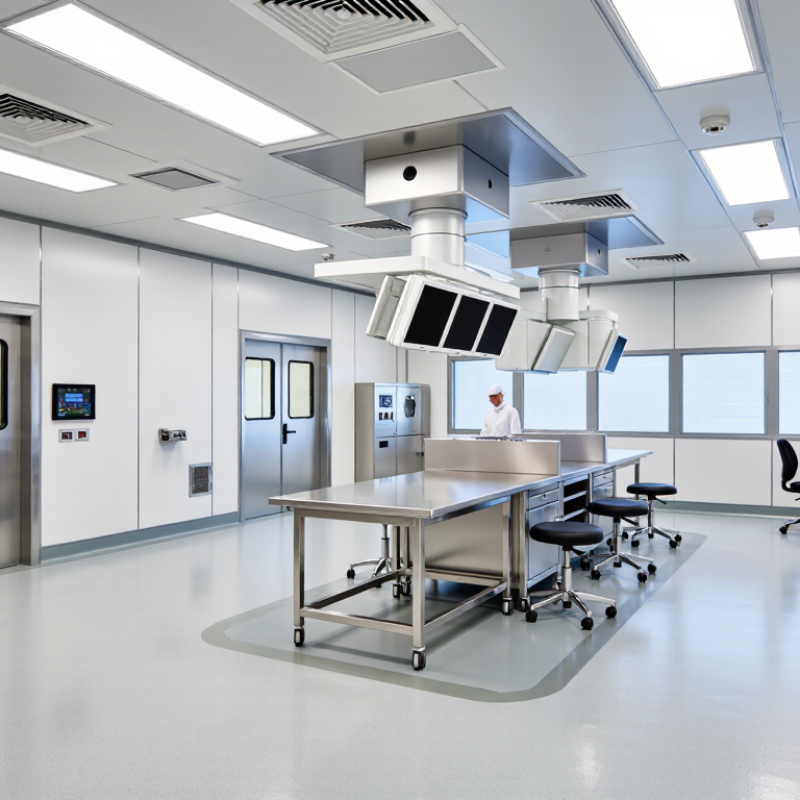
What Turnkey Cleanroom Solutions Include in 2026
Turnkey cleanroom solutions in 2026 cover far more than sealed walls and HEPA filters. They normally include site assessment, airflow design, modular panels, HVAC systems, pressure control, utilities, lighting, monitoring, and controlled access. Commissioning and validation are also included. Documentation matters.
A 2024 report by Grand View Research estimated the global cleanroom technology market at over USD 5 billion in 2023, with continued growth through 2030. That expansion reflects stricter contamination control in pharmaceuticals, electronics, medical devices, and food processing. ISO 14644-1 classification remains central, using airborne particle concentration to define room cleanliness. A capable supplier should connect each class to real production risks, not simply sell a lower particle count.
Energy performance deserves closer attention. The International Energy Agency reports that buildings consume about 30% of global final energy, while cleanrooms often require continuous filtration and air changes. Efficient fans, heat recovery, variable-speed controls, and sensible zoning can reduce operating costs. Yet energy savings should never weaken pressure stability or recovery time. This is where many projects become less perfect. Buyers should request factory acceptance tests, site acceptance tests, airflow visualization, particle-count records, and operator training. Remote monitoring helps, but it cannot replace skilled technicians on the floor. Pricing should include spare filters, calibration, maintenance intervals, and local service capacity. Otherwise, a “turnkey” package may only be turnkey on paper.
How Turnkey Cleanroom Installation and Validation Work
2026 Best Turnkey Cleanroom Solutions for Global Buyers?
How Turnkey Cleanroom Installation and Validation Work
A reliable turnkey cleanroom begins with a clear user requirement specification. The project team maps room classification, processes, personnel flow, material transfer, and cleaning routines. Experienced engineers then coordinate panels, doors, HVAC systems, filtration, lighting, utilities, and monitoring points. Installation should follow approved drawings, documented change control, and local safety requirements. Small details matter. A poorly sealed cable opening can disturb pressure stability and increase cleaning risks.
Validation confirms that the installed room performs as intended. Installation Qualification checks materials, equipment, drawings, and calibration records. Operational Qualification tests airflow, pressure differences, temperature, humidity, alarms, and filtration integrity. Performance Qualification uses particle counts, recovery testing, and airflow visualization under defined operating conditions. Results should be traceable, reviewed, and linked to acceptance criteria. In practice, schedules sometimes become too tight. That creates pressure to overlook minor deviations, which can become expensive later.
Tips: Request a validation plan before installation begins. Keep room layouts and equipment lists updated. Photograph hidden services before closing panels. Use calibrated instruments and independent review when possible. Do not treat particle testing as the only proof of performance. Operator behavior, door discipline, and cleaning technique can change real conditions. A cleanroom may pass testing yet perform poorly during busy shifts. That uncomfortable gap deserves honest investigation.
How Global Buyers Can Evaluate Suppliers and Total Costs
For 2026 cleanroom projects, supplier evaluation must extend beyond the quoted equipment price. Grand View Research estimated the global cleanroom technology market at about USD 5.1 billion in 2023, with steady growth through 2030. That growth attracts capable suppliers, but also creates uneven technical proposals. Buyers should verify ISO 14644 classification tests, airflow calculations, material traceability, installation records, and after-sales response times. A polished presentation is not proof of performance.
Total cost includes energy, filters, calibration, validation, maintenance, spare parts, training, and production downtime. Lawrence Berkeley National Laboratory reports that cleanrooms can consume 10 to 100 times more energy per square meter than ordinary offices. Therefore, a cheaper system may become expensive after three years. Ask suppliers for measured air-change rates, fan power data, filter replacement intervals, and five-year operating estimates. The numbers can mislead. Some estimates ignore seasonal conditions, local electricity prices, or future capacity changes. My practical concern is simple: buyers often compare identical specifications that are not truly identical.
Tips: Request a line-by-line cost breakdown. Require factory acceptance testing and site acceptance testing. Check two comparable project references. Use independent validation when risks are high. Leave contingency for commissioning delays, because real sites rarely behave like drawings. Cite: Grand View Research, Cleanroom Technology Market Analysis, 2024; Lawrence Berkeley National Laboratory, Cleanroom Energy Studies.




