Choosing the best Cbn Turning Inserts from China requires more than comparing prices or polished product photos. Global buyers need consistent hardness, accurate geometry, reliable edge preparation, and stable performance on hardened steel, cast iron, and superalloys. A small variation at the cutting edge can create chatter, burns, or an uneven surface within minutes.
Professor Yusuf Altintas, a leading authority in manufacturing science, states, “Process stability matters as much as cutting speed.” This principle is highly relevant when evaluating Chinese suppliers. A dependable manufacturer should provide clear CBN content, substrate information, nose-radius tolerance, recommended cutting parameters, and traceable inspection records. Samples should be tested on the buyer’s actual machine, not only in a supplier’s demonstration video. Real conditions matter.
The best choice is application-specific.
Buyers should examine insert geometry, chipbreaker design, coating behavior, and clamping accuracy. They should also ask how the supplier controls batch consistency. ISO documentation helps, but paperwork cannot replace cutting trials. That is where many purchasing decisions become less certain.
A lower-priced insert may appear attractive. However, shorter tool life can increase downtime, scrap, and operator adjustments. Some Chinese manufacturers now offer advanced CBN grades, customized geometries, and responsive technical support. Others still provide incomplete data. This difference deserves careful attention.
This guide compares practical signals of quality, including performance evidence, technical communication, packaging, and after-sales support. It also recognizes an uncomfortable truth: no CBN insert is best for every workpiece, machine, or cutting condition. Claims should be tested, measured, and sometimes questioned.
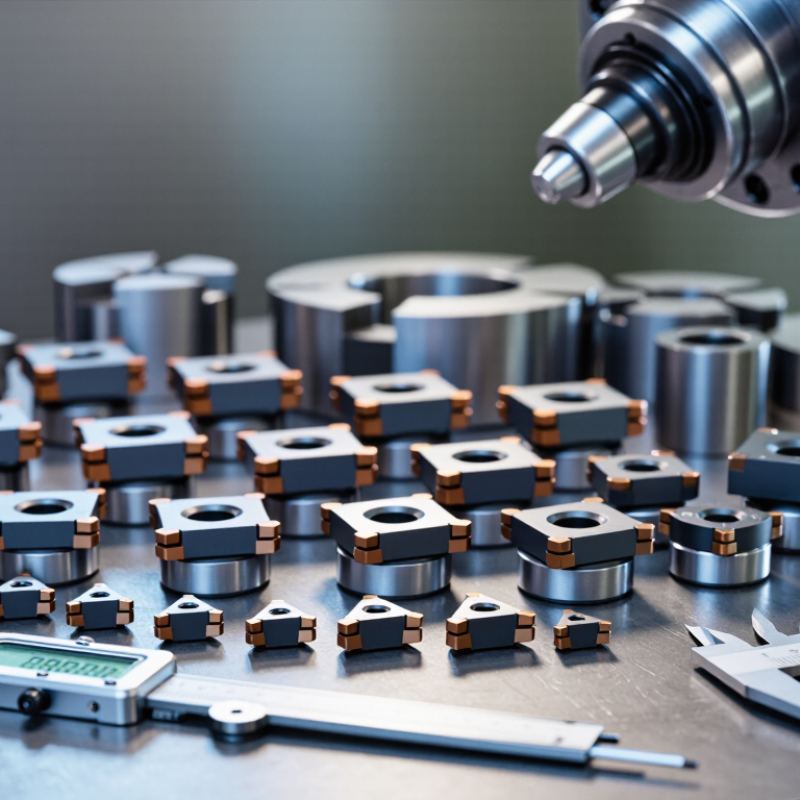
CBN turning inserts are cutting tools made with polycrystalline cubic boron nitride, or PCBN. CBN is extremely hard and remains stable during high-temperature cutting. It is especially suitable for hardened steel, cast iron, powder metallurgy parts, and selected nickel-based alloys. In practical turning, inserts often machine components above 45 HRC, such as bearing races, gears, brake discs, and hydraulic valve parts.
The application data is substantial. A 2024 report from Grand View Research places the global cutting tools market at more than USD 25 billion, with automotive and aerospace production among major demand sources. CBN represents a smaller, specialized segment, but its value comes from reducing grinding operations. The U.S. Geological Survey’s 2024 Mineral Commodity Summaries also reports continued industrial demand for synthetic diamond and cubic boron nitride abrasives. These materials support high-precision finishing and longer tool life.
Machine rigidity matters. A rigid CNC lathe, accurate workholding, and controlled cutting parameters help prevent edge chipping. Interrupted cuts remain difficult, even with premium-grade CBN. Some buyers assume a harder insert always lasts longer. That assumption is incomplete. Excessive speed, weak clamping, or poor chip control can destroy an insert quickly. Experienced users compare hardness, binder composition, nose radius, and cutting geometry with the actual workpiece. Dry cutting may work well, but coolant requirements depend on thermal shock, surface finish, and part geometry.
| CBN Insert Type | Typical CBN Content | Main Workpiece Materials | Recommended Hardness Range | Typical Cutting Speed | Common Operations | Key Performance Characteristics | Buyer Selection Considerations |
|---|---|---|---|---|---|---|---|
| Low-CBN-content grade | Approximately 40–65% CBN, with a relatively high binder proportion | Hardened steels, bearing steels, tool steels, and alloy steels | Approximately 45–65 HRC | 80–180 m/min for continuous or light-interrupted turning | Finishing, semi-finishing, boring, and light facing | Good edge strength, lower chipping risk, and suitable for interrupted cuts | Choose a stronger edge preparation when scale, interrupted surfaces, or variable stock are present |
| High-CBN-content grade | Approximately 70–95% CBN, providing high thermal and wear resistance | Hardened steels, chilled cast iron, and high-wear ferrous components | Approximately 55–70 HRC | 100–250 m/min, depending on workpiece hardness, insert geometry, and coolant policy | Continuous hard turning and high-volume finishing | High abrasion resistance, long wear life, and stable performance at elevated cutting temperatures | Best suited to rigid machines, stable workholding, and relatively continuous cuts |
| CBN grade for hardened steel | Usually a balanced CBN-binder composition optimized for ferrous hard-turning | Hardened carbon steel, alloy steel, bearing rings, gears, and shafts | Approximately 50–68 HRC | 100–220 m/min | External turning, internal boring, profiling, and finishing | Can replace some grinding operations while producing consistent dimensional control | Consider nose radius, edge preparation, workpiece hardness, and required surface roughness together |
| CBN grade for cast iron | Often formulated with a ceramic or metallic binder for abrasive cast-iron applications | Grey cast iron, nodular cast iron, chilled cast iron, and compacted graphite iron | Typically measured by material grade rather than HRC; chilled areas may exceed 50 HRC | 150–500 m/min for many cast-iron turning applications | Facing, rough turning, finishing, and machining of brake discs or housings | Strong resistance to abrasion and crater wear caused by hard carbides and abrasive inclusions | Use a robust geometry when casting skin, sand inclusions, or interrupted surfaces are expected |
| CBN grade for powder metallurgy parts | Wear-resistant CBN structure selected for abrasive, sintered ferrous materials | Sintered iron, powder-metal gears, bushings, and structural components | Commonly about 40–65 HRC, depending on the sintering and heat-treatment process | 80–200 m/min | Profile turning, bore finishing, shoulder turning, and interrupted machining | Resists abrasive wear from hard particles and variable-density material | Review density variation, porosity, inclusions, and the amount of interrupted cutting before selecting the grade |
| Solid CBN insert | CBN throughout most or all of the cutting body | Hardened steels and cast irons in demanding production environments | Approximately 45–70 HRC for suitable ferrous materials | Application-dependent; commonly selected for higher wear resistance rather than minimum tool cost | High-volume finishing, heavy wear conditions, and repeated production cycles | Very high wear resistance and the ability to support multiple usable cutting edges in some designs | Higher purchase cost can be justified where tool life, cycle time, and process stability are priorities |
| CBN-tipped carbide insert | A brazed or sintered CBN cutting segment attached to a carbide substrate | Hardened steels, cast irons, and selected ferrous alloy components | Approximately 45–68 HRC, depending on grade and application | 80–250 m/min in typical hard-turning applications | General hard turning, small-batch production, and flexible machining | Lower cost per insert than many solid-CBN designs while providing a strong carbide support body | Check segment size, usable cutting edges, brazing quality, and recommended cutting direction |
| Negative-rake CBN insert | CBN cutting edge mounted in a negative-rake ISO-style geometry | Hardened steel, cast iron, and components requiring a robust cutting edge | Approximately 45–70 HRC, depending on workpiece material | 80–220 m/min | Roughing, interrupted cuts, shoulder turning, and hard-part profiling | Strong wedge-shaped edge and reliable support under mechanical shock | Requires adequate machine power and rigidity; verify clearance and programmed tool geometry |
| Positive-rake CBN insert | CBN edge designed with a more positive effective cutting geometry | Thin-wall hardened parts, small components, and lower-power machining setups | Approximately 45–62 HRC | 60–180 m/min | Light finishing, small-diameter boring, profiling, and delicate components | Lower cutting forces and smoother engagement than a heavily negative geometry | Use only where edge impact is limited; positive geometries may be less tolerant of severe interruptions |
| PCBN insert with chip control | Polycrystalline cubic boron nitride bonded to a carbide substrate, with a formed chip-control feature | Hardened steel and cast-iron components in automated production | Approximately 50–68 HRC for hardened steel applications | 100–250 m/min, subject to feed, depth of cut, and insert design | Continuous turning, finishing passes, and unattended machining | Improved chip control, predictable wear behavior, and consistent surface quality | Match chip-control geometry with feed rate and depth of cut; chip breakers are not universal across all speeds |