
Compression Molding Machine sourcing in China can look straightforward until production requirements become specific. A press designed for rubber seals may not suit composite panels or thermoset electrical components. Buyers should compare more than rated force and quoted price. Check platen dimensions, temperature control, cycle consistency, mold-change time, safety features, and service coverage. Small details matter. Uneven closure can affect part quality, while slow technical support can leave a production line idle.
Industry data offers useful context, though it does not rank machine suppliers. Plastics Europe’s Plastics—the Fast Facts 2024 reports global plastics production of 413.8 million tonnes in 2023. The OECD’s Global Plastics Outlook reports that plastic waste more than doubled from 2000 to 2019, with only 9% recycled. These figures underscore the scale of plastics manufacturing and the growing attention to resource use. They do not prove that one molding process or machine is best. That distinction matters.
This guide compares Chinese manufacturers through practical criteria: machine range, customization capability, control systems, documented test results, export experience, and parts availability. Ask for cycle-time evidence using a comparable mold and material, not only a showroom demonstration. Request customer references where possible. Brochures rarely show every limitation. A clear comparison can narrow the shortlist, but factory audits and application-specific trials remain valuable before purchase.
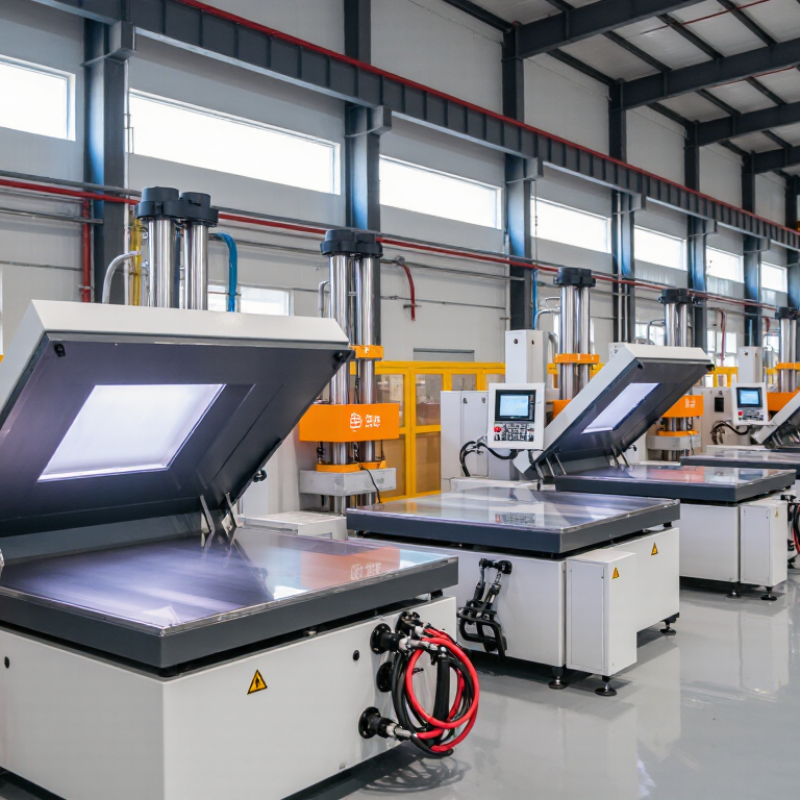
Thermoset compression molding depends on controlled heat, pressure, and time. Many compounds cure in molds set between 150°C and 200°C, but the correct point depends on resin chemistry, part thickness, and filler content. The range is not a recipe. A thick component may develop a cured outer skin while its center remains under-cured. Operators should verify the full cycle using test pieces, not rely on the controller display alone.
The ISO 11357-5:2013 standard describes differential scanning calorimetry methods for measuring cure reaction temperatures, times, and enthalpy. These measurements help engineers compare formulations and estimate a suitable press cycle.
On the shop floor, record mold temperature, closing speed, pressure, and demolding time for each trial. Watch for flash at the parting line and bubbles near ribs. Small clues matter. When comparing Chinese machine manufacturers, ask whether the control system supports repeatable temperature logging and recipe tracking.
One imperfect assumption deserves review: a stable platen reading does not prove uniform heat across a large mold. Test it at several points.
Compression molding machine ratings should start with the mold, not a headline tonnage figure. Hydraulic presses are common for thermoset, rubber, and sheet molding compound parts; frame and four-column designs differ in access and support. Ask the material supplier for the recommended molding pressure, then estimate force from pressure multiplied by the projected mold area. For example, 5 MPa over 0.5 m² requires about 2,500 kN before allowances. NIST Special Publication 811 gives 9.80665 kN per metric ton-force, making that roughly 255 metric tons. Treat this as a sizing check, not a final specification.
Platen size matters just as much. The mold must sit fully on the heated platens, with room for clamps, connections, and safe loading. Check daylight and stroke separately; a wide platen cannot compensate for insufficient opening height. Compare usable platen dimensions, not just the machine’s outside footprint. For a large SMC panel, uneven support or poor temperature uniformity can spoil the part even when nominal tonnage looks adequate. The details can be easy to miss.
Request a force-versus-pressure calculation for the actual projected area, plus platen parallelism and temperature-uniformity data. NIST SP 811 supports unit conversion, but it does not set process pressure; that value must come from validated material and mold trials. I would still leave margin for process variation. Too much margin can also mean unnecessary cost and energy use.
China’s compression-molding manufacturers produce hydraulic presses for rubber parts and composite components. Hydraulic systems provide controlled force, while heated platens help maintain molding temperatures. For rubber seals or vibration pads, buyers should check pressure stability, platen parallelism, and how easily operators can set cycle parameters. Fit matters.
Composite presses often need larger platens, even heat distribution, and programmable pressure cycles. These details matter when molding panels or structural components with layered materials. Ask manufacturers how they verify temperature uniformity across the working area, not just at one sensor. Request sample parts or trial data using materials close to yours.
When comparing suppliers, review machine drawings, component specifications, and commissioning support. Ask for references from customers with similar tooling and production volumes. A polished brochure cannot answer every practical question: how repeatable is the process after a full shift? Some specifications may look strong on paper but need confirmation in a real production trial. Check safety features, spare-parts availability, and operator training before placing an order.
When comparing compression molding machine manufacturers in China, treat certificates as evidence to verify, not a shortcut to choosing a supplier. Ask for the ISO 9001 certificate and check the issuing body, validity dates, and certified factory address. The scope should cover relevant manufacturing activities, not only sales or general management. Confirm that the production site you visit matches the certificate. Records matter.
Review the CE documentation for the exact machine configuration being quoted. Check whether it covers the press, electrical cabinet, guarding, and any included automation. A certificate or declaration for a different model may not answer your questions. Request factory-test records tied to the machine’s serial number, including pressure, temperature control, cycle repeatability, and safety-interlock checks. If possible, observe a test using a representative mold and material, then compare readings with the written report. Small gaps happen. Ask how they were recorded and resolved. A careful supplier should explain test limits, retain dated results, and identify who approved the release. Keep these documents with the quotation and technical specification; later, they can help clarify what was actually inspected and delivered.
When evaluating a compression molding machine, compare cycle time using the same material, mold, and part conditions. A quoted cycle may omit loading, curing, opening, or unloading. Measure the complete cycle on a representative part. Small pauses matter.
Energy use needs a practical test, too. Record power consumption during heating, pressing, and idle periods, then calculate energy per acceptable part. Fast platen movement does not always mean lower energy use; temperature swings and standby losses can offset the speed. Ask for logged results across several shifts, not one demonstration. A small caveat: measurements can vary.
Repeatability shows whether the machine can hold part weight, thickness, and dimensions across consecutive runs. Check results after a shift change and when using a new material batch. Stable pressure and temperature readings help, but finished-part measurements matter more. Request sample production data and clarify how rejected parts were counted. Operator habits and mold condition can skew a comparison. That is easy to miss.
