China Best Dynamic Compaction Equipment Manufacturers
Choosing a reliable supplier of Dynamic Compaction Equipment in China takes more than comparing machine prices. Buyers need to understand how equipment performs under real site conditions, from loose reclaimed ground to large industrial plots. A machine may look capable on paper. The details matter.
This guide examines manufacturers through practical criteria: operating weight, drop energy, lifting height, control systems, safety features, and ease of maintenance. It also considers parts availability, operator training, technical documentation, and the quality of after-sales support. Ask for clear specifications and, where possible, references from projects with similar soil and working conditions. Check that stated certifications and testing records match your intended market and equipment configuration.
No single manufacturer suits every project. Ground conditions, transport limits, crew experience, and budget can change what “best” means. Even a careful comparison has limits, because site performance depends on more than the machine alone. That point is easy to overlook. The sections ahead offer a grounded way to compare China’s leading manufacturers, assess their strengths, and identify questions worth asking before requesting a quotation. A polished brochure is useful, but it cannot replace verified technical details or a candid discussion with the supplier.
Dynamic Compaction Basics: Typical Energy Ranges of 500–10,000 kN·m
China Best Dynamic Compaction Equipment Manufacturers
Dynamic compaction uses a heavy tamper dropped from a controlled height to densify loose ground. The nominal energy per impact is the tamper’s weight multiplied by its drop height. A 10-tonne tamper dropped 5 metres delivers roughly 490 kN·m before equipment and ground losses. The 500–10,000 kN·m range is therefore a practical planning band, not a guaranteed treatment result. FHWA’s Geotechnical Engineering Circular No. 1, Dynamic Compaction (FHWA-SA-95-037), discusses how tamper mass, drop height, soil conditions, and impact patterns guide design.
At the lower end, impacts may suit shallow or moderately loose deposits. Higher energy can reach deeper layers, but it may also increase vibration, crater size, and surface disturbance. Engineers typically verify performance with trial sections, settlement monitoring, and post-treatment testing. Energy alone does not predict improvement. I have seen that distinction get overlooked; a larger number can look reassuring on paper, yet still miss variable fill or wet, fine-grained soils.
Tips: Check drop height, tamper mass, and impact spacing together. Record settlement after each pass, and adjust the pattern if field results differ from the design assumptions.
Equipment Types: Cranes, Drop Weights, Winches, and Safety Systems
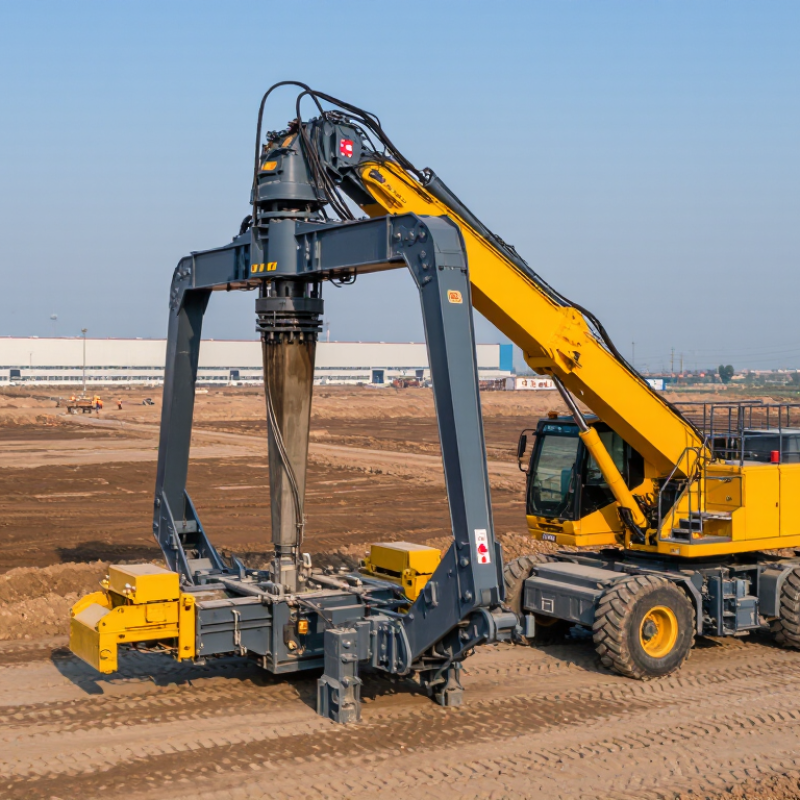
Dynamic compaction equipment works as a coordinated system, not a collection of interchangeable parts. The crane must lift the specified drop weight and hold it steadily at the required release height. Buyers should check rated capacity, boom configuration, and operating limits against the planned energy and site conditions. A heavier weight is not automatically more effective; soil type and compaction depth also matter.
Drop weights may use compact steel or concrete designs, with shape and mass affecting handling and impact. Winches control lifting and release, so smooth operation and dependable braking are essential. Ask manufacturers how cables, drums, and controls are sized for repeated cycles. Small details matter. A poorly matched cable can wear faster than expected, and maintenance intervals deserve a careful review.
Safety systems should include practical safeguards such as clear operator visibility, reliable emergency stops, and controlled access around the drop zone. Ground stability, overhead clearance, and communication between the operator and site crew need assessment before work begins. Equipment specifications are useful, but they cannot replace a site-specific operating plan. I would still verify how inspection records and service support are handled; these details are sometimes overlooked during purchasing.
Manufacturer Assessment: Compare Rated Energy, Lift Height, and Duty Cycle
When comparing dynamic compaction equipment manufacturers, rated energy is a useful starting point, not a verdict. It describes the impact energy available per drop, while soil type, moisture, and treatment depth affect field results. Request test data from comparable ground conditions. Numbers without context can mislead.
Check lift height alongside rated energy. A greater drop height may increase impact energy, but it also affects cycle time, rig stability, and site constraints. Confirm the machine can reach the required height with the intended tamper and cable arrangement. Ask how energy ratings are measured. This comparison is not perfectly tidy.
Duty cycle shows how consistently equipment can work, not just its peak capability. Review expected drops per hour, cooling requirements, maintenance intervals, and wear-part availability. Ask for operating records from similar projects, then compare them with your planned shift length. Field conditions vary. A manufacturer’s answer should include assumptions, not only a headline figure. Slightly inconvenient details often reveal more than polished specifications.
Dynamic Compaction Equipment: Indicative Manufacturer Assessment
Compare representative planning points for rated energy, drop height, and duty cycle. Duty cycle here means the share of scheduled operating time spent performing hammering work; it is site- and operating-plan-dependent, not a standardized equipment rating. Values are illustrative benchmarks, not manufacturer specifications.
China Manufacturer Profiles: Evaluate Product Range, Service, and Customization
A useful profile of a Chinese dynamic compaction equipment manufacturer should show more than a list of machines. Check whether its range includes suitable hammer weights, drop heights, lifting systems, and carrier configurations for your project. Details matter. A site with soft ground and limited access may need different equipment from a broad, open reclamation area. Look for clear operating limits, component specifications, and maintenance guidance. Ask for evidence, such as test records or project references, rather than relying only on catalog images. Published specifications are helpful, but they cannot guarantee performance on every soil type.
Service quality deserves equal attention. Ask how technicians support commissioning, operator training, spare-parts planning, and fault diagnosis. Confirm what support is available remotely and what requires an on-site visit. Response times can vary. A manufacturer should explain those limits plainly. Customization may cover mast height, hammer capacity, transport dimensions, or controls suited to local working conditions. Share site drawings and lifting constraints before requesting a quotation. Not every request deserves a redesign. Some changes add cost without improving productivity, and that is worth discussing openly. A careful comparison should note both the requested options and any trade-offs in transport, maintenance, or operating efficiency.
Project Selection: Match 8–40 t Drop Weights to Soil and Site Conditions
Choosing a dynamic compaction drop weight is not a matter of selecting the largest option available. An 8–40 tonne range can suit different ground conditions, but weight alone does not predict improvement. Lighter weights may fit shallow treatment or sites with nearby structures. Heavier weights can deliver deeper influence, provided the ground and working area can accommodate them. Soil matters.
Loose granular fills often respond well, while cohesive or saturated soils may need careful trial work and longer pore-pressure dissipation. A geotechnical assessment should guide weight, drop height, grid spacing, and impact sequence together. Check buried services, nearby buildings, groundwater, and access for the crane before setting the pattern. Small details matter.
Start with a controlled test area. Record crater depth, surface heave, vibration, and settlement between passes, then compare results with the project targets. If the ground response differs from predictions, adjust the plan rather than forcing the original setting. Even a sound estimate can be wrong. Practical selection depends on measured site response, not weight ratings alone.




