
Welcome to Worldia, we have over 25 years of expertise.

What Is the Best Transparent LED Display for 2026?

The best Transparent Led Display for 2026 is not simply the panel with the clearest glass or brightest pixels. It is the display that fits its setting, viewing distance, and daily operating needs. A storefront facing afternoon sun has different demands from a hotel lobby with soft lighting. Small details matter: visible support bars, cable routes, reflections, and how the screen looks when switched off.

Industrial designer Dieter Rams offered a useful reminder: “Good design is as little design as possible.” His principle was not written specifically for transparent displays, but it applies here. The technology should draw attention to the message, not to distracting hardware. That is harder than it sounds. A nearly invisible screen can still produce glare, uneven brightness, or awkward gaps between modules.

This guide compares what buyers should inspect before choosing a model for 2026. We will consider transparency, brightness, pixel pitch, installation limits, maintenance access, and the quality of technical support. Specifications help, but they do not tell the whole story. Ask to see the display in lighting close to your own, and check moving content from the distance customers will actually stand. A demonstration can look impressive in a dark showroom. Real sites are messier. The right choice depends on those conditions, not on a single headline number.
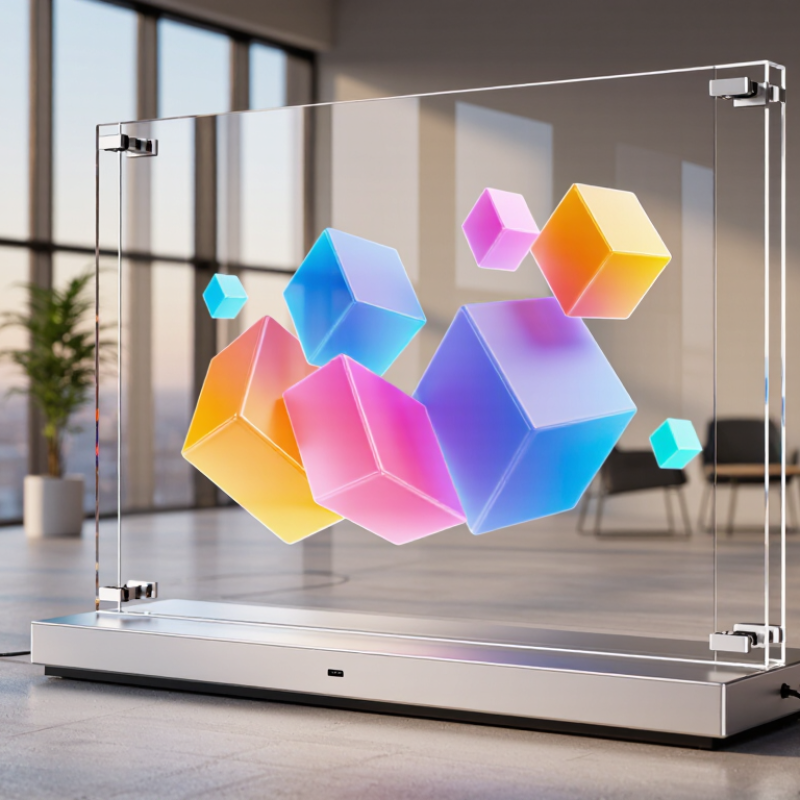
What Is the Best Transparent LED Display for 2026?

What Defines a Transparent LED Display in 2026?

In 2026, a transparent LED display is a direct-view screen that forms images with LEDs while leaving open areas through which people can see. It is not simply a bright screen placed behind glass. Its defining measures include pixel pitch, luminance, viewing angle, and visible-light transmission. Ask how transparency is measured: the frame, wiring, and installation can make a showroom window look less open than the module specification suggests. There is no single transparency figure that suits every façade.

The IEA’s 2023 Buildings report estimates that buildings use about 30% of global final energy. That makes daylight and heat management relevant when planning a window display, though a transparent screen does not automatically reduce energy use. Check power consumption at the brightness you will actually run, not only at a peak setting. Also inspect content outdoors and from an oblique angle. Small text may vanish against a sunlit street.

Tips: Request a full-size sample. View it in the intended glass, at noon and after dark. Confirm transmission, brightness, and power figures in writing, and ask how the system handles heat and service access. One detail is easy to overlook: a technically clear screen can still feel visually busy once cables and moving content appear.

How Transparent LED Display Technologies Differ

Transparent LED displays differ mainly in how they support the light-emitting components. Mesh-style panels use narrow bars and open gaps, creating a visible grid when viewed up close. LED film places tiny emitters on a thin, flexible substrate, which can suit glass surfaces with limited structural support. Glass-integrated designs build LED elements into the glazing itself. They can look cleaner, but often require more planning before installation.

Each structure changes the balance between transparency, brightness, and image detail. A tighter pixel pitch can make text and graphics clearer, but may reduce the open view through the screen. In a bright shop window, higher brightness helps maintain visibility in daylight. At night, excessive output can feel harsh against the glass. The comparison is not always tidy. Viewing distance and ambient light can matter as much as the product specification.

Installation conditions deserve equal attention. Mesh panels may need a supporting frame and careful alignment across sections. Film systems can preserve more of a window’s appearance, yet curved glass, heat, and surface preparation may limit where they work well. Ask for measured transparency, power requirements, service access, and sample images at the intended viewing distance. There is no universal winner. I would still test a small section on the actual window before committing; showroom lighting can make differences seem smaller than they are.

Which Performance Factors Matter Most?

For a transparent LED display in 2026, the best choice depends on where people will view it. Pixel pitch affects image sharpness: fine text and close viewing need tighter spacing, while distant storefront displays may not. Transparency matters too. A denser LED layout can make images clearer but may block more of the view behind the glass. There is a trade-off.

Tips: Compare displays in the actual space, not only in a showroom. Check brightness beside a sunlit window, and look for readable content from several distances. Numbers can mislead.

Also assess contrast, color consistency, refresh rate, and heat management. Brightness alone cannot overcome reflections or washed-out colors. Ask how the display handles changing daylight and whether individual panels can be serviced without major disruption. Confirm the mounting system suits the building’s structure and leaves enough room for ventilation. A specification sheet may look convincing, but real viewing conditions can expose gaps. I would not choose by transparency percentage alone; that figure says little about image quality, installation, or long-term upkeep. Test moving content, too. Small text can still look awkward.

How Display Types Match Different Applications

The best transparent LED display for 2026 depends on what viewers need to see through it. Fine-pitch, glass-mounted panels suit retail windows, where close-up product detail matters. Mesh displays fit large atriums and building façades, where airflow and a lighter structure can be priorities. Rigid transparent cabinets often work better for indoor stages or lobby feature walls, where viewing distance is greater and installation access is planned. Visibility matters. Check pixel pitch from the actual viewing position, then inspect the display in daylight and after dark. A bright window can wash out content, while dense LEDs may block more of the scene than expected.

Application choices also affect building comfort and operating costs. The International Energy Agency’s 2023 energy-efficiency report notes that buildings account for about 30% of global final energy consumption. That makes transparency, brightness controls, and operating schedules practical selection factors—not automatic energy savings. Grand View Research estimated the global digital-signage market at USD 28.83 billion in 2024; its broad category includes many display types, not only transparent LED. For a storefront, compare daytime readability with sightlines into the shop. For an atrium, assess viewing distance, ambient light, and service access. Test it onsite. Even a technically impressive screen can feel intrusive when its supports interrupt the architecture.

How to Choose the Best Transparent LED Display for 2026

What Is the Best Transparent LED Display for 2026?

How to Choose the Best Transparent LED Display for 2026

Choosing a transparent LED display starts with the building, not the product sheet. Measure the glass area, viewing distance, and available mounting space. Then check how much daylight reaches the screen. A display that looks vivid indoors may appear washed out beside a sunlit window. Ask for a demonstration under conditions similar to your site. That matters.

Pixel pitch affects how clearly images appear up close, while transparency affects how much of the view remains visible. These goals can compete. Compare samples from the distance customers will actually stand, not just from across a showroom. Also confirm brightness controls, power use, ventilation needs, and how technicians will access components. A beautiful installation is less useful if routine servicing means dismantling a large section.

Think about content before choosing the display. Fine text and detailed product images may need a closer-viewing configuration than bold motion graphics. Check that the control system supports your planned formats and scheduling. Review installation drawings and warranty terms with qualified professionals, especially for large glass façades. A common mistake is assuming every window can support the same mounting approach. It cannot. Budget for testing, installation, and maintenance—not only the screen itself. One awkward detail: the best option may be less transparent than you hoped, but more readable in daylight.

What Is the Best Transparent LED Display for 2026? — How to Choose the Best Transparent LED Display for 2026
Display Type Typical Transparency Typical Pixel Pitch Typical Brightness Best-Fit Applications Main Advantages Key Considerations
Transparent LED film Approximately 70–95% Approximately 3.9–10 mm Often about 1,000–5,000 nits, depending on model and installation Storefront windows, glass partitions, and installations where preserving the view is a priority Lightweight, slim, and designed to attach to glass; can maintain a high degree of visibility through the display Check glass compatibility, viewing distance, heat management, and whether the film can be serviced without removing the glazing
Transparent LED cabinet or grid display Approximately 40–75% Approximately 3.9–10 mm Often about 3,000–6,000 nits for high-brightness installations Retail façades, atriums, event spaces, and large architectural glass surfaces Modular construction can support larger screen areas; open structure allows light and some airflow to pass through Compare cabinet weight, mounting structure, pixel pitch, wind loading, and access for maintenance
LED mesh or curtain display Approximately 30–70% Approximately 10–25 mm Often about 4,000–8,000 nits for outdoor-facing applications Building exteriors, stages, large façades, and long-distance viewing Open construction can reduce wind resistance and overall visual obstruction on very large installations Coarse pixel pitch is generally better suited to longer viewing distances; confirm weather protection and structural requirements
Transparent LED glass Varies substantially by glass construction and LED layout Project-specific; confirm the actual pixel pitch in the proposed glass unit Project-specific; compare measured brightness under the intended ambient lighting New-build façades, architectural glazing, and projects requiring an integrated glass-and-display assembly Can combine the display with a purpose-designed glazing system for a clean architectural finish Requires early coordination with the façade designer; review glass performance, replacement strategy, wiring, and applicable building codes
Best choice by priority Choose the option that meets the required view-through level Choose a finer pitch for closer viewing; a coarser pitch can suit longer viewing distances Set brightness according to ambient light and viewing direction Film for minimal visual obstruction; cabinet/grid for modular large-area installations; mesh for large outdoor façades Match the display format to the building, content, viewing distance, and maintenance plan Request a full-size sample or on-site demonstration before purchase, especially for window installations

Selection note: Figures are indicative ranges, not guaranteed specifications. Transparency, pixel pitch, brightness, viewing angle, power consumption, and weather protection vary by product and configuration. Compare current 2026 product datasheets and confirm performance under the actual installation conditions.

Hi! What is your idea today?
WORLDIA 8618618272087
Nina +86 15631662072
google-site-verification=0STkOZEvYuoDp-D40AVfMUk--CzM2AsZv24S6ISPdmk