
Choosing a Treatment Plant manufacturer is not a catalogue exercise. A plant must fit local water quality, available land, energy costs, operator skills, and future demand. The wrong process can leave a buyer with oversized tanks, costly power bills, or equipment that is difficult to maintain. Small details matter: the space around a pump, the clarity of alarm screens, and whether replacement parts can be sourced reliably.
The need is substantial. The WHO/UNICEF Joint Monitoring Programme reported that 2.2 billion people lacked safely managed drinking water in 2022. The UN World Water Development Report 2024 also highlights growing water stress and the need for resilient infrastructure. These figures explain why global buyers should compare more than price. Process performance, commissioning support, lifecycle costs, and proven references deserve equal attention. No shortlist can answer every local requirement.
Professor Mark van Loosdrecht, a leading researcher in environmental biotechnology and wastewater treatment, has advanced a practical idea: wastewater can be treated as a resource, not merely as waste. That perspective matters when assessing technologies for water reuse, nutrient recovery, and energy efficiency. This guide introduces 10 Treatment Plant manufacturers serving international buyers, while recognizing that no single supplier suits every project. The strongest choice depends on measurable needs, not polished brochures. Use the comparison as a starting point, then verify technical claims, local service coverage, and references from operating plants. That extra work can feel slow. It is worth doing.
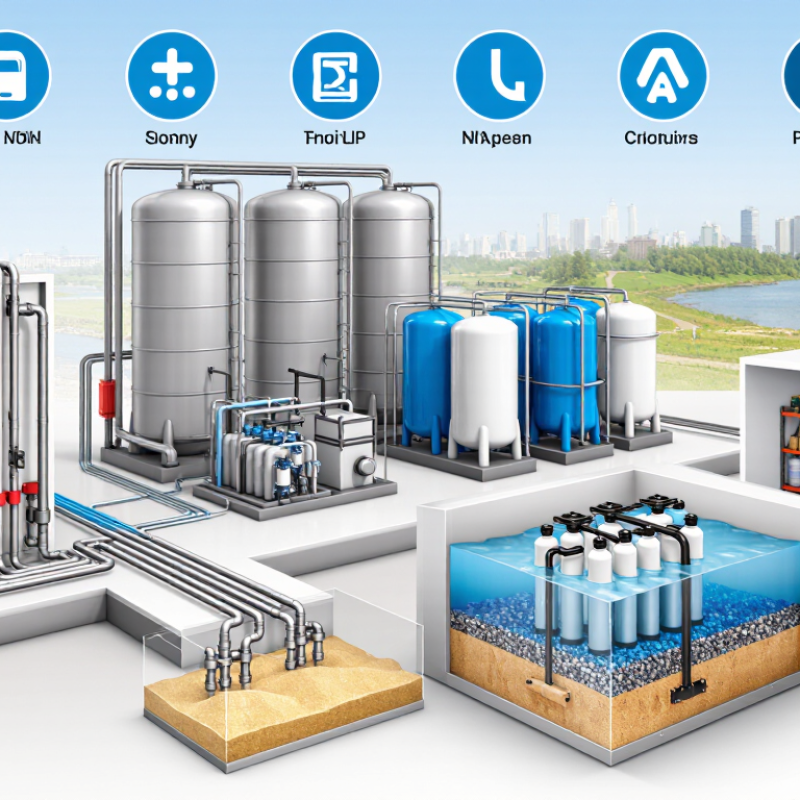
Treatment plant manufacturers turn raw water, sewage, and industrial effluent into systems that operators can run and maintain. Their work may include screening equipment, pumps, biological treatment tanks, membrane units, disinfection, controls, and sludge handling. A municipal plant might receive wastewater through a deep concrete channel, remove grit, then treat it in aerated basins. Industrial projects often need process designs matched to changing wastewater composition.
Manufacturers also support global markets through engineering, installation guidance, spare parts, and operator training. UN-Water’s 2024 SDG 6 report estimates that 42% of household wastewater was not safely treated in 2022. That gap makes reliable treatment capacity important, but equipment alone cannot solve it. Power supply, local skills, climate, and maintenance budgets all affect performance. A polished process diagram can hide messy operating realities; even sound designs need adjustment after commissioning.
Tips: Ask manufacturers for performance data under conditions close to your own, including influent quality, energy use, and expected sludge output. Check how quickly critical parts can be supplied. Request clear operating procedures and training plans, not just a list of equipment. Small details matter. A valve that is hard to reach may complicate routine maintenance.
When comparing treatment plant manufacturers, assess documented performance, not polished equipment photos. UN-Water’s 2024 Progress on Wastewater Treatment reports that 42% of household wastewater was not safely treated in 2022. That shortfall makes reliable operation and verifiable results essential. Ask for performance data under influent conditions similar to your site, including seasonal flow changes, temperature swings, and pollutant loads. Request clear guarantees for treated-water quality, energy use, sludge production, and plant availability. Check whether independent test results support those claims.
Review the full project lifecycle. Can the supplier provide process design, commissioning, operator training, and accessible spare parts? Examine references from plants with comparable capacity and discharge requirements. Ask how the system handles power interruptions, sensor failures, and uneven inflow. A low purchase price can hide high chemical, energy, or maintenance costs. Yet not every site needs the most automated option; local skills and service access matter. No scorecard captures every constraint. Be willing to revisit your assumptions.
Tips: Ask for a sample operating log, not just a brochure. Compare annual operating costs over a consistent period, and verify what the warranty excludes. Keep a record of unanswered technical questions; gaps matter.
These ten manufacturer profiles reflect different strengths in water and wastewater treatment. One focuses on compact packaged plants for small communities, where limited space makes skid layout important. Another designs municipal systems with larger flow capacity and room for future expansion. A third specializes in membrane filtration; buyers should check cleaning requirements and replacement intervals. A fourth integrates biological treatment with nutrient removal. Details matter.
A fifth profile centers on industrial wastewater, with equipment selected for variable influent conditions. A sixth offers modular units that can be shipped in sections and assembled on site. A seventh emphasizes automation, including sensor-based monitoring of flow, pH, and dissolved oxygen. An eighth focuses on sludge handling, where dewatering performance affects hauling costs. These are practical differences, not guarantees. Ask for comparable project data.
The ninth manufacturer profile highlights engineering support, from process selection to operator training. The tenth combines treatment equipment with reuse systems, such as filtration and disinfection for non-potable applications. For any supplier, review design assumptions, local service access, commissioning plans, and references from facilities with similar water quality. A polished proposal can still miss an awkward site constraint. Check the drawings against the actual footprint, pipe routes, and power supply before comparing prices.
Treatment plant manufacturers differ less by brochure claims than by how well their processes fit local water and operating conditions. Biological systems can treat steady organic loads, while membrane units offer compact footprints and consistent effluent quality, but require careful cleaning. Neither option is automatically best. Ask for design data based on influent tests, seasonal changes, and discharge targets.
Assess capacity at both average and peak flow, not just the largest figure on a sales sheet. A 500-cubic-meter-per-day plant may perform well on paper, yet struggle during sudden inflow spikes or cold months. Request modular expansion limits, energy use per cubic meter, sludge volumes, and operator hours. Trade-offs show. Small details matter.
Global support means more than a service email. Check commissioning plans, spare-parts lead times, remote diagnostics, and training in operators’ working language. For remote sites, ask how faults are handled when internet access drops or specialists cannot travel quickly. References from plants with similar climates and feedwater can help, though reported results need context. Even sound designs can disappoint when maintenance assumptions are unrealistic. That deserves scrutiny.
Comparison basis: The entries below are anonymous supplier archetypes organized by treatment specialization—not named companies or a verified ranking. Capacity bands are indicative project scales, not guaranteed manufacturer limits. Actual capacity depends on influent quality, discharge or reuse targets, site conditions, and plant configuration.
| No. | Anonymous supplier profile | Typical treatment technology | Indicative project capacity | Common applications | Key selection consideration | Global support to verify |
|---|---|---|---|---|---|---|
| 1 | Membrane bioreactor (MBR) specialist | Biological treatment combined with membrane separation | About 100–100,000 m³/day | Municipal wastewater, compact urban plants, and high-quality water reuse | Check membrane replacement cost, energy use, pretreatment needs, and performance guarantees. | Confirm local membrane supply, trained service technicians, commissioning, and operator training. |
| 2 | Moving-bed biofilm reactor (MBBR) specialist | Attached-growth biological treatment using suspended carrier media | About 100–100,000 m³/day | Municipal and industrial wastewater, plant upgrades, and variable-load treatment | Verify media retention screens, aeration requirements, and the design basis for peak loads. | Check availability of carrier media, replacement parts, process support, and regional installation partners. |
| 3 | Sequencing batch reactor (SBR) specialist | Fill-and-draw activated sludge treatment in timed cycles | About 50–50,000 m³/day | Small and mid-sized communities, campuses, resorts, and industrial sites | Assess equalization needs, cycle flexibility, control-system complexity, and operator requirements. | Verify controls support across time zones, spare-parts access, and local commissioning capability. |
| 4 | Conventional activated-sludge plant supplier | Primary treatment, aeration, secondary clarification, and sludge handling | About 5,000–500,000+ m³/day | Large municipal wastewater treatment and established industrial applications | Compare energy demand, footprint, sludge processing, and expansion options against local standards. | Look for regional engineering coverage, long-term parts support, and documented operator-training programs. |
| 5 | Oxidation-ditch system supplier | Extended-aeration activated sludge, commonly configured for nutrient removal | About 1,000–100,000 m³/day | Small to medium municipalities and sites seeking robust biological treatment | Review land requirements, aeration energy, process flexibility, and seasonal performance. | Confirm local support for aerators, drives, instrumentation, and routine maintenance. |
| 6 | Packaged sewage treatment plant supplier | Factory-assembled biological systems, often using extended aeration, SBR, or MBBR | About 10–5,000 m³/day | Hotels, housing developments, institutions, small communities, and remote facilities | Check the included scope, civil works, noise control, sludge handling, and expansion limits. | Verify delivery coverage, installation assistance, warranty terms, and access to consumables and spares. |
| 7 | Containerized and modular plant supplier | Pre-engineered treatment modules; biological and filtration processes vary by design | About 5–2,000 m³/day per modular installation | Temporary projects, remote sites, emergency response, and phased capacity expansion | Confirm transport dimensions, climate protection, site connections, and the ability to add modules. | Check deployment logistics, remote monitoring, regional maintenance, and replacement-module availability. |
| 8 | Brackish-water reverse-osmosis (RO) plant supplier | RO membranes with pretreatment and post-treatment, designed for dissolved-salt removal | About 100–100,000 m³/day of product water | Brackish groundwater, industrial process water, and selected water-reuse applications | Compare feed-water analysis, recovery rate, concentrate disposal, energy use, and membrane fouling controls. | Verify membrane and chemical supply, local service engineers, and support for water-quality monitoring. |
| 9 | Seawater desalination plant supplier | Seawater RO with intake, pretreatment, high-pressure pumping, and post-treatment | About 1,000–500,000 m³/day of product water | Coastal municipalities, islands, and water-intensive industrial facilities | Assess intake and outfall permits, marine conditions, power demand, brine management, and lifecycle cost. | Check regional marine engineering capability, membrane servicing, critical spares, and long-term operations support. |
| 10 | Tertiary treatment and water-reuse system supplier | Filtration, disinfection, and—in some designs—advanced oxidation or membrane polishing | About 1,000–500,000 m³/day | Municipal reuse, industrial reuse, irrigation, and polishing of secondary effluent | Match treatment barriers to the intended reuse standard and verify monitoring and disinfection requirements. | Confirm local regulatory support, laboratory and commissioning assistance, consumables, and operator training. |
Buyer note: Capacity ranges are broad, indicative engineering scales and are not directly comparable across technologies or water types. Request project references, independently verifiable performance data, a site-specific process design, and written details of regional service coverage before shortlisting any supplier.
Choosing a treatment plant manufacturer begins with the water, not the brochure. Share actual influent data, seasonal changes, peak flow, and required effluent quality. A design sized only for average flow may struggle during heavy-use periods. Ask how the proposed process handles suspended solids, variable loads, and difficult operating conditions. Ask for evidence. Request performance records from plants with comparable capacity and wastewater characteristics. Site visits can reveal practical details, such as access for cleaning and whether operators can reach valves safely.
Compare the full scope, not just the equipment price. Check what is included for civil works, installation, commissioning, operator training, and spare parts. Clarify expected energy and chemical use, maintenance intervals, warranty limits, and response times for technical support. Details matter. A polished brochure can hide a weak handover. Ask to review process drawings, control descriptions, and a commissioning plan before signing. References are useful, but confirm that the cited plants have operated long enough to show routine performance. No checklist catches everything; site constraints and staff experience can still change the best-fit design.
