
Welcome to Worldia, we have over 25 years of expertise.

What Are the Best Types of Auto Tint Film in 2026?

Choosing Auto Tint Film in 2026 is less about picking the darkest shade and more about matching the film to your driving routine. A sedan parked beneath a hot afternoon sun has different needs from a garage-kept commuter. The glass matters, too. Dyed films can reduce glare and add privacy, while metalized films reflect heat but may interfere with some electronic signals. Carbon films offer a subdued appearance and useful heat reduction without a reflective finish. Ceramic films use nonmetallic materials and can provide strong infrared heat rejection, though performance and price vary by product. There is no single winner.

This guide compares the main film types by heat control, glare reduction, appearance, durability, and cost. It also explains how to read specifications such as visible light transmission and total solar energy rejected. Small details count. A film’s results depend on its construction, the vehicle’s glass, and the quality of installation. I would not treat a bold brochure claim as the whole story; published figures can use different test conditions. Look for product data that explains how performance was measured, and ask an experienced installer about the trade-offs for your vehicle. The best choice may not be the most expensive—or the one that looks darkest in a sample book. It should suit your climate, comfort needs, and expectations, with clear specifications to support the decision.
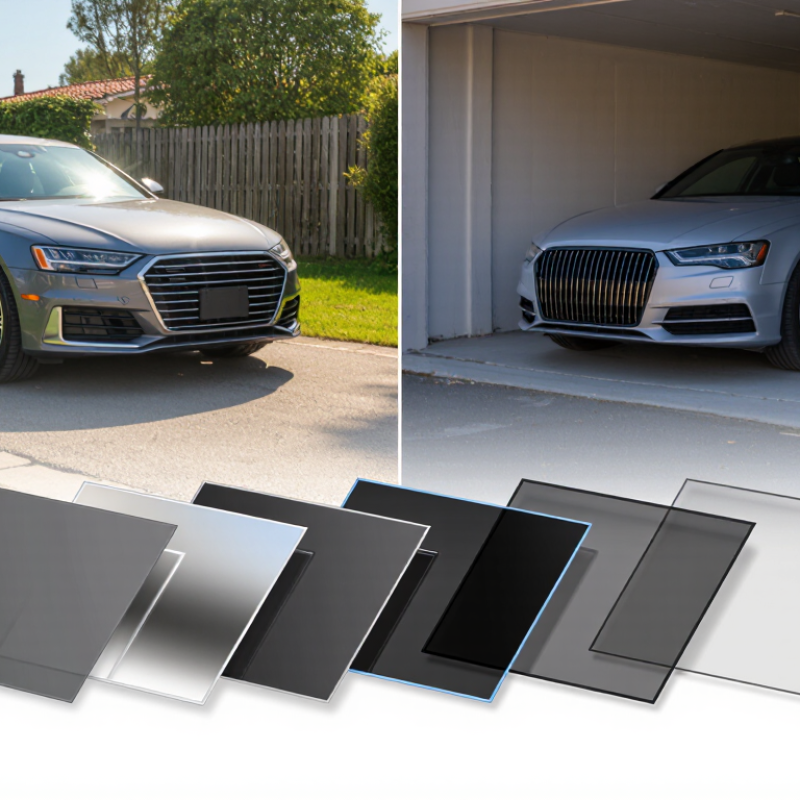
What Are the Best Types of Auto Tint Film in 2026?

How Automotive Window Tint Film Works

Automotive window tint is a thin, layered film applied to the inside of vehicle glass. It filters sunlight rather than simply making windows darker. Think of it as a selective screen. Visible light, ultraviolet radiation, and infrared energy behave differently as they meet the film. Dyed films mainly reduce glare and brightness. Carbon and ceramic films can limit more solar heat without relying on a metallic layer. Metalized films reflect energy, but may affect some electronic signals. Each construction has trade-offs.

After installation, the adhesive holds the film against the glass, while a hard outer coating helps resist scratches. Sunlight that reaches the film may be reflected, absorbed, or transmitted. Some absorbed heat can move into the glass and cabin, so “heat rejection” does not mean every window stays cool. Darkness alone is not a reliable measure of performance. A lighter film can reduce more heat than a darker one. A single test number is tempting, but it may not describe real driving conditions. Glass type, climate, and installation quality all matter; the details are easy to overlook.

The Main Types of Auto Tint Film in 2026

Dyed film is a simple option for reducing glare and adding privacy. It uses layered dye to darken the glass, but its heat rejection can be modest. In strong sunlight, the cabin may still feel warm. Some dyed films can also fade over time, depending on their construction and care.

Metallized film contains fine reflective particles that help reject solar heat. The finish can look slightly reflective from outside. Because it contains metal, it may affect some radio or signal reception; results vary by vehicle and film. Carbon film uses carbon-based particles instead. It often has a matte appearance and avoids the signal concerns associated with metal layers, though performance differs between products. Hybrid films combine materials, aiming to balance appearance, heat control, and cost.

Ceramic film uses non-metallic particles designed to reduce heat while keeping the view relatively clear. It is often a higher-priced choice, but the label alone does not guarantee performance. Check the film’s published figures for visible light transmission, ultraviolet blocking, and infrared rejection, rather than judging by darkness. A useful detail: a shaded sample can look very different from film installed across a sunlit window. The terminology can be confusing, and even experienced buyers may need to compare specifications carefully.

What Are the Best Types of Auto Tint Film in 2026?

Ceramic films often offer strong heat rejection without a metallic layer, while carbon, hybrid, and metalized films can also reduce solar heat. These ranges are indicative, not guaranteed: actual performance depends on the specific film, shade, and vehicle glass. Compare product specifications before choosing.

How Tint Films Compare in Heat, Glare, and UV Protection

Ceramic films use nonconductive particles to reduce solar heat without a reflective, mirror-like finish. Carbon films can darken the cabin and soften glare, though performance varies by product. Dyed films are often chosen for appearance, but their heat rejection may be more limited. Metallized films can reflect solar energy effectively; the trade-off is a shinier look and possible interference with electronic signals.

Compare published total solar energy rejected, or TSER, figures—not darkness alone. Dark glass does not automatically mean a cooler cabin. The International Window Film Association’s consumer guidance distinguishes solar-energy rejection from visible-light transmission, two measures that affect comfort differently.

For UV protection, the Skin Cancer Foundation recommends window film that blocks 99% of UVA and UVB rays. Check the test data for the specific film, since broad category labels are not performance guarantees.

That sounds tidy. Real cabins are messier: sunlight shifts across the dashboard, and glare can come from the side window as well as the windshield. A film that cuts glare may also make evening visibility feel dimmer, so compare heat, light transmission, and UV figures together.

How to Choose a Film for Your Vehicle and Driving Needs

Choosing auto tint starts with how and where you drive, not how dark the glass looks. A commuter parked in direct afternoon sun may value heat reduction, while a night driver needs clear views through the side windows. Start with your routine. Dyed film can reduce glare and add privacy, but it may offer less lasting heat control than other options. Carbon film usually provides a stronger balance of heat reduction and color stability. Ceramic film can reject substantial infrared heat while keeping a lighter appearance, though it often costs more. Compare measured performance, not just product labels.

Think about your vehicle, too. A large glass roof can make cabin heat more noticeable, while a small car used mostly for short trips may not need the highest-performance film. Sit inside a similar vehicle, if possible, and check visibility in daylight and at dusk. Small details matter. I would not choose by shade alone; that is an easy mistake. A film that feels comfortable at noon might make a dim parking garage harder to navigate.

Ask an experienced installer how the film performs on your specific glass and how it should be maintained. Request clear information about heat rejection, glare reduction, and optical clarity. Results can vary with glass type and installation quality. Even good film cannot make a hot cabin instantly cool. Keep your expectations realistic, and prioritize comfortable, unobstructed driving.

What to Check Before Buying or Installing Auto Tint

Before choosing dyed, carbon, ceramic, or metallized tint, check the film’s written specifications and your car’s existing glass. Ask for visible light transmission, total solar energy rejected, and ultraviolet rejection—not just a vague “heat-blocking” claim. These figures measure different things. A darker film does not automatically reject more heat, and some metallized films may affect electronic signals. Ask the installer to confirm compatibility with your vehicle’s antennas and sensors. Small details matter.

Independent research can help set expectations. A 2016 study in JAMA Ophthalmology tested 29 vehicles and found that windshields blocked an average of 96% of UVA, while front side windows blocked an average of 71%. That gap shows why factory glass alone may offer uneven protection. Ask for test data for the specific film and glass combination, plus written warranty terms and care instructions. Check the glass carefully for scratches, old film, or hazy edges before installation; these can affect the finish. I still find film comparisons confusing when companies use different testing methods. Ask for comparable figures, and confirm local visible-light-transmission requirements before booking.

Hi! What is your idea today?
WORLDIA 8618618272087
Nina +86 15631662072
google-site-verification=0STkOZEvYuoDp-D40AVfMUk--CzM2AsZv24S6ISPdmk