
Choosing a supplier for Welded Parts involves more than comparing prices. A bracket may look simple in a drawing, yet its performance depends on material grade, joint design, weld consistency, and finishing. For global buyers, distance adds practical concerns. Shipping schedules, clear documentation, and responsive communication can shape a project just as much as production capacity.
This guide introduces seven suppliers for buyers seeking welded components across different industries and order sizes. It highlights factors worth checking, including manufacturing capabilities, quality controls, customization options, and experience with export orders. These details can help narrow a shortlist, but they are not a substitute for direct verification. Ask for recent inspection records, material traceability details, and samples when the application calls for them. If possible, compare a supplier’s quotation with its technical response. Both reveal useful information.
There are limits to any supplier overview. Public information may be incomplete, and a polished website does not prove that a factory can meet every tolerance or delivery date. That gap matters. Buyers should confirm requirements in writing and discuss how defects, design changes, and delays are handled. The right choice depends on the part, production volume, destination, and risk tolerance. Use the profiles as a starting point, then validate the details before placing an order. A careful review takes time, but assumptions can cost more.
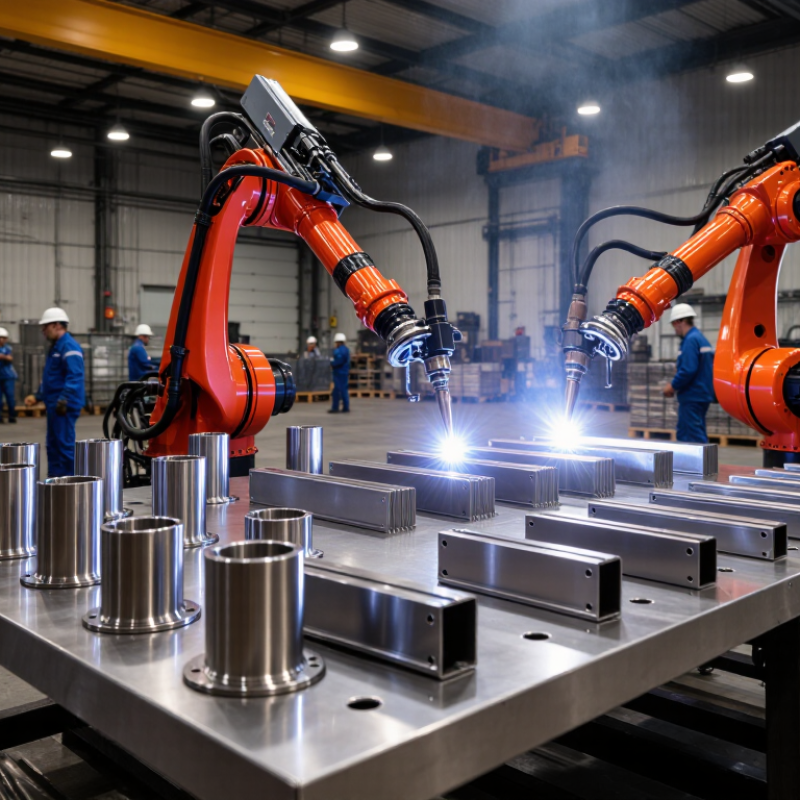
Welded parts suppliers help global buyers turn engineering drawings into components ready for assembly. Their work can include cutting, bending, fixture setup, welding, machining, and surface finishing. A capable supplier reviews weld symbols, material grades, tolerances, and production volumes before preparing a quote. Small details matter. A hole near a weld may become difficult to machine after the part distorts. Early design feedback can prevent costly rework, though it cannot replace a buyer’s own engineering review.
Suppliers may also provide sample parts, dimensional inspection records, material documentation, and photographs of production stages. Buyers should ask how weld quality is checked and which dimensions are measured, rather than relying on a general claim of quality control. Packaging and shipment coordination are useful too, especially when parts have exposed edges or machined surfaces that could be damaged in transit. Clear drawings and agreed inspection criteria make communication easier across time zones. A polished quotation is not proof of consistent production. Start with a small order when practical, review the results, and note any gaps in the supplier’s process before scaling up.
Choosing a welded-parts supplier takes more than comparing quoted prices. Start with the part drawing, material grade, weld type, and required tolerances. Ask how the supplier controls fit-up, heat input, and distortion across repeat orders. Specific answers matter.
Request material certificates, inspection records, and a sample part made with the proposed process. A clean weld bead is useful, but it does not prove consistent strength or dimensions. Check critical measurements against the drawing, including hole position, flatness, and joint alignment. If the part carries load, ask how weld quality is verified and what inspection criteria apply. Do not rely on photographs alone.
Review production capacity, traceability, packaging, and response times for nonconforming parts. Ask who will notify you if material or process changes. Compare the full delivered cost, including finishing, freight, and likely rework—not just the unit price. Small details count. A factory visit or live process review can reveal whether documented procedures match the shop floor. Even a careful checklist has limits: production can drift after approval. Clear communication and periodic checks help, though they cannot remove every risk.
A seven-supplier shortlist should cover different welding strengths, not seven nearly identical quotes. Compare fabrication shops for sheet metal, structural assemblies, stainless steel, aluminum, robotic welding, low-volume prototypes, and repeat production. Ask each supplier for sample inspection records, material traceability, and weld-procedure qualifications relevant to your part. A polished brochure is not proof.
The International Federation of Robotics reported 541,302 industrial robots installed worldwide in 2023, with 70 percent of new installations in Asia. That scale can support consistent production, but robot use alone does not guarantee sound welds. Request close-up sample photos and measurements of bead size, distortion, and fit-up. For critical parts, agree on inspection methods and acceptance criteria before ordering. Small details matter.
Compare landed cost, not just the quoted unit price. Include packaging, freight, lead time, and the cost of correcting rejected parts. Ask how the supplier handles drawing revisions and production changes across time zones. A practical trial order can reveal more than a long sales call. It may still miss problems that appear at scale, so review the first production batch closely.
A global buyer should compare welded-parts suppliers by process range, inspection depth, and export experience—not price alone. Some handle thin stainless-steel enclosures; others specialize in heavy frames, robotic welding, or mixed-material assemblies. Ask for recent examples with similar wall thicknesses, tolerances, and production volumes. Fit matters.
Certifications can help screen suppliers, but a certificate is not proof that every weld meets your drawing. Check its scope, issuing body, and validity, then review inspection plans and sample records. Ask how operators qualify, how weld parameters are controlled, and whether dimensional checks happen before shipment. Details count. A neat document pack can still leave gaps.
Markets shape delivery capability. Suppliers serving overseas customers may have established packaging, documentation, and freight routines, while regional shops can offer faster engineering feedback. Compare lead-time assumptions, capacity during peak demand, and communication across time zones. Request a sample inspection report and clarify how changes are approved. This comparison is imperfect: public information rarely reveals daily shop-floor discipline. A direct technical review can expose what a polished sales page cannot.
| Supplier Profile | Typical Capabilities | Standards and Certifications to Verify | Typical Buyer Markets | Best Fit for Buyers |
|---|---|---|---|---|
| Custom sheet-metal fabricator | Laser or plasma cutting, press-brake forming, MIG/TIG welding, finishing, and assembly of low- to medium-volume parts. | ISO 9001 quality management may be relevant. Confirm welding procedures, welder qualifications, material traceability, and inspection requirements for the project. | Industrial equipment, electrical enclosures, commercial machinery, and general manufacturing. | Buyers needing mixed fabrication processes, design-for-manufacture input, and flexible production quantities. |
| Structural steel fabricator | Welded frames, platforms, supports, and structural assemblies; cutting, fit-up, welding, and dimensional inspection. | For applicable structural work, verify the required jurisdictional code and qualified welding procedures. AWS D1.1 is a structural welding code used for steel; it is not, by itself, a company certification. | Construction, infrastructure, industrial plants, and material-handling systems. | Projects where documented welding quality, structural drawings, and code compliance are central. |
| Pressure equipment fabricator | Welded pressure-retaining components and assemblies, with controlled material identification, inspection, and testing processes. | Verify the governing pressure-vessel code and approvals for the destination market. ASME Boiler and Pressure Vessel Code requirements apply where specified; required authorizations depend on scope and jurisdiction. | Power generation, process industries, chemical plants, and industrial utilities. | Buyers sourcing pressure-retaining parts that require code-specific documentation and inspection. |
| Precision weldment manufacturer | Tight-tolerance welded subassemblies, machining after welding, fixtures, dimensional checks, and repeat production. | ISO 9001 may support quality-system controls. Request a project-specific inspection plan, measurement records, and evidence that welding personnel are qualified for the required process. | Automation, robotics, machine tools, transportation equipment, and OEM production. | Buyers prioritizing repeatability, fit-up accuracy, and integration with machined components. |
| Stainless-steel hygienic fabricator | Stainless tanks, frames, piping assemblies, and product-contact parts; surface finishing and weld cleanup may be available. | Confirm the applicable food, beverage, or pharmaceutical design and hygiene requirements. ISO 9001 is a quality-management standard, not a hygienic-design approval; verify surface-finish criteria and cleaning compatibility separately. | Food and beverage processing, pharmaceutical production, and clean-process equipment. | Buyers needing corrosion-resistant parts and documented surface-finish or cleanliness requirements. |
| Robotic welding production supplier | Automated welding for repeatable, higher-volume parts, often supported by fixtures, process monitoring, and production inspection. | Verify the quality system, welding procedure controls, equipment maintenance, and process validation relevant to the part. Automation alone does not establish compliance with a welding code. | Automotive supply chains, agricultural machinery, material handling, and high-volume industrial products. | Buyers with stable designs, recurring demand, and production volumes that can justify automation. |
| Heavy industrial and offshore fabricator | Large welded structures and assemblies, heavy plate work, complex fit-up, and project-based fabrication. | Verify the project’s required welding codes, inspection scope, material traceability, and any customer or industry approvals. Requirements vary by structure, service conditions, and destination market. | Energy, marine, offshore, mining, and large-scale industrial projects. | Buyers managing oversized components, demanding inspection plans, or project-specific technical requirements. |
These are anonymized supplier profiles, not named or ranked companies. Standards listed are examples of requirements buyers may encounter, not claims that any individual supplier holds a certification. Confirm scope, validity, applicable codes, and destination-market requirements directly with each prospective supplier.
Matching a welded-parts supplier starts with the part, not the price. Share the drawing, material grade, thickness, weld symbols, tolerances, finish, and expected annual volume. A supplier suited to a thin stainless enclosure may not be right for a heavy structural frame. Ask how it checks distortion, weld penetration, and dimensional accuracy after cooling. Details matter.
Capacity needs a closer look. The American Welding Society’s 2023 workforce data projected that the United States would need 360,000 new welding professionals by 2027. That forecast makes staffing and scheduling useful questions, especially for repeat orders or tight delivery windows. Ask who performs inspections, what records accompany each batch, and how production changes are handled. A sample part can help reveal fit-up problems before they become a full production issue.
Certifications may support confidence, but they do not replace project-specific evidence. Request inspection records, material traceability, and a clear explanation of the supplier’s quality process. If your design is still changing, ask how revisions are approved and old drawings are controlled. I would be cautious here: a polished audit document cannot predict every late engineering change. A short pilot order can test communication and consistency, though it may not expose every scale-up issue.
