
Welcome to Worldia, we have over 25 years of expertise.

10 Tips for Buying PE Gas Pipes for Global Projects?

Global gas projects depend on more than a competitive pipe price. PE Gas Pipes must suit the network design, operating conditions, and installation method. A product that performs well on paper may not fit local requirements. Check the applicable standards and approval documents before comparing suppliers. Confirm pressure ratings, outside diameter, wall thickness, and material grade against the project specification. Small mismatches can delay delivery or create costly site changes.

Look beyond the quotation. Ask for traceable production records, test documentation, and clear marking on each pipe or bundle. Review the manufacturer’s quality controls, delivery capacity, packaging, and experience with similar projects. These details matter when pipes travel long distances, wait at a port, or arrive in difficult weather. Also consider how joints will be made and whether compatible fittings and trained installation support are available. Keep the project engineer and procurement team involved; neither should rely on a brochure alone.

Be realistic about risk. A lower price may not include inspection, freight protection, or replacement terms. And a polished certificate is not a substitute for checking its scope and validity. Ask direct questions, compare like-for-like specifications, and document the answers. Some project details will remain uncertain until the route and site conditions are confirmed. That is worth admitting. The following ten tips offer a practical framework for evaluating suppliers, verifying product information, and making a more informed buying decision for global projects.
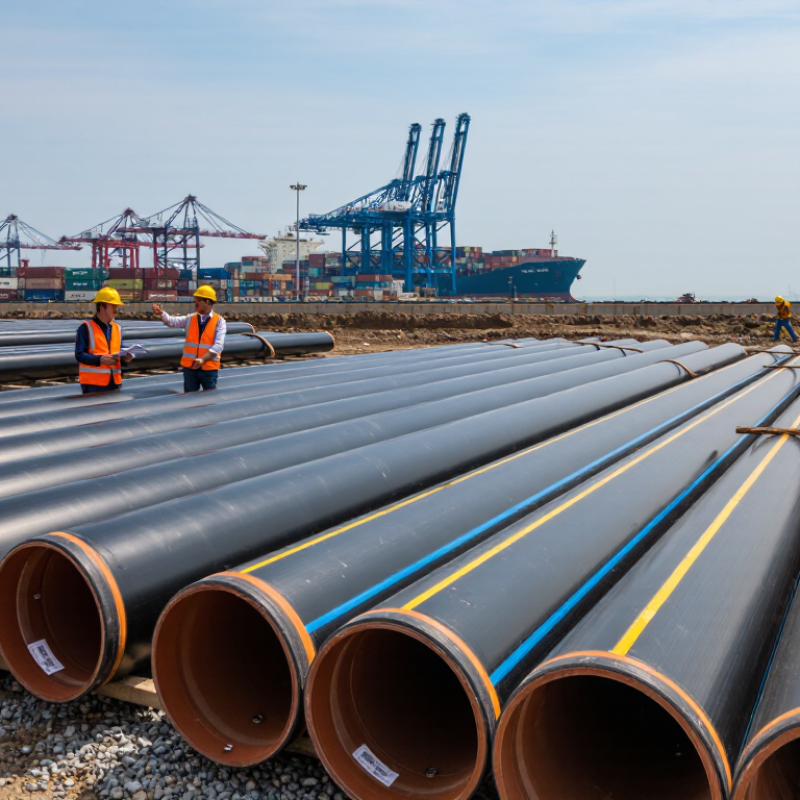
10 Tips for Buying PE Gas Pipes for Global Projects?

Define PE Gas Pipe Grades Using ISO 12162 MRS Classes: PE80 at 8 MPa, PE100 at 10 MPa

PE gas-pipe grades are tied to long-term strength, not simply to a higher number on the pipe. ISO 12162 classifies PE80 at an MRS of 8 MPa and PE100 at 10 MPa. MRS is a material classification value, not the pipe’s allowable operating pressure. ISO 9080 sets out the regression method used to assess long-term hydrostatic strength from pressure-test data. That distinction matters.

Key takeaway
PE grade alone does not determine a pipe’s pressure rating. Confirm the dimensions, design conditions, and applicable requirements.

For a global project, ask suppliers to document the resin grade and the pipe’s SDR, wall thickness, and intended gas service. Check the paperwork. A PE100 pipe does not automatically deliver the same pressure rating at every diameter: SDR, design coefficient, operating temperature, and the applicable installation rules all affect the design. Compare the stated rating against the project specification, rather than choosing by grade alone.

Project checks

  • Verify the specified SDR and delivered pipe dimensions.
  • Confirm the stated pressure rating against the project specification.
  • Check that certificates identify the tested material and pipe dimensions.

A small mismatch between the specified SDR and delivered pipe can create costly delays on site. I would also verify that certificates identify the tested material and pipe dimensions; paperwork can look complete while leaving those details unclear.

Sources: ISO 12162, Thermoplastics materials for pipes and fittings for pressure applications; ISO 9080, determination of long-term hydrostatic strength.

Match Pipe Dimensions to ISO 4437 SDR Ratings, Including SDR11 and SDR17

For global gas projects, pipe dimensions must match the required ISO 4437 SDR rating, not only the outside diameter. SDR means the outside diameter divided by wall thickness. An SDR11 pipe has a thicker wall than an SDR17 pipe with the same diameter. For example, a 110 mm pipe is approximately 10 mm thick at SDR11 and 6.5 mm at SDR17. Small errors matter.

Tip 1: Confirm the design pressure, gas type, temperature, and material grade before selecting dimensions. ISO 4437-2 identifies dimensional requirements for polyethylene gas pipes, but local codes may apply stricter limits. Industry guidance commonly associates SDR11 with higher pressure capacity than SDR17. Do not treat those values as universal ratings. The manufacturer’s pressure table and project code must control.

Tip 2: Check actual measurements at delivery. Record outside diameter, wall thickness, ovality, and batch markings. ISO 4437 tolerances support field verification, while fusion procedures require clean, aligned pipe ends. The International Gas Union reported global gas demand near 4.2 trillion cubic metres in 2023, showing why consistent infrastructure quality matters across regions. Yet a global statistic cannot replace a site calculation. A spreadsheet can still mislead.

Tip 3: Allow for installation conditions. Trench depth, soil movement, bending radius, and temperature can affect performance. SDR17 may reduce material use, but SDR11 can provide greater wall protection. Review the calculation with a qualified engineer, and keep inspection records from unloading through pressure testing.

Check Pressure Design: PE100 SDR11 Gives 1.0 MPa at a Design Coefficient of 2

For PE100 gas pipe, SDR11 does not mean a pressure rating by itself. The calculation uses material strength, pipe geometry, and the design coefficient. ISO 12162 classifies PE100 with a minimum required strength (MRS) of 10 MPa. Using the pressure relationship in the Plastics Pipe Institute’s Handbook of Polyethylene Pipe, 2 × MRS ÷ [coefficient × (SDR − 1)] gives 1.0 MPa when the coefficient is 2. That is the stated pressure design basis, not a universal field guarantee.

Check the project conditions before comparing suppliers. ISO 4437 covers polyethylene piping for gas supply, while temperature, service life, installation damage, and local design rules can affect allowable operating pressure. Ask for the pipe’s declared SDR, material classification, dimensional records, and test documentation. A clear certificate helps.

Small details matter. For example, a 110 mm outside-diameter SDR11 pipe has a nominal wall thickness near 10 mm. Verify dimensions against the applicable standard; nominal figures are not inspection results. I would also check whether the design coefficient is appropriate for the project, rather than copying “2” into every calculation. Easy to overlook. A spreadsheet can still mislead.

PE100 Pipe Pressure Design at Design Coefficient C = 2

Illustrative calculated values use the ISO-style relationship p = 2 × MRS ÷ [C × (SDR − 1)], with PE100 MRS = 10 MPa. At SDR 11, the result is 1.00 MPa. Actual allowable operating pressure depends on temperature, application, standards, and project requirements.

Verify Material, Dimensions, and Markings Against ISO 4437 and Local Codes

Treat every PE gas pipe shipment as a set of claims to verify, not just a delivery. The ISO 4437 series covers polyethylene piping systems for gaseous fuels, including material, pipe, and fitting requirements. Check the specified PE grade, outside diameter, wall thickness, and SDR against the project design and applicable part of the standard. A mismatch can hide in plain sight: a pipe may look correct while its wall thickness does not meet the required pressure rating. Measure sample lengths and diameters on arrival, and compare them with the purchase documents. Small checks matter.

Markings should be legible and durable. Confirm the manufacturer’s traceable production code, material designation, dimensions, SDR, and standard reference; then match these details to certificates and batch records. Local codes may require extra approvals, colors, or marking languages, so ISO compliance alone may not satisfy a project specification.

The International Gas Union’s 2024 World LNG Report recorded 401.4 million tonnes of LNG trade in 2023, reflecting the scale of international gas supply chains. That figure is not a pipe specification, but it underscores why procurement documents must travel clearly across borders.

Do not rely on a certificate alone. A practical gap remains: busy receiving teams can overlook faded print or inconsistent batch numbers. Record discrepancies before installation and request written clarification.

Assess Supplier Quality, Traceability, Testing, and Project Delivery Requirements

For global projects, a low quotation is not proof of a reliable PE gas pipe supply. Ask suppliers for current quality-system certificates, production records, and evidence that the offered resin and pipe dimensions match the project specification. The Plastics Pipe Institute’s Handbook of Polyethylene Pipe explains why material selection, joining procedures, and installation conditions affect system performance. Check those details, not just the certificate cover page. A missing batch record can become a costly delay.

Tip: Request traceability from resin lot to finished pipe. A practical document pack should identify the resin grade, manufacturing date, pipe dimensions, and test results. Confirm that sample certificates correspond to the actual production lot. Review relevant requirements, including ISO 4437, with the project engineer; standards and approvals can vary by destination and application.

Testing and delivery deserve equal attention. Ask for documented dimensional checks, hydrostatic pressure testing, and a clear inspection plan. PHMSA’s annual pipeline safety reporting tracks incidents and pipeline system information, underscoring why dependable records matter across the asset lifecycle. Agree on inspection hold points, packaging, coil or straight-length formats, shipping marks, and delivery milestones before production. Get realistic lead times in writing. They are sometimes optimistic. A staged shipment plan and named contacts for quality issues can help teams respond when ports, weather, or site readiness disrupt the schedule.

10 Tips for Buying PE Gas Pipes for Global Projects: Assess Supplier Quality, Traceability, Testing, and Project Delivery Requirements
# Procurement tip What to verify Practical acceptance check
1 Confirm the governing standard Identify the standard and edition accepted by the project jurisdiction. Common PE gas-piping references include ISO 4437 and EN 1555; ASTM D2513 is used in some markets. List the required standard, edition, product scope, and local regulatory approval in the purchase specification. Do not assume standards are interchangeable.
2 Match design and operating requirements Check specified material designation, outside diameter, wall thickness or SDR, pressure rating, service conditions, and applicable design factors. Have the design authority confirm that each offered pipe size and rating meets the approved design and local code requirements before order release.
3 Assess supplier quality controls Review the supplier’s documented quality-management processes, production controls, calibration records, nonconformance handling, and corrective-action process. Request current audit or certification evidence where required, plus a quality plan identifying inspection stages, responsibilities, and records supplied with the order.
4 Require material and batch traceability Check that pipe markings and records link product to production date, batch or lot, material designation, dimensions, and applicable conformity documentation. Request a sample traceability record and verify that a marked pipe can be linked to its inspection and material records throughout receiving and installation.
5 Review test evidence Confirm that required tests and inspections are defined by the governing standard and project specification, and that reports identify the tested product, method, results, and date. Agree before production whether inspection is routine, witness, or hold-point based; request test reports and conformity documents for the supplied lots.
6 Check dimensions and marking Verify dimensional tolerances, pipe length, end condition, and marking content against the applicable specification and order schedule. Include measurable inspection criteria and sampling arrangements in the inspection plan; check that markings remain legible after handling.
7 Confirm joining compatibility Ensure pipe, fittings, and joining procedures are compatible with one another and accepted under the project’s approved design and local rules. Obtain product data for the complete pipe-and-fitting system and confirm installer qualification, equipment, and fusion procedures before site work.
8 Plan storage and transport Review protection against contamination, impact, excessive bending, and prolonged exposure to conditions restricted by the product instructions or project specification. Specify end protection, loading and unloading methods, stacking limits, packaging, and receiving inspection responsibilities.
9 Validate delivery capacity Assess production capacity, confirmed lead times, shipment phasing, export documentation, customs requirements, and contingency arrangements for schedule changes. Request a dated delivery schedule tied to quantities and destination, with agreed progress updates and escalation contacts.
10 Define documentation and closeout Set out required certificates, inspection and test reports, packing lists, origin documents where applicable, installation records, and nonconformance records. Use a document register with submission deadlines and review status; make complete, accepted documentation a defined delivery milestone.
Note: Final requirements depend on the project design, local regulations, and the applicable standard edition. Confirm them with the project’s qualified engineering and regulatory authorities.
Hi! What is your idea today?
WORLDIA 8618618272087
Nina +86 15631662072
google-site-verification=0STkOZEvYuoDp-D40AVfMUk--CzM2AsZv24S6ISPdmk