
Choosing a reliable China supplier requires more than comparing prices and polished product photos. Dental Implant Screwdrivers support delicate procedures, where a mismatched tip can damage an implant connection or compromise torque control. This guide examines supplier capability, material quality, driver geometry, compatibility, sterilization performance, and production consistency.
Dr. Per-Ingvar Brånemark, widely regarded as a pioneer of modern implant dentistry, said, “If you have a patient, you have to treat a patient, not a case.” That principle also applies to instrument selection. A supplier should understand clinical handling, not only machining tolerances. Look for stainless steel or titanium options, clear size markings, stable hex or star interfaces, and documented torque recommendations. Ask whether each batch receives dimensional inspection, surface treatment checks, and functional testing.
Small details matter.
A dependable manufacturer should provide samples before large orders. Request material certificates, inspection records, packaging information, and sterilization guidance. Confirm whether the screwdriver fits your implant systems, handpiece connections, and restorative workflow. Some suppliers offer customized handles, laser marking, or private-label packaging. These services can help, but they should not replace technical verification.
No supplier guide is perfect. Product pages may omit failure rates, test methods, or real clinical feedback. That gap deserves attention. Buyers should compare evidence, communicate with engineers, and test instruments under controlled conditions. The lowest quotation may become expensive after poor fit, repeated replacement, or delayed delivery. A responsible China supplier combines manufacturing experience, transparent communication, traceable quality control, and practical support after purchase.
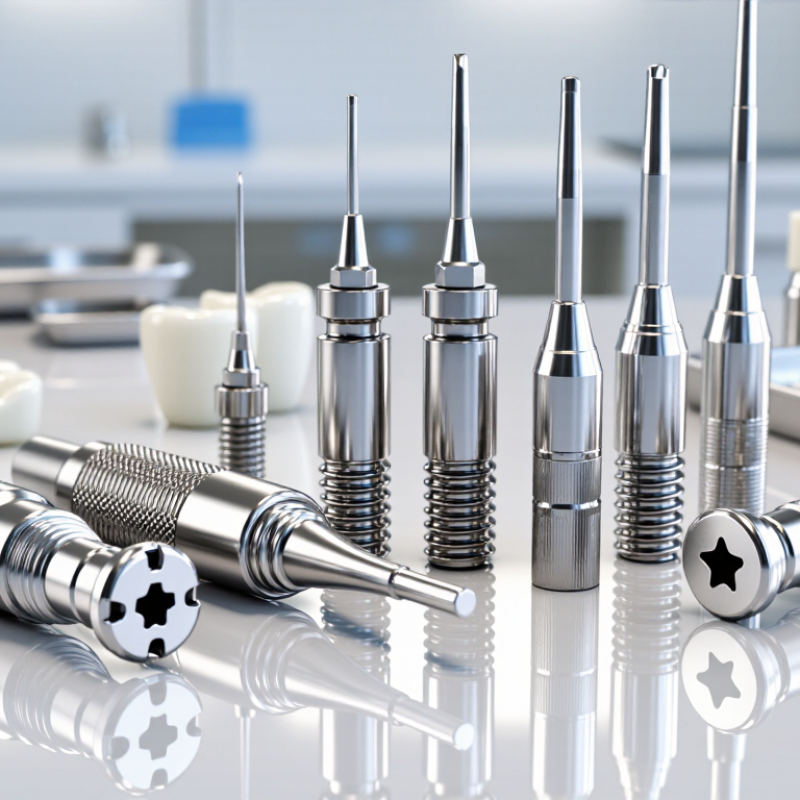
China Best Dental Implant Screwdrivers Supplier Guide?
Dental implant screwdrivers must match the implant interface exactly. Common options include internal hex, external hex, and Torx designs. Hex drivers are widely used and easy to identify. Torx tips can reduce rotational slipping during controlled tightening. However, similar-looking geometries are not interchangeable. A small mismatch may damage the screw head or reduce torque accuracy.
Manual drivers provide tactile feedback during seating and removal. They suit delicate adjustments and limited-access procedures. Machine drivers improve speed and repeatability, but require verified torque and speed limits. According to the World Health Organization’s Global Oral Health Status Report 2022, nearly 3.5 billion people live with oral diseases. This growing treatment need makes dependable instrument compatibility increasingly important. Clinical reviews often report five-year implant survival above 90%, but driver errors can still compromise the restoration.
Tips: Ask suppliers for interface drawings, material specifications, torque ranges, and sterilization instructions. Request samples before bulk purchasing. Check whether the driver fits both the implant connection and the clinician’s handpiece. A polished surface is not proof of durability. I have seen catalogue descriptions hide important details, especially working length and tip tolerance. Supplier documentation should be precise, though it is sometimes incomplete. Verify every measurement.
China Best Dental Implant Screwdrivers Supplier Guide?
Selecting an implant screwdriver starts with the connection, not the handle. A 1.0, 1.2, or 1.3 mm hex tip may look similar, but small differences can damage internal geometry. Torx profiles require the correct star pattern and engagement depth. They should not be treated as interchangeable with hex drivers. In practical fitting checks, the tip should enter smoothly, seat fully, and show no rocking under light finger pressure.
The WHO Global Oral Health Status Report 2022 estimates that nearly 3.5 billion people live with oral diseases. This scale increases the need for dependable clinical instruments and traceable manufacturing. A capable supplier should provide dimensional inspection records, material specifications, sterilization guidance, and ISO 13485-based quality evidence. Ask for calibrated measurements, not only catalogue drawings. Some suppliers list nominal sizes, while overlooking tolerance. That weakness matters.
Tips: Confirm the implant system’s exact interface before ordering. Check hex width, Torx designation, working length, and driver clearance. Request a sample for fit testing. Test several pieces, not just one. Look for rounded edges, poor seating, or excessive wobble. Do not rely on colour coding alone. It is convenient, but not proof. A written compatibility table can still contain mistakes, so compare it against the system’s current technical documentation.
When assessing a dental implant screwdriver supplier, start with the torque setting, not the catalog photograph. A stated range of 15–45 N·cm should match the instrument’s real performance. Ask for test records at 15, 30, and 45 N·cm. Measure it.
A reliable supplier should explain how torque is checked, which tester is used, and when calibration is renewed. A ±10% accuracy claim means a 30 N·cm setting may measure between 27 and 33 N·cm. That difference can affect clinical control, especially during final tightening.
Request readings from several samples, not one carefully selected unit. Check whether the result changes after repeated cycles. It often does.
Inspect the handle, scale markings, driver connection, and sterilization instructions in practical conditions. A clear scale is useful under bright operatory lights, while a loose connection creates uncertainty.
Supplier responses should include material information, batch identification, inspection procedures, and traceable documentation. Technical language alone is not proof.
I would also test a small sample before placing a larger order. One weakness remains easy to miss: torque may be accurate in the middle of the range but unstable near 15 N·cm. That deserves direct verification.
Ask difficult questions. Good suppliers should answer with measurements, not promises.
A reliable dental implant screwdriver supplier should make sterilization readiness easy to verify. The key document is not a sales sheet. It is a clear ISO 17664-1 processing instruction.
The instruction should describe disassembly, pre-cleaning, manual or automated cleaning, rinsing, drying, inspection, packaging, and storage. It should identify compatible materials and any parts requiring replacement. A clean-looking screwdriver is not proof of safety. Look closely at the driver tip, shaft, joints, and internal surfaces. Small debris can remain where visibility is poor.
A 134°C steam cycle must never be treated as a universal setting. The supplier should state the validated exposure time, pressure, drying phase, and maximum load conditions. The cycle must match the instrument’s design and the sterilizer’s approved program. Keep batch records with date, cycle number, operator, and chemical or biological monitoring results. Traceability matters during an audit.
In practice, teams often focus on sterilization and overlook drying. That is a weakness. Moisture may affect packaging integrity and storage conditions. We once found instructions that mentioned 134°C but omitted drying requirements. The document looked professional, yet it was incomplete. Ask for revision control, validation evidence, and readable instructions before approving the screwdriver for repeated clinical use.
| Audit Area | Verification Dimension | Required Evidence or Technical Data | Reference Acceptance Point | Status | Audit Risk if Missing |
|---|---|---|---|---|---|
| Documentation | Reusable-device processing instructions | Current manufacturer instructions covering point-of-use treatment, cleaning, inspection, packaging, sterilization, drying, storage, and transport. | Instructions are supplied for the exact screwdriver model, materials, and configuration. | Ready when verified | Incorrect processing parameters or incomplete reprocessing. |
| Documentation | ISO 17664-1 alignment | Instructions identify the device as reusable where applicable and provide validated or justified processing steps consistent with ISO 17664-1 principles. | Each processing step has defined equipment, chemicals, time, temperature, concentration, and limitations where relevant. | Review required | Instructions may not be sufficiently reproducible for clinical use. |
| Device Identification | Traceability of screwdriver components | Model number, size, drive interface, lot or batch reference, and material information for the shaft, handle, and detachable parts. | Identification remains legible after cleaning and sterilization and matches the supplied instructions. | Ready when verified | Wrong cycle or incompatible component may be selected. |
| Design | Cleanability of geometry | Assessment of knurling, recesses, joints, retaining features, internal channels, and any areas that can trap bioburden. | All surfaces can be reached by the specified manual or automated cleaning method. | Inspect closely | Residual soil can shield microorganisms during sterilization. |
| Cleaning | Point-of-use treatment | Defined maximum delay before cleaning, moisture-control method, and instructions for preventing blood or tissue from drying on the instrument. | Procedure is practical for the intended dental workflow and does not conflict with the cleaning agent instructions. | Confirm in IFU | Dried soil is more difficult to remove and may compromise sterilization. |
| Cleaning | Manual cleaning parameters | Brush type and size, water quality, detergent identity or required characteristics, concentration, temperature, contact time, rinsing, and drying method. | All parameters are measurable and operators can reproduce them consistently. | Confirm in IFU | Uncontrolled cleaning results may leave visible or microscopic residue. |
| Cleaning | Ultrasonic or washer-disinfector compatibility | Clear statement on whether ultrasonic cleaning or automated washing is permitted, including loading position and cycle limitations. | Only validated or manufacturer-authorized equipment and settings are used. | Equipment-specific | Unsupported vibration, chemicals, or loading may damage the tool. |
| Inspection | Post-cleaning visual and functional inspection | Inspection criteria for soil, corrosion, cracks, deformation, worn drive geometry, loose components, and impaired engagement with the implant screw. | Defective or contaminated instruments are removed from service before packaging. | Required | Mechanical failure, poor torque transfer, or contamination may occur. |
| Packaging | Steam-sterilization packaging compatibility | Validated or compatible sterilization pouch, wrap, or container; correct size; adequate seal; and protection against puncture or excessive loading. | Packaging permits steam penetration and maintains sterility until point of use. | Required | Wet, damaged, or improperly sealed packs may not maintain sterility. |
| Sterilization | 134°C pre-vacuum steam cycle | Cycle record showing exposure at 134°C with the exposure time specified by the applicable device instructions and sterilizer validation. | Common reference cycles may use approximately 3–5 minutes at 134°C, but the device-specific IFU and sterilizer cycle must control. | Do not assume | Temperature alone does not prove adequate sterilization. |
| Sterilization | Steam penetration and air removal | Use of a suitable pre-vacuum cycle when required, with sterilizer monitoring and routine performance testing according to local procedures. | Cycle achieves the required temperature, pressure, exposure time, and drying phase without alarms. | Required | Trapped air can prevent steam contact with instrument surfaces. |
| Sterilization | Load configuration | Defined placement of screwdrivers, separation of dissimilar metals where necessary, avoidance of overloading, and correct orientation of hinged or hollow parts. | Steam can contact all exposed surfaces and packages are not compressed or stacked improperly. | Verify by load type | Restricted steam flow or wet packs can compromise the process. |
| Materials | Repeated 134°C exposure resistance | Material and coating information for stainless steel, engineering polymers, elastomers, adhesives, markings, and any surface treatment. | No unacceptable corrosion, discoloration, embrittlement, loss of markings, or dimensional change after the stated reprocessing exposure. | Evidence required | Premature wear or loss of identification may result. |
| Performance | Drive-interface integrity | Post-cycle inspection of the driver tip, connection interface, retention feature, and fit with the intended implant screw head. | No visible deformation, excessive play, rounding, or retention failure after repeated processing. | Required | Inadequate engagement can cause stripping or instrument breakage. |
| Performance | Torque-control statement | Clear distinction between a manual screwdriver and a torque-controlled driver; compatible torque limits or calibration requirements where applicable. | Users are not instructed to apply torque values beyond the instrument or implant-system limits. | Must be explicit | Over-torquing may damage the driver, screw, or implant connection. |
| Drying and Storage | Dryness and pack integrity | Drying-stage requirements, cooling period, storage conditions, and checks for wet packs, tears, punctures, or broken seals. | Only dry, intact, correctly labeled packs are released for storage or use. | Required | Moisture and packaging damage can undermine sterility maintenance. |
| Validation | Reprocessing-life or reuse limitation | Defined maximum number of processing cycles or objective replacement criteria based on wear, damage, corrosion, or performance. | Replacement criteria are documented and can be applied during routine inspection. | Request evidence | Repeated processing may reduce mechanical reliability. |
| Quality Records | Batch and sterilizer traceability | Records linking device or tray identification to cleaning, packaging, sterilizer cycle, operator, date, and release decision. | Records are retained according to the facility’s quality system and applicable local requirements. | Required | Recalls, investigations, and process verification become difficult. |
| Supplier Audit | Change-control notification | Procedure for notifying customers of changes to materials, coatings, dimensions, manufacturing process, packaging, or processing instructions. | Changes trigger documented review of cleanability, sterilization compatibility, and performance. | Request procedure | Previously accepted reprocessing evidence may no longer apply. |
Choosing a China dental implant screwdriver supplier requires more than comparing prices. A practical ranking should begin with ISO 13485:2016 certification, covering design controls, production records, corrective actions, and supplier management. Ask for the current certificate, issuing body, scope, and expiry date. A certificate with the wrong product scope creates uncertainty.
ISO 2859-1 inspection procedures add another useful layer. Strong suppliers define sampling levels, acceptance criteria, torque checks, surface inspections, and calibration records. During audits, request recent inspection reports and sample identification. Do not accept vague claims. Small details matter. A clean batch file is reassuring.
MOQ can separate suitable suppliers from expensive commitments. Rank flexible suppliers higher when they support pilot orders, mixed models, and controlled customization. However, a low MOQ may hide limited production capacity or inconsistent materials. Review traceability from raw stainless-steel lot to finished screwdriver, packaging label, operator, and shipment record. Serial or batch coding should remain readable after handling. I have seen paperwork look complete while one inspection record lacked a clear link to the production lot. That weakness deserves attention, not excuses.
A useful ranking model places ISO 13485 evidence first, ISO 2859-1 discipline second, and traceability third. MOQ and lead-time reliability then refine the result. Request samples before signing a long-term agreement. Measure fit, grip, torque response, and repeated-use wear under documented conditions. Supplier claims are helpful, but verified records are stronger. No system is flawless. Good sourcing leaves room for questions.
Objective qualification criteria based on ISO 13485:2016, ISO 2859-1, MOQ disclosure, and product traceability
The chart distinguishes criteria governed by recognized standards from criteria that must be verified through supplier documentation. ISO 13485:2016 addresses quality management systems for medical devices, while ISO 2859-1 provides acceptance-sampling procedures based on lot size and inspection levels. MOQ and traceability requirements are commercial or product-specific and should be confirmed using quotations, batch records, inspection reports, and certificates.
