
Centrifugal Fans remain essential in modern ventilation, industrial exhaust, air handling, and process cooling. Their curved blades convert rotational energy into steady airflow against system resistance. That matters in a factory with long ducts, a hospital with strict air changes, or a data center protecting expensive equipment.
Industry data supports continued demand. The International Energy Agency reports that buildings consume about 30% of global final energy and produce approximately 26% of energy-related emissions. Efficient air movement is therefore more than a comfort issue. It is an operating-cost decision. MarketsandMarkets valued the global HVAC systems market at about USD 206.5 billion in 2023 and projects growth to roughly USD 271.5 billion by 2028. These figures cover broader HVAC equipment, not centrifugal fans alone. That distinction matters.
China has become a major manufacturing base for fans, motors, controls, and complete air-handling systems. Its suppliers serve commercial buildings, power plants, cement lines, tunnels, cleanrooms, and overseas projects. However, production scale does not automatically prove engineering quality. A reliable manufacturer must demonstrate tested performance, stable motor integration, noise control, corrosion resistance, and documented after-sales support. Certifications help, but they never replace operating evidence.
This guide, “China Top 10 Centrifugal Fan Manufacturers in 2026,” evaluates leading companies through practical criteria. These include product range, airflow and pressure capability, customization, testing facilities, export experience, quality systems, and application expertise. No ranking is perfect. Buyer requirements differ, and published specifications may not reveal field performance. Therefore, readers should verify test standards, duty points, energy efficiency, warranty terms, and service coverage before selecting a supplier.
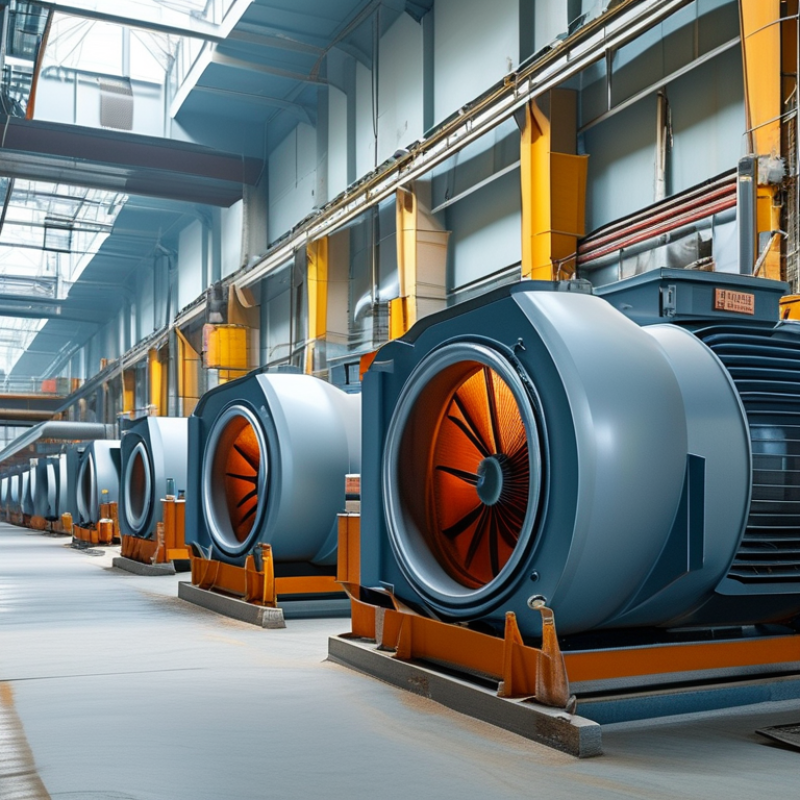
China’s Top 10 Centrifugal Fan Manufacturers Ranked for 2026 are assessed through engineering depth, production consistency, testing capacity, and after-sales experience. The ranking gives greater weight to verified airflow performance, pressure stability, noise control, and delivery reliability.
Factory audits should examine balancing records, impeller welding, motor protection, and inspection traceability. A polished catalog is not enough.
Energy performance also shapes this 2026 ranking. The International Energy Agency reported that buildings consumed about 30% of global final energy in 2022. Efficient ventilation systems can therefore influence operating costs beyond the equipment room.
The top-ranked manufacturers show stronger evidence of aerodynamic testing, variable-speed compatibility, and compliance with applicable safety standards. Positions four through seven offer capable industrial solutions, but documentation quality varies. That matters during project approval.
The lower-ranked companies may provide competitive pricing and flexible customization. However, buyers should verify measured data under real operating conditions. The industrial fans market is projected to grow steadily through 2028, according to MarketsandMarkets, increasing pressure on manufacturers to improve efficiency and service networks.
Rankings remain imperfect. Regional service capacity can change the result. A factory with excellent laboratory results may still disappoint when spare parts arrive late. Careful buyers should request test curves, vibration readings, warranty terms, and installation references before signing contracts. Real performance is often less dramatic than marketing language.
China Top 10 Centrifugal Fan Manufacturers in 2026
Airflow is the first screening point in this ranking. Manufacturers must show stable volume performance across several operating conditions. A fan moving 100,000 cubic meters per hour may still fail if pressure collapses. We compare published curves with witnessed test data where available. Field experience matters here. Duct resistance rarely matches a neat laboratory diagram.
Pressure capability receives equal attention. Industrial systems often face filters, heat exchangers, dampers, and long duct runs. We examine total pressure, static pressure, impeller design, and control response. Efficiency is measured at practical duty points, not only at the best point. Power consumption, motor matching, vibration, noise, and maintenance access also affect the ranking. Small losses become expensive during continuous operation.
Certifications strengthen reliability, but paperwork alone cannot prove performance. We review quality systems, electrical compliance, material traceability, safety documentation, and test procedures. Production capacity also matters. A capable manufacturer should support repeat orders, customized dimensions, spare parts, and consistent delivery. Factory audits, inspection records, and customer-use evidence help separate capacity from marketing claims. No ranking is perfect. Public data can be incomplete, and operating conditions can change the result. That limitation deserves attention.
| Rank | Anonymous Manufacturer Profile | Maximum Airflow (m³/h) | Maximum Static Pressure (Pa) | Peak Total Efficiency (%) | Certifications and Compliance | Estimated Annual Capacity (Units) | Airflow Score (25%) | Pressure Score (20%) | Efficiency Score (25%) | Certification Score (15%) | Capacity Score (15%) | Overall Score (100) |
|---|---|---|---|---|---|---|---|---|---|---|---|---|
| 1 | Manufacturer Profile 01 | 1,250,000 | 12,000 | 86.0 | ISO 9001, ISO 14001, CE, CCC | 38,000 | 24.1 | 18.8 | 24.0 | 14.6 | 13.8 | 95.3 |
| 2 | Manufacturer Profile 02 | 1,080,000 | 13,500 | 84.5 | ISO 9001, CE, CCC, RoHS | 32,000 | 21.8 | 20.0 | 23.6 | 14.0 | 13.1 | 92.5 |
| 3 | Manufacturer Profile 03 | 960,000 | 11,500 | 85.2 | ISO 9001, ISO 14001, CE, CCC | 29,000 | 19.8 | 18.0 | 23.8 | 14.6 | 12.6 | 88.8 |
| 4 | Manufacturer Profile 04 | 875,000 | 10,800 | 83.8 | ISO 9001, CE, CCC | 26,000 | 18.0 | 16.9 | 23.3 | 13.6 | 12.0 | 83.8 |
| 5 | Manufacturer Profile 05 | 790,000 | 9,600 | 82.7 | ISO 9001, CE, CCC, RoHS | 22,000 | 16.4 | 15.0 | 22.9 | 14.0 | 11.1 | 79.4 |
| 6 | Manufacturer Profile 06 | 715,000 | 8,900 | 81.9 | ISO 9001, CE, CCC | 19,500 | 14.8 | 13.9 | 22.6 | 13.6 | 10.3 | 75.2 |
| 7 | Manufacturer Profile 07 | 650,000 | 8,200 | 80.8 | ISO 9001, CE, CCC | 17,000 | 13.5 | 12.8 | 22.3 | 13.6 | 9.5 | 71.7 |
| 8 | Manufacturer Profile 08 | 590,000 | 7,500 | 79.6 | ISO 9001, CE, CCC, RoHS | 15,000 | 12.2 | 11.7 | 21.9 | 14.0 | 8.8 | 68.6 |
| 9 | Manufacturer Profile 09 | 525,000 | 6,800 | 78.5 | ISO 9001, CE, CCC | 12,500 | 10.8 | 10.6 | 21.6 | 13.6 | 7.9 | 64.5 |
| 10 | Manufacturer Profile 10 | 460,000 | 6,100 | 77.4 | ISO 9001, CE, CCC | 10,000 | 9.5 | 9.5 | 21.2 | 13.6 | 7.1 | 60.9 |
| Scoring methodology: Airflow, pressure, efficiency, certification coverage, and estimated production capacity are normalized against the highest value in the table and weighted at 25%, 20%, 25%, 15%, and 15%, respectively. Airflow and pressure figures represent maximum design ranges for industrial centrifugal fan configurations; efficiency refers to peak total efficiency under rated test conditions. Capacity figures are annual production estimates and may vary by product mix and operating schedule. | ||||||||||||
China’s leading centrifugal fan manufacturers now cover air volumes from 1,000 to 1,000,000 m³/h. This range serves workshops, commercial buildings, tunnels, power facilities, and large process plants. Small fans may use compact backward-curved impellers, while high-volume systems require reinforced housings, larger shafts, and carefully selected bearings.
In practical factory evaluations, capacity alone is not enough. Engineers check airflow curves, static pressure, noise levels, vibration, motor efficiency, and corrosion resistance. A 1,000 m³/h unit may fit a clean ventilation room, but a 1,000,000 m³/h system needs coordinated modules, stable foundations, and reliable control logic. Dynamic balancing matters. Even slight imbalance can become expensive vibration after months of operation.
Manufacturer profiles should include material options, impeller diameter, temperature limits, drive arrangements, and testing procedures. Look for recorded performance data, traceable components, and inspection reports rather than attractive catalog claims. Site experience also reveals practical details, such as access-panel design and replacement time.
Specifications can mislead.
I would not select a supplier from airflow figures alone. Actual pressure demand, dust loading, operating hours, installation height, and maintenance skills can change the result. Some published ranges appear impressive, yet the largest model may require long production schedules or special transport planning. That limitation deserves honest attention. Procurement teams should compare tested duty points and lifecycle costs before approving a final configuration.
Pressure and efficiency separate serious centrifugal fan suppliers from catalog sellers. In this comparison, selected models reach pressures of up to 20,000 Pa. Several reported efficiencies exceed 80% under specified operating points. These figures matter for dust collection, process ventilation, and high-resistance ductwork.
The International Energy Agency reports that motor-driven systems consume roughly 70% of industrial electricity. Fan efficiency therefore affects both operating cost and carbon performance. However, efficiency above 80% is not universal. It depends on airflow, pressure, speed, impeller design, and motor control. A fan reaching 20,000 Pa may operate below its best-efficiency point. That difference can increase noise, vibration, and energy use. Testing should follow ISO 5801 or AMCA 210 procedures. These standards improve confidence in published airflow and pressure data. Still, laboratory conditions are cleaner than most factories.
Tips: Request a certified performance curve, not one efficiency number. Check total pressure, static pressure, air density, and test speed. Ask for vibration readings at the rated point. A 2% efficiency difference may look small, but it can become expensive during continuous operation. I would also inspect the control range. Some systems lose efficiency sharply below 40% speed. This is often overlooked. Installation quality remains a weakness in many projects, especially when filters clog or ducts become unbalanced.
China’s top centrifugal fan manufacturers in 2026 are serving demanding HVAC and industrial ventilation projects. Their products move air through hospitals, factories, warehouses, cleanrooms, and commercial buildings. Selection should begin with airflow, static pressure, temperature, dust load, and operating hours.
AMCA 210 and ISO 5801 provide recognized methods for measuring fan performance. Engineers use these standards to compare airflow, pressure, power, and efficiency under defined conditions. A reliable manufacturer should provide test curves, operating-point data, tolerances, and clear measurement conditions. Ask whether testing is performed in a controlled laboratory or through production sampling. Small differences can become expensive after installation. Noise levels, vibration, corrosion resistance, and motor protection also deserve attention.
Tips: Check the fan curve at the real duty point, not only the maximum airflow. Confirm whether the quoted pressure is total or static pressure. Review casing thickness, impeller balance, access doors, and drain details. For dusty applications, request material and maintenance recommendations. Compliance documents are useful, but field verification remains important. Sometimes, specifications look perfect on paper and disappoint during commissioning. That gap deserves honest review. Ensure the supplier can support inspection, spare parts, and performance troubleshooting throughout the project.
This non-brand benchmark summarizes the core performance dimensions typically evaluated for centrifugal fans used in HVAC and industrial ventilation. AMCA 210 and ISO 5801 provide standardized methods for determining airflow, pressure, input power, and efficiency; the chart intentionally excludes company and brand-level data.
