
China’s custom titanium plate market combines large-scale production with highly specialized processing. China remains a major participant in the global titanium supply chain, according to the U.S. Geological Survey’s Mineral Commodity Summaries 2024. The report tracks titanium mineral concentrates as an important industrial feedstock. The International Titanium Association also identifies aerospace, chemical processing, and medical equipment as major titanium applications.
Quality is not measured by volume alone. A dependable Custom Titanium Plate manufacturer should demonstrate control over Grade 2, Grade 5, and other titanium alloys. Buyers should examine ASTM B265, AMS 4911, and GB/T 3621 compliance. Traceable mill certificates matter. So do ultrasonic testing, chemical analysis, surface inspection, and dimensional records. A plate that looks clean under warehouse lighting may still fail flatness or thickness requirements.
Matthew J. Donachie, a recognized titanium materials author and engineer, wrote, “Titanium is a relatively new engineering material.” That reminder remains useful when comparing Chinese suppliers. Titanium demands process knowledge, not only modern equipment. This guide reviews China’s top ten Custom Titanium Plate manufacturers through manufacturing experience, certifications, export capability, customization range, and delivery consistency. It also considers practical details, including edge condition, cut size, protective packaging, and response time.
No ranking is perfectly objective. Supplier performance can change with alloy, thickness, and order size. A manufacturer excellent for aerospace-grade plate may not suit a small chemical-processing project. Readers should verify current certificates, sample quality, and inspection records before signing contracts. Small details often decide the result.
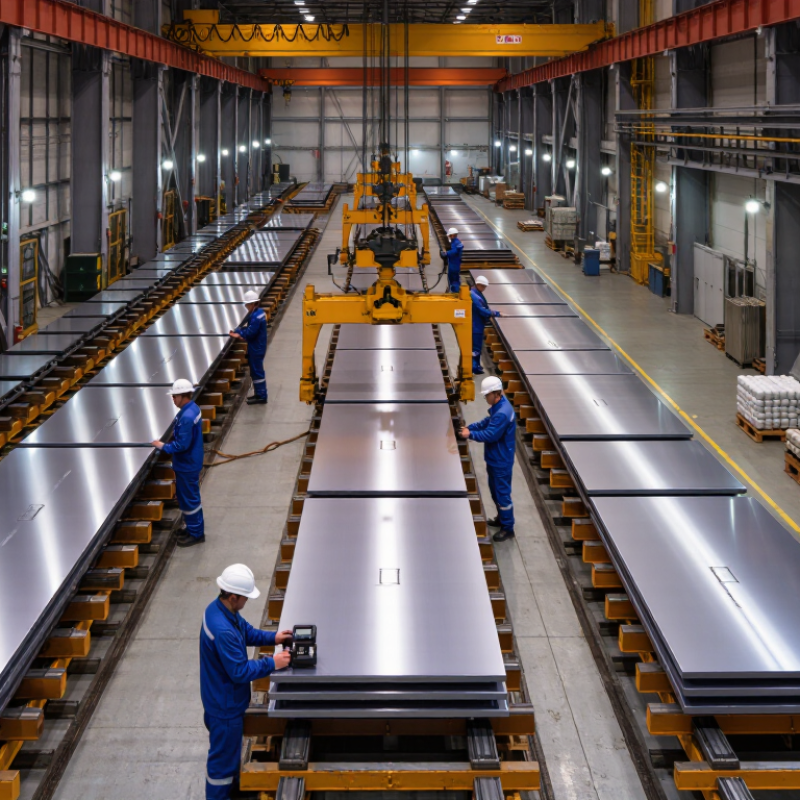
A leading custom titanium plate manufacturer combines material control, process experience, and verifiable documentation.
The USGS Mineral Commodity Summaries 2025 estimates China produced about 210,000 metric tons of titanium sponge in 2024. This indicates strong upstream capacity, but sponge output alone proves little about finished plate quality.
Serious manufacturers control melting, forging, rolling, annealing, and surface treatment in documented stages.
For custom orders, engineers should confirm grade, chemistry, thickness tolerance, flatness, grain direction, and required mechanical properties.
ASTM B265 remains a practical reference for titanium and titanium-alloy plate. Independent ultrasonic testing can reveal internal flaws that visual inspection misses.
It matters.
A reliable supplier should provide heat numbers, mill test certificates, chemical analysis, tensile results, and inspection records. ISO 9001 certification supports process discipline, but it is not a substitute for product evidence.
The International Titanium Association has repeatedly highlighted aerospace demand for traceability and consistent performance, especially where titanium reduces weight and resists corrosion.
In practice, I would request a small trial plate before approving large production.
Check edge quality, surface marks, dimensional stability, and weld behavior.
One uncomfortable truth remains: attractive certificates can hide weak sampling methods. Buyers should audit testing frequency and retain samples when possible. China’s manufacturing depth is valuable, yet each custom project still needs independent verification, clear tolerances, and realistic delivery commitments.
China’s Top 10 Custom Titanium Plate Manufacturers should be judged by evidence, not promotional language. China remains a major titanium producer. The USGS Mineral Commodity Summaries 2024 estimated China’s 2023 sponge titanium output at about 210,000 metric tons. That industrial depth supports broad plate production, from Grade 2 sheets for chemical equipment to Grade 5 plates for aerospace components.
A credible top-ten shortlist should show mill certificates, chemical analysis, ultrasonic testing, and traceable heat numbers. Plate thickness, width, flatness, surface finish, and tolerance must match the drawing. Experienced buyers also check cutting accuracy. A rough edge can create expensive rework.
Look for ISO 9001 systems and testing aligned with ASTM B265 or equivalent standards. Custom orders need more than capacity. They need stable rolling schedules and responsive engineering support. A supplier that explains grain structure, annealing, and pickling gives stronger technical confidence. The World Steel Association and related materials reports repeatedly highlight energy and quality pressures across advanced manufacturing. Titanium is not simple to process.
A ranking can still mislead. Some factories publish impressive equipment lists but provide weak inspection records. Request recent samples. Inspect the actual plate. Small details matter, especially around welded assemblies and pressure service. The strongest manufacturers combine process control, honest lead-time estimates, and documentation that survives an audit.
This chart compares representative minimum tensile-strength values for ten commonly specified titanium plate grades used in custom fabrication. The figures are based on typical ASTM/ASME material requirements and may vary according to product form, heat treatment, thickness, and applicable specification. The chart presents material benchmarks rather than company or brand rankings.
When comparing China’s top ten custom titanium plate manufacturers, buyers should examine grade control, size accuracy, and fabrication depth. Grade 1 offers excellent ductility and corrosion resistance for lighter-duty applications. Grade 2 provides higher strength and remains common in chemical and marine equipment. Grade 5, or Ti-6Al-4V, suits demanding structures where strength-to-weight ratio matters. Grade 7 and Grade 12 can serve specialized corrosion environments. Confirm the applicable standard before requesting a quotation. ASTM, ISO, and project specifications may require different testing. Do not select a grade from price alone. That shortcut causes trouble.
Custom dimensions may include thin sheets, heavy plates, or large-format sections. Manufacturers should support laser cutting, waterjet cutting, CNC machining, bending, drilling, and weld preparation. Titanium requires clean tooling and controlled heat input. Argon shielding helps protect heated surfaces from contamination. Ask about flatness, thickness tolerance, edge condition, and surface finish. These details affect assembly accuracy. Request mill test certificates, chemical analysis, mechanical results, and ultrasonic inspection when the application demands it. A polished surface proves little by itself. The specification may still be incomplete. No checklist is perfect, and one missed tolerance can create expensive rework. Experienced suppliers should review drawings carefully, identify unclear dimensions, and suggest practical fabrication limits before production begins.
Selecting China’s top 10 custom titanium plate manufacturers requires more than comparing prices. Quality begins with controlled melting, forging, rolling, heat treatment, and finishing. ASTM B265 defines requirements for titanium and titanium alloy sheet, strip, and plate, including chemical composition and mechanical performance. Buyers should request mill test certificates, heat numbers, tensile results, elongation data, and ultrasonic inspection records.
The USGS Mineral Commodity Summaries 2024 estimated global titanium sponge production at approximately 280,000 metric tons in 2023. That scale increases the importance of traceability. ISO 9001 certification shows documented quality management, while aerospace projects may require AS9100 and independent special-process accreditation. Still, a certificate alone is not proof of stable production. Inspectors should compare actual plate dimensions, surface condition, flatness, and edge quality against the purchase specification.
Small details matter.
Experienced manufacturers can explain vacuum melting controls, alloy segregation risks, and thickness tolerances without relying on vague claims. They should also provide sample reports from third-party laboratories and maintain records from raw material receipt through final packing. The ISO 10012 measurement-management standard is useful when dimensional accuracy is critical. In practice, some suppliers present excellent documentation but inconsistent flatness between batches. That weakness deserves attention. A factory audit, witnessed inspection, and trial order can reveal more than a polished website.
| No. | Evaluation Area | Applicable Standard or Certification | Quality and Production Expectation | Documents or Capability Evidence to Request |
|---|---|---|---|---|
| 1 | Titanium Plate Specification | ASTM B265 AMS 4911 | The supplier should manufacture titanium sheet and plate within the agreed grade, thickness, width, length, and dimensional tolerances. Common grades include commercially pure titanium and Ti-6Al-4V. | Material specification, dimensional inspection report, heat number traceability, and sample certificate of analysis. |
| 2 | Quality Management System | ISO 9001:2015 | A documented quality-management system should control purchasing, production, inspection, nonconforming products, corrective actions, and customer complaints. | Valid certificate issued by an accredited certification body, certificate scope, audit status, and quality manual extract where permitted. |
| 3 | Aerospace Manufacturing Readiness | AS9100D NADCAP | Aerospace-oriented production should include stronger configuration control, risk management, special-process control, counterfeit-part prevention, and detailed product traceability. | AS9100 certificate, applicable NADCAP accreditation, approved-process list, and aerospace customer quality records with confidential information removed. |
| 4 | Medical-Device Supply Capability | ISO 13485:2016 ASTM F67 | Medical applications require controlled material sourcing, contamination prevention, documented process validation, and titanium grades suitable for the intended biological application. | ISO 13485 certificate where applicable, material compliance statement, cleanliness controls, and complete lot traceability documentation. |
| 5 | Chemical Composition Control | ASTM E2371 ASTM B265 | Chemical analysis should verify elements such as titanium, aluminum, vanadium, iron, oxygen, nitrogen, hydrogen, and carbon against the specified grade limits. | Heat-level chemical analysis, optical-emission or equivalent laboratory report, and cross-reference between the heat number and finished plate. |
| 6 | Mechanical Property Verification | ASTM E8/E8M ASTM B265 | Tensile strength, yield strength, and elongation should meet the requirements of the ordered titanium grade, product form, and delivery condition. | Heat-treatment condition, test temperature, specimen orientation, test location, tensile test results, and laboratory calibration records. |
| 7 | Microstructure and Hardness | ASTM E112 ASTM E384 | Metallographic examination and hardness testing should confirm that rolling and heat-treatment practices have produced a structure suitable for the specified application. | Microstructure photographs, hardness values, test method, sampling location, and heat-treatment records. |
| 8 | Non-Destructive Testing | ASTM E1417/E1417M ASTM E1444/E1444M | Depending on the application, plates may require ultrasonic, liquid-penetrant, or magnetic-particle inspection to detect internal or surface discontinuities. The selected method must be compatible with titanium. | NDT procedure, acceptance criteria, operator qualification, equipment calibration, inspection map, and final NDT report. |
| 9 | Surface and Dimensional Finishing | ASTM B265 ISO 2768 | Custom production should control flatness, thickness, edge condition, surface roughness, oxide removal, pickling, polishing, cutting, and burr removal according to the purchase specification. | Inspection plan, calibrated measuring equipment list, surface-finish sample, flatness report, and first-article inspection record. |
| 10 | Traceability and Export Documentation | EN 10204 3.1 ISO 14001 | Each shipment should be linked to its heat, processing history, inspection results, packing records, and applicable environmental or export documentation. | EN 10204 3.1 inspection certificate, packing list, certificate of origin where required, production traceability record, and environmental-management certificate if claimed. |
Selecting the right Chinese titanium plate manufacturer requires more than comparing quoted prices. Start with the material grade, thickness range, plate size, and required standard. Common grades, such as Grade 2 and Grade 5, behave differently during forming and welding. Ask for recent mill test certificates, chemical analysis, mechanical results, and heat numbers linked to each plate.
A reliable supplier should explain its melting, rolling, annealing, surface treatment, and inspection processes clearly. Check whether thickness tolerance is measured across several points, not only at the edge. For critical applications, request ultrasonic testing, surface inspection, and independent laboratory verification. Production photos can help, but they are not proof. Traceability matters more.
Review the manufacturer’s export experience, quality system, and response time. A remote factory audit may examine furnaces, rolling equipment, storage areas, and calibration records. Ask for a small sample before approving a large order. The sample should match the final specification, packaging, and marking method. No supplier is flawless. Even a polished certificate can contain an unclear test scope or outdated standard. I would also confirm production capacity during peak seasons, because promised delivery dates sometimes change. Written agreements should define inspection rights, tolerance limits, packaging protection, and procedures for handling nonconforming plates. A careful selection process takes longer, but it reduces expensive surprises.
