
China’s Tank Container industry serves chemical, food-grade, and other liquid transport needs through a wide range of manufacturers and suppliers. Choosing a Tank Container is not simply a matter of comparing prices or exterior finishes. Buyers need to assess the tank’s intended cargo, capacity, material, pressure rating, insulation, heating options, and valve configuration. Details matter. A mismatch between the tank design and operating conditions can create costly delays, even when the product looks well made.
This guide introduces key Chinese manufacturers and suppliers and outlines practical points for comparing them. Look for clear technical specifications, traceable quality records, inspection documentation, and responsive after-sales support. Ask how the supplier handles fabrication checks, leak testing, spare parts, and customization requests. Ask for evidence. A polished brochure is not enough, and a low quotation may leave important service details unclear. Where possible, review sample documents and discuss requirements directly with the engineering or sales team. Supplier capabilities vary, so claims should be checked against the specific model and order. Even a careful shortlist can miss a meaningful difference in support or documentation. That deserves a second look. By examining product details alongside communication and service, buyers can make a more informed comparison and identify a supplier suited to their actual transport needs.
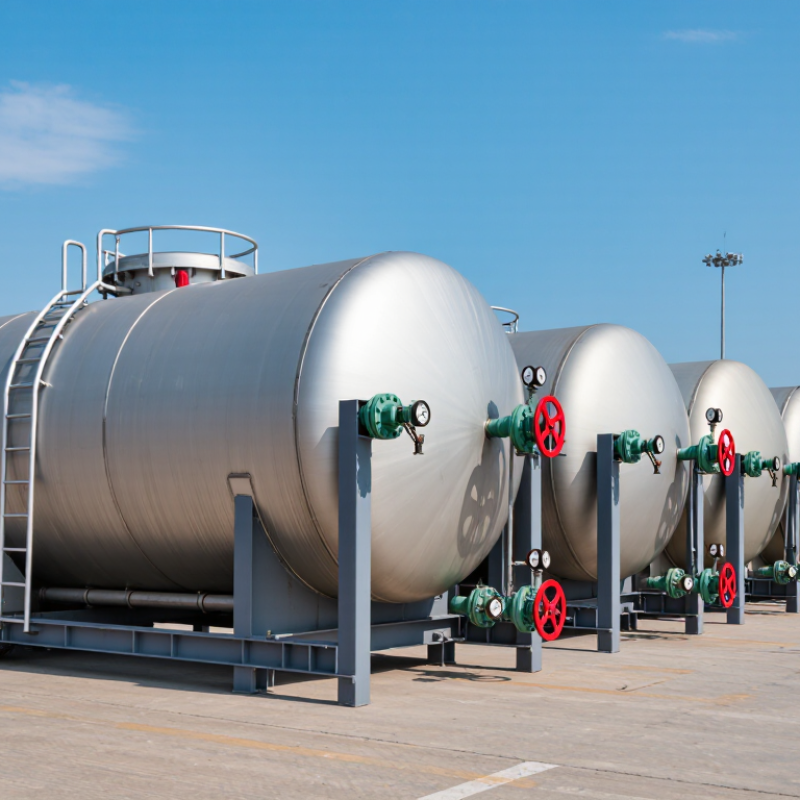
An ISO tank container places a pressure vessel inside a standardized freight-container frame. ISO 1496-3 specifies tank-container testing and construction requirements, while ISO 668 defines standard container dimensions. A common 20-foot frame measures about 6.058 metres long and 2.438 metres wide. The tank shell sits within that footprint, with corner castings designed for lifting and stacking. One important distinction: ISO does not prescribe a single tank capacity.
Commercial units commonly offer nominal capacities from roughly 17,500 to 26,000 litres. Usable loading volume depends on the cargo’s density, temperature, expansion allowance, and the tank’s operating limits. More litres do not always mean more payload. Check the data plate, valve arrangement, insulation, and pressure rating before comparing specifications. Small details matter.
The International Tank Container Organisation’s 2024 Annual Survey estimated the global fleet at 801,800 units at the start of 2024. That scale highlights the value of standardized frames, but it does not make every tank interchangeable. A capacity figure alone is not enough; I would verify the intended service and equipment records rather than rely on a catalogue number.
ISO 1496-3 sets design and test requirements for Series 1 tank containers. It covers structural strength, lifting and handling, and tests appropriate to the tank type. Operators should check the container’s technical file against its intended service, not rely on appearance alone. A sound frame can still conceal a faulty valve or worn seal. Small, but consequential.
The CSC sets an international safety framework for container approval, examination, and identification. An approved container carries a safety approval plate showing key data, including its maximum operating gross mass. Periodic examination is generally required within five years of manufacture, then at intervals not exceeding 30 months, unless an approved continuous examination programme applies. CSC approval does not replace tank-specific pressure testing or applicable vessel requirements. Check the plate, test records, and inspection status together. Paperwork can lag.
The scale makes consistent checks important. UNCTAD’s Review of Maritime Transport 2024 reports that global container-port throughput reached 858.6 million TEU in 2023, up 2.3% year on year. That figure covers all container traffic, not tank containers specifically, but it shows the busy network these units enter. Before dispatch, inspect corner castings, frame welds, closures, and visible corrosion, then verify records with a qualified inspector. Standards matter most when the physical unit and its documents agree.
Under the CSC periodic examination scheme, a container’s first examination is due no later than five years after manufacture; subsequent examinations are due at intervals not exceeding 30 months. An approved ACEP (Approved Continuous Examination Programme) may be used instead. ISO 1496-3 covers tank-container design and testing; this chart shows CSC examination timing, not ISO design requirements.
A tank container begins with a cargo-specific design, not just a steel shell. Manufacturers commonly form the vessel from stainless-steel plate, often 316L where the cargo and operating conditions suit it. Rolled sections and pressed end heads are joined by qualified welds; technicians inspect critical seams for defects. Small details matter. A rough weld or poorly fitted nozzle can complicate cleaning and maintenance. The finished vessel sits within a protective steel frame, which carries handling loads separately from the tank. Material selection still requires care: “stainless” does not mean suitable for every product.
Insulation is fitted around the vessel when temperature control is required, then enclosed by an outer jacket. Builders check that cladding joints, valves, manways, and fittings are properly sealed and accessible. Testing is not a formality. ISO 1496-3 sets requirements for series 1 tank-container design and testing, while production checks may include pressure, leakage, weld, and dimensional inspections. The exact test plan depends on the design and applicable requirements. ITCO’s 2024 survey estimated the global tank-container fleet at 801,800 units, illustrating the scale of equipment that depends on consistent manufacturing. Yet a passed test alone cannot prevent every service problem; handling, inspection, and maintenance matter too.
China’s tank-container supplier landscape includes large integrated manufacturers, specialist fabricators, and companies focused on refurbishment or components. Their capabilities can differ considerably, even when product listings look similar. A supplier may offer several tank types but have limited experience with a particular cargo temperature or insulation requirement. Capacity alone is not proof of fit.
A practical review starts with the container’s intended service. Check shell and frame materials, insulation thickness, valve access, manway design, and available inspection records. Ask how welds are traced and how dimensional checks are documented. These details affect cleaning, maintenance, and daily handling. I have seen comparisons focus too heavily on purchase price; that shortcut leaves important questions unanswered. Production schedules and after-sales support also deserve verification, especially when replacement parts must travel far.
Tips: Request a sample quality dossier and confirm that its drawings match the offered configuration. Ask for references involving comparable operating conditions. Inspect door, valve, and frame clearances where possible. A polished brochure helps, but it cannot replace evidence. Supplier assessments are never perfect; revisit assumptions when the operating plan changes.
When comparing tank container suppliers, begin with compliance evidence, not a polished brochure. Request current certificates, inspection records, material specifications, and a clear list of applicable standards for the intended route and cargo. Verify documents with the issuing bodies where possible. A certificate alone is not proof that every unit meets your requirements. Check the container’s data plate and confirm its maximum allowable working pressure, test pressure, and temperature range match your operating conditions. Ask how pressure tests are performed and recorded. Small details matter.
Pressure ratings should be compared on the same basis. Confirm whether figures refer to working or test pressure, and ask about relief-device settings and inspection intervals. Then estimate lifecycle costs, including purchase price, periodic testing, maintenance, replacement parts, cleaning, and possible downtime. A low-cost unit may need more frequent attention; a premium specification may not pay off for every use. In real procurement, a tidy spreadsheet can hide uncertain assumptions. Ask suppliers to state service-life estimates and what conditions those estimates assume. Also check repair access and parts availability near your operating locations. The comparison may still be imperfect, but documented assumptions make it more dependable.
| Comparison Dimension | What to Verify | Relevant Benchmark or Evidence | Why It Matters |
|---|---|---|---|
| Design and construction | Confirm the tank’s intended service, design code, approved configuration, and documentation for the specific model. | ISO 1496-3 covers specifications and testing for series 1 freight containers used for liquids, gases, and pressurized dry bulk. | A standard reference helps define the design and test basis; confirm that the offered unit and its approvals match the intended cargo and route. |
| Transport approvals and markings | Review the tank’s approval documents, nameplate, markings, and suitability for the planned transport modes and jurisdictions. | Depending on the tank and route, applicable requirements may include the IMDG Code, ADR/RID, and the UN Recommendations on the Transport of Dangerous Goods. | Requirements depend on cargo classification, tank type, and route. A general certificate does not establish approval for every service. |
| CSC status | Check the Convention for Safe Containers (CSC) safety approval plate, inspection status, and container identification details where applicable. | The CSC addresses container structural safety and examination; it is not, by itself, a pressure-vessel approval or proof of cargo compatibility. | Separating structural container compliance from tank pressure and cargo approvals prevents gaps in the verification process. |
| Working and test pressure | Compare the documented maximum allowable working pressure and test pressure for each offered design, together with the applicable code and approval. | There is no single working-pressure value suitable for every tank container. Values must be taken from the specific tank’s approved design documents and markings. | A higher pressure rating is not automatically better; the rating must suit the product, operating conditions, and governing requirements. |
| Periodic inspection and testing | Request the latest inspection and test records, due dates, scope of examination, and records of repairs or modifications. | For portable tanks under applicable UN dangerous-goods provisions, periodic inspection is generally required at intervals not exceeding five years, with an intermediate inspection generally at intervals not exceeding 2.5 years. Confirm the applicable rules for the specific tank and service. | Inspection intervals and requirements are rule-dependent. Current, traceable records help avoid delays and unplanned out-of-service time. |
| Materials and cargo compatibility | Check tank-shell, lining, gasket, valve, and fitting materials against the chemical properties and handling conditions of the intended cargo. | Obtain material specifications and compatibility information for the actual cargo; confirm any product-specific cleaning or lining requirements. | Compatibility affects corrosion risk, contamination control, cleaning requirements, and the usable life of components. |
| Manufacturing quality and traceability | Review quality-system documentation, material traceability, welding and examination records, and inspection plans relevant to the tank’s design code. | ISO 9001 concerns quality-management systems; it does not, on its own, certify a particular tank design or authorize its transport use. | Traceable production and inspection records make it easier to verify conformity and manage later repairs or claims. |
| Maintenance and repair support | Compare access to service locations, replacement parts, technical documentation, repair procedures, and expected response arrangements. | Ask for a written service and parts plan for the intended operating regions; confirm that repairs will preserve required approvals and records. | Service availability influences repair lead time, inspection scheduling, and the risk of extended downtime. |
| Lifecycle cost | Compare purchase or lease cost, transport and commissioning, inspections, cleaning, maintenance, repair, downtime, and end-of-life costs. | Use the same service life, operating region, cargo assumptions, and utilization rate when comparing total cost of ownership. | The lowest initial price may not produce the lowest total cost if maintenance, cleaning, inspection, or downtime costs differ. |
| Quotation comparability | Ensure each quotation specifies capacity, tare mass, design pressure, materials, included equipment, approvals, warranty terms, delivery scope, and exclusions. | Compare like-for-like configurations and request supporting documents for all stated technical and compliance claims. | A consistent specification reduces the risk of comparing different tank designs or incomplete commercial scopes. |
