

Choosing a Film Coating Machine in 2026 is not simply a matter of comparing drum sizes or advertised output. The right choice depends on the product, batch range, coating process, and cleaning routine your team can reliably manage. A machine that performs well in a brochure may behave differently when operators load real batches, monitor spray patterns, and check tablet appearance under production conditions. Small details matter. Nozzle access, airflow control, and clear process data can shape daily performance.
Quality expert W. Edwards Deming is widely associated with the line, “In God we trust; all others must bring data.” It is a useful reminder for equipment selection, though not a statement about coating machines specifically. Ask suppliers for evidence from trials with comparable products and batch sizes. Review coating uniformity, process repeatability, cleaning time, and the support available after installation. Look closely at the numbers.
This guide explores how to weigh those factors when choosing a Film Coating Machine for 2026. It also considers capacity, control systems, materials, service, and future production needs. A polished demonstration is helpful, but it cannot answer every question. The awkward part is that buyers may not know their future workload precisely. A sensible decision should account for that uncertainty without paying for features the plant will rarely use. That balance takes careful review.
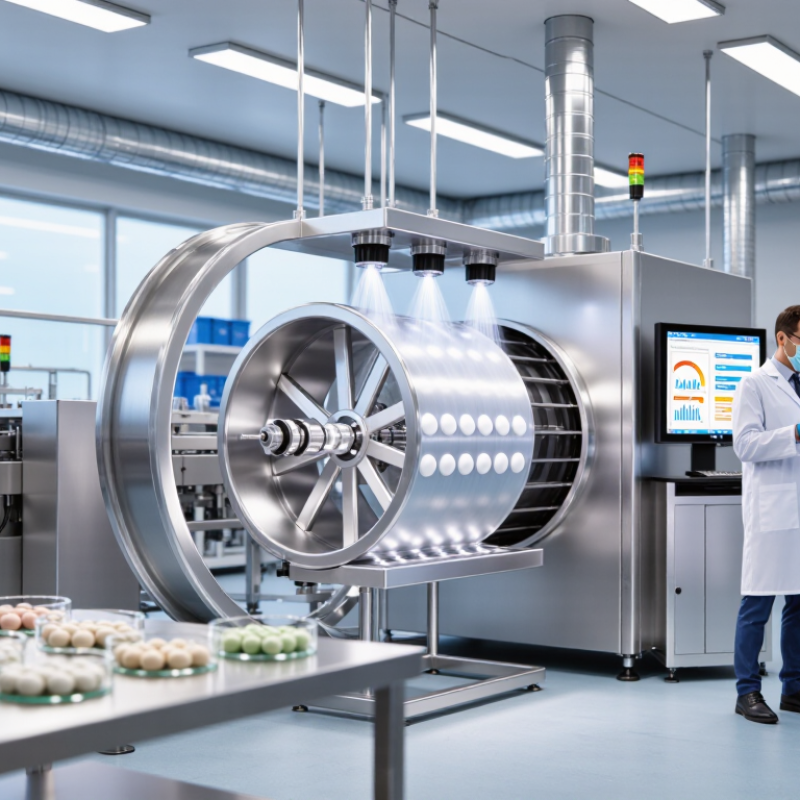
Start with the product, not the machine. Tablets, capsules, and other solid forms behave differently in a coating pan. Note each unit’s shape, size, surface condition, and tendency to chip or stick. These details affect how evenly the product moves and how reliably coating reaches its surface. A small, fragile tablet may need gentler handling than a dense, rounded one.
Batch size matters at both ends. Record the smallest routine batch as well as the largest; a machine that runs well when full may perform poorly with a shallow load. Check the working capacity, not just the vessel’s stated volume. Then define the coating target: appearance, film thickness, drying limits, and acceptable variation. A smooth finish is not always the only goal. Some products may require a functional film, which can change spray and drying needs. Consider pan motion, spray-gun arrangement, airflow, and temperature control together. The figures on a specification sheet can look reassuring. They do not replace a trial with representative material.
Be specific, but leave room for testing. Small differences in formulation or tablet hardness can change the process. Ask how the equipment handles startup, cleaning, and a partial batch. Those details are easy to overlook. I would also question any selection based on maximum capacity alone; that shortcut often hides the real operating range.
| Selection Factor | Product or Requirement | Typical Batch Context | Suitable Machine Configuration | Key Checks Before Selection |
|---|---|---|---|---|
| Product form | Tablets | From laboratory development batches to routine production batches; actual capacity depends on tablet size, pan geometry, and loading limits. | Perforated coating pan with controlled spray guns, heated process air, exhaust, and adjustable pan speed. | Confirm tablet-bed movement, pan loading range, spray coverage, and whether the tablets are fragile or prone to twinning or picking. |
| Product form | Pellets or small multiparticulates | Batch size and loading depend on particle size, density, and the required coating weight gain. | Fluid-bed coater with a bottom-spray (Wurster-type) insert for controlled particle coating, or a suitable pellet-coating pan where appropriate. | Check particle circulation, nozzle position, filter design, and whether the equipment can limit agglomeration and maintain uniform coating. |
| Product form | Granules or powders | Ranges from small development quantities to larger process batches, subject to fluidization behavior and vessel size. | Fluid-bed processor configured for top spray or another process arrangement suited to the intended application. | Confirm that the material fluidizes consistently and assess particle attrition, dust handling, spray rate, and drying capacity. |
| Batch size | Laboratory development | Often a few kilograms or less, depending on the product and development plan. | Small-scale coating pan or laboratory fluid-bed unit with adjustable process settings and representative sampling access. | Check minimum working load, scale-up relevance, recipe recording, and whether the unit can reproduce the intended production process. |
| Batch size | Pilot or process scale-up | Intermediate batches selected to bridge development and commercial equipment; the required amount is product-specific. | Pilot-scale pan or fluid-bed system with process controls and geometry representative of the planned production equipment. | Compare pan or vessel geometry, spray-to-bed relationship, airflow distribution, and control strategy with the target production scale. |
| Batch size | Routine production | Set the working batch from the required output, campaign schedule, and validated operating range—not from vessel volume alone. | Production-scale coating system sized for the intended minimum and maximum batch loads. | Verify usable load range, cycle time, cleaning time, exhaust capacity, and the effect of batch size on coating uniformity. |
| Coating objective | Immediate-release film coat | Typically selected to improve appearance, handling, or product identification without changing the intended release profile. | Pan or fluid-bed system appropriate to the dosage form, with repeatable spray and drying controls. | Define target weight gain, appearance, allowable defects, and the process limits needed to avoid overwetting or uneven coverage. |
| Coating objective | Enteric or modified-release coat | Requires controlled coating deposition and product-specific performance testing. | Equipment capable of stable spray delivery, controlled product temperature, and reproducible drying throughout the batch. | Confirm coating uniformity, curing or drying requirements, sampling plan, and the analytical tests used to verify release performance. |
| Coating liquid | Aqueous coating suspension or solution | Common where the formulation and product are compatible with water-based processing. | System with adequate inlet-air heating, airflow, exhaust, and spray capacity for the planned evaporation load. | Assess product sensitivity to moisture and heat, drying capacity, spray rate, and the risk of sticking or agglomeration. |
| Coating liquid | Organic-solvent coating solution | Use only where justified by formulation or process needs and permitted by applicable site and regulatory requirements. | Equipment designed and configured for the specific solvent hazard, with appropriate ventilation, monitoring, and protective systems. | Conduct a formal process-safety and facilities review, including solvent recovery or exhaust treatment, ignition risk, and applicable exposure limits. |
| Containment and cleaning | Potent, sensitizing, or cross-contamination-sensitive products | Containment needs depend on the material hazard assessment and the facility's handling strategy. | Contained or closed-transfer configuration with compatible seals, charging and discharge arrangements, and validated cleaning provisions. | Specify the required containment performance, operator exposure controls, cleaning method, and verification approach before procurement. |
| Automation and documentation | Repeatable, documented production | Relevant to development transfer and routine manufacture across defined product families. | Controls that can manage and record critical process parameters such as pan speed, inlet conditions, airflow, spray rate, and product temperature. | Define recipe management, alarms, audit-trail or electronic-record needs, data retention, and qualification requirements for the intended use. |
| Selection note: Capacity ranges and performance are equipment- and product-dependent. Confirm the operating range using the actual dosage form, formulation, batch size, coating target, facility utilities, and applicable safety and quality requirements. | ||||


