
Choosing the right Laser Bending Machine can shape your workshop’s productivity, accuracy, and long-term operating costs. The decision is rarely based on laser power alone. Material type, sheet thickness, bending length, production volume, and required tolerances all influence the best choice. A machine that performs beautifully on thin stainless steel may struggle with thicker carbon steel. That difference matters.
Begin with real production needs. Measure your common sheet sizes and record your current bending defects. Watch for uneven angles, edge marks, slow tool changes, or excessive setup time. Servo-driven systems can improve repeatability, while automatic tool changers may reduce labor during varied production runs. However, advanced features are not always valuable. A smaller manufacturer may gain more from reliable controls and accessible maintenance than from an expensive automated package.
Supplier experience deserves equal attention. Ask for sample bends using your own materials, not only polished showroom demonstrations. Examine the finished angle, surface condition, back-gauge movement, and cycle consistency. Request clear information about training, spare parts, software updates, warranty coverage, and service response times. These details often become more important after installation.
Do not ignore safety.
Review guarding, emergency controls, operator visibility, and training procedures with qualified professionals. Energy consumption and floor space also affect the true purchase cost. I have seen buyers focus on maximum capacity, then discover that their daily work rarely needs it. That is an expensive lesson. A careful comparison, supported by production data and independent technical advice, can lead to a Laser Bending Machine that remains practical, accurate, and dependable for years.
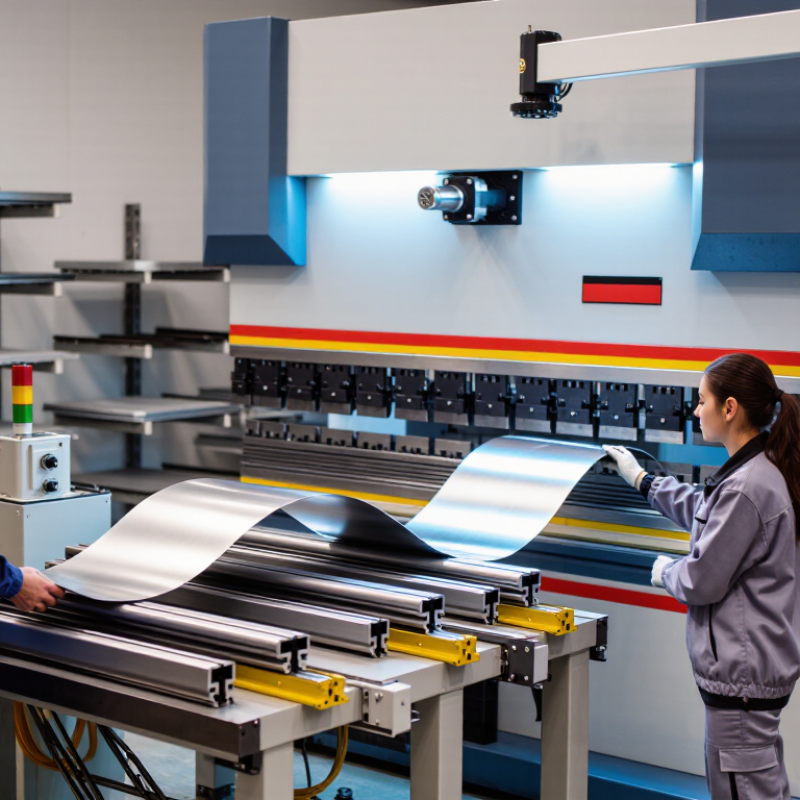
A laser bending machine uses a focused laser beam to shape metal without traditional dies. The beam heats a narrow line on the workpiece. Thermal expansion is restricted by the cooler surrounding metal. As the heated area cools, the material contracts and bends along the scanned path.
The process depends on power, beam diameter, travel speed, and material thickness. A CNC system controls the laser movement and bending angle. Sensors can monitor temperature and position, reducing variation between parts. In practical workshops, steel, stainless steel, and some aluminum alloys respond differently. Therefore, test samples matter. A setting that works well on one sheet may distort another.
When choosing a machine, check its laser power range, motion accuracy, cooling system, and software controls. Ask whether it supports your actual materials and target angles. A reliable supplier should provide process data, maintenance guidance, and operator training. Look for safety enclosures, interlocks, and clear emergency controls. Small details matter.
The first trial is rarely perfect. Slight springback may remain after cooling. Operators often adjust scanning speed or repeat the heating path carefully. Excessive heat can discolor the surface or weaken a sensitive area. For this reason, the best machine is not always the most powerful one. It should offer stable control, repeatable results, and practical adjustment for your production needs.
Choosing the best laser bending machine starts with the material, not the machine’s advertised power. In my experience, mild steel bends predictably, while stainless steel demands more energy and careful heat control. Aluminum conducts heat quickly and may require tighter process monitoring. Copper and titanium can be more demanding because of their reflectivity and thermal behavior. A neat specification can still be wrong. Always test the exact grade, thickness, and surface condition before making a purchase.
Your bending requirements should be equally specific. Record the sheet thickness, maximum part length, bend angle, inside radius, and required tolerance. A workshop producing small brackets may prioritize speed and repeatability. Large structural panels need greater working width and stable beam control. Tight radii can increase cracking, distortion, or heat-affected areas. Ask for sample tests using your own drawings and materials. Measure the finished angle, edge quality, and dimensional change after cooling.
Production volume also affects the right configuration. Frequent orders may justify automated loading, inspection, and recipe management. Smaller batches may benefit from flexible tooling and simple setup. Consider operator training, ventilation, maintenance access, and emergency safeguards. These details often influence real productivity more than peak laser output. I would also review rejected parts from your current process. They may reveal that the real problem is material variation, not machine capacity. The final choice should match proven data, not assumptions.
Choosing a laser bending machine requires more than comparing headline power. Machine specifications directly shape bend angle, speed, repeatability, and material limits. Laser power controls heating capacity, but higher power is not automatically better. It may enlarge the heat-affected zone and increase distortion on thin sheet. Wavelength, beam quality, and spot size determine how evenly energy enters the metal. A small, stable spot usually gives tighter control. But it demands accurate focusing.
Scanning speed is equally important. Slow movement adds heat and can deepen the bend. Excessive speed may leave the material underheated. Effective systems allow precise control over power, speed, focal position, and pass count. Bed size matters when processing long panels. A narrow working area can force repositioning, which introduces alignment errors. Cooling capacity and thermal monitoring also influence repeatability during long production runs. Keep the heat stable.
Before buying, test the machine with your actual alloy, thickness, and bend radius. Record angle variation after cooling, not only immediately after forming. Check calibration routines, sensor resolution, and software access to correction values. I have seen impressive sample bends fail when operators changed material batches. That weakness deserves attention. Specifications should be verified through documented trials, maintenance records, and operator training. Some advertised figures may reflect ideal conditions. Your workshop will be less perfect. Plan for that.
| Specification | Typical Industrial Range | Effect on Bending Performance | Recommended Selection Guidance |
|---|---|---|---|
| Laser Power | 1–20 kW | Higher power increases cutting speed and enables thicker material processing, helping reduce production interruptions before bending. | Choose power according to the thickest material and most frequently processed metal grade rather than maximum theoretical capacity. |
| Working Length | 1,250–4,000 mm | Determines the maximum part length that can be bent in one setup and affects dimensional consistency across long workpieces. | Select a working length slightly longer than the longest regular component to avoid repositioning and accumulated errors. |
| Bending Force | 400–3,000 tonnes | Greater force allows thicker or higher-strength sheets to be formed and reduces overload risk during demanding jobs. | Use the material thickness, tensile strength, die opening, and bending length to calculate required tonnage; include a practical safety margin. |
| Maximum Mild-Steel Thickness | 6–40 mm, depending on power and process | Defines the upper limit for compatible blanks and influences the required bending force, tooling, and bend radius. | Base the selection on the thickest production material, not occasional prototype work. |
| Positioning Accuracy | ±0.01–0.05 mm | Improves first-piece accuracy and reduces dimensional variation between programmed bend positions. | For precision sheet-metal work, prioritize verified accuracy under load rather than relying only on a catalog value. |
| Repeatability | ±0.005–0.03 mm | Provides consistent results across batches and is especially important for assemblies with multiple mating parts. | Choose low repeatability error when production involves high volumes or tight assembly tolerances. |
| Bending Angle Range | Typically 0–180° | A broad angle range supports standard bends, acute bends, hems, and complex multi-step components. | Confirm the machine’s available tooling, stroke, and clearance for the smallest and largest required angles. |
| Ram Stroke | 100–300 mm | A longer stroke increases forming depth and flexibility for deep boxes, offsets, and special profiles. | Select sufficient stroke for the deepest part geometry while avoiding unnecessary machine cost and energy use. |
| Daylight Opening | 300–600 mm | Controls the available space between the upper beam and bed, affecting the size of formed flanges and boxed components. | Check the required tooling height and workpiece clearance before choosing a compact machine. |
| Backgauge Axes | 2–8 controlled axes | Additional axes improve positioning of complex parts, reduce manual adjustments, and support repeatable multi-bend sequences. | Two axes suit basic work; four or more axes are beneficial for tapered, deep, or multi-sided components. |
| Approach Speed | 80–250 mm/s | A higher approach speed can shorten cycle time before forming, provided the control system maintains stable deceleration and positioning. | Compare complete cycle time, not approach speed alone; forming speed and return speed also affect productivity. |
| Bending Speed | 5–20 mm/s under load | Influences throughput, material springback, operator control, and the stability of the forming process. | Use controlled speed for thick, high-strength, or springback-sensitive materials. |
| Angle Measurement and Compensation | Optional optical or laser-based systems | Measures the actual bend angle and automatically compensates for material variation and springback. | Consider this feature for high-mix production, tight angle tolerances, and materials with variable strength. |
| Drive System | Hydraulic, electric, or hybrid | Hydraulic systems provide high force; electric systems generally offer efficient positioning, lower idle energy use, and fast response. | Match the drive type to required force, duty cycle, accuracy, maintenance resources, and energy objectives. |
| Laser Cut Edge Quality | Low burr and heat-affected edge with correct parameters | Cleaner edges reduce cracking, distortion, and tooling damage during subsequent bending. | Evaluate cut quality at production thicknesses, especially near bend lines and on high-strength steel. |
| Tooling Compatibility | Standard, segmented, or quick-change tooling | Compatible tooling affects bend radius, surface marking, setup time, and the range of parts that can be produced. | Confirm punch height, die opening, included angle, load capacity, and availability of suitable inserts. |
| Control and Programming | 2D/3D offline programming with CNC control | Simulation, automatic sequence calculation, and collision checking reduce setup errors and improve operator productivity. | Choose a control system that supports your CAD/CAM workflow, training level, data transfer needs, and production volume. |
Note: The specifications shown are representative industrial ranges. Actual capacity and performance depend on machine design, material grade, thickness, tooling, bend length, and operating conditions.
Choosing a laser bending machine starts with safety, not maximum tonnage. During a practical trial, inspect the work zone closely. Fixed guards should block access to pinch points. Interlocked doors must stop motion immediately when opened. Light curtains, emergency stops, and overload protection add another layer. They are not substitutes for training or a documented risk assessment. Ask the supplier to demonstrate fault recovery, not only normal production. The control panel should show clear alarms and safe restart conditions. Operators need hands-on instruction, written procedures, and suitable protective equipment. Small details matter. A poorly placed stop button can waste seconds during an incident.
Automation should improve consistency without removing human judgment. Look for automatic bend sequencing, angle measurement, collision checks, and offline programming. Tool libraries and job recall can reduce setup errors. However, sensors can drift, and software settings can be wrong. Require manual override, access controls, and production records showing who changed a program. In my evaluations, simple screens often outperform crowded interfaces during busy shifts. Maintenance features deserve equal attention. Choose accessible lubrication points, filter indicators, diagnostic messages, and easy calibration routines. Check whether technicians can reach electrical and hydraulic components safely. Review the maintenance schedule, spare-parts availability, and service response process before purchase. Keep inspection logs for tooling, cables, sensors, and guards. A perfect checklist does not exist. Revisit it after the first month, when real operators reveal problems that showroom demonstrations miss.
Choosing the best laser bending machine requires more than comparing purchase prices. A low quote may exclude tooling, installation, software updates, operator training, or delivery. Request an itemized proposal with every cost clearly listed. Ask how the supplier calculates machine capacity, power use, and expected output. A machine producing accurate bends at 18 seconds per part may outperform a cheaper model needing 30 seconds.
Evaluate suppliers through evidence, not polished presentations. Ask for sample parts made from your materials and inspect bend angles, surface marks, and repeatability. Speak with users who have operated similar machines for several years. Their maintenance records can reveal more than sales claims. Check response times for spare parts and technical support. A strong warranty matters, but service quality matters more after the warranty ends.
Tips: Calculate total ownership costs over five to ten years. Include electricity, tooling replacement, maintenance, training, downtime, and software fees. Confirm whether technicians can service the machine locally. Review payment terms carefully. Do not ignore floor space and ventilation requirements. They affect installation costs. One practical mistake is focusing only on maximum speed. Real production may depend more on setup time, automatic calibration, and ease of programming. Cost comparisons are never perfectly clean, because workloads change and estimates can be optimistic. Test the machine with difficult parts before deciding.
