
Choosing an Ev Charger Type 2 in 2026 is no longer a simple plug-and-play decision. European drivers face more electric models, variable tariffs, and increasingly busy home circuits. The International Energy Agency’s Global EV Outlook 2024 reported more than 14 million electric car sales worldwide in 2023. It also recorded public charging points exceeding four million globally. Demand is moving quickly.
Type 2 charging remains central across Europe. The IEC 62196-2 standard supports single-phase and three-phase AC charging. Many home units deliver 7.4 kW, 11 kW, or 22 kW. Your vehicle may accept less. Your building may supply less. That detail matters. A 22 kW charger cannot create extra grid capacity.
CharIN expert Claas Bracklo has stressed, “Interoperability is essential for successful electric mobility.” That principle belongs beside every specification sheet. Check connector compatibility, residual-current protection, cable length, load balancing, app reliability, and outdoor safety ratings. The European Alternative Fuels Observatory also shows charging infrastructure expanding rapidly, yet coverage remains uneven between regions. A charger that works perfectly in a detached garage may disappoint in an apartment car park.
There is no universal winner. A smaller 7.4 kW unit may suit overnight charging and limited electrical capacity. An 11 kW model often offers a practical balance. A 22 kW system may be unnecessary without three-phase power. That part is easy to overlook.
Real ownership reveals the gaps. Rain reaches the driveway. Firmware updates fail. Cable weight becomes annoying after a long day. This guide compares Ev Charger Type 2 options through those everyday details, not specifications alone. Expect useful answers, but verify local installation requirements before purchasing.
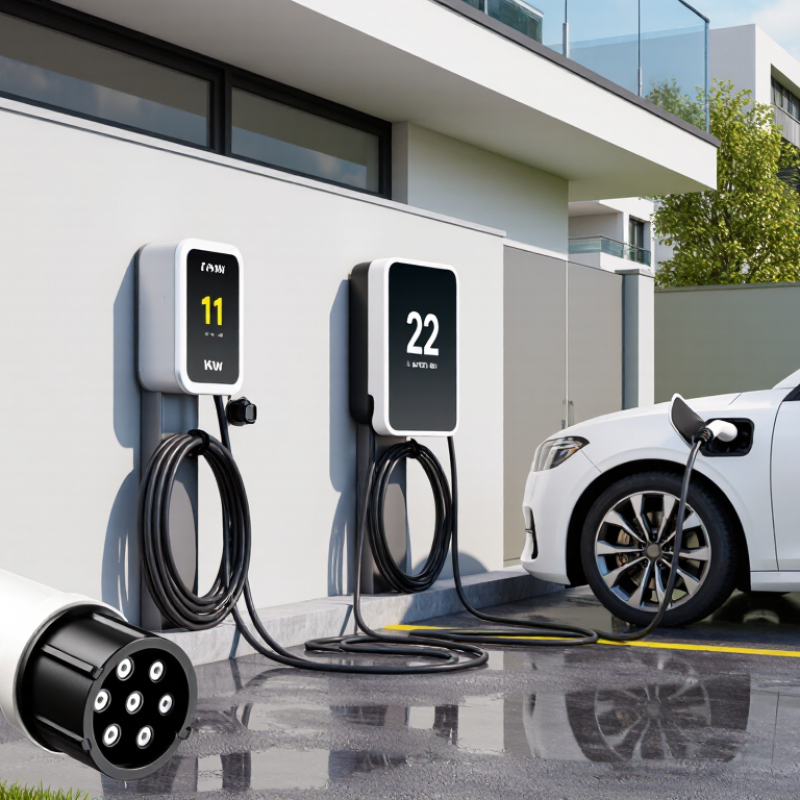
Type 2 EV charging remains central to everyday electric mobility in 2026. It is an AC connection standard covered by IEC 62196-2. Many European vehicles and public charging points use it. However, Type 2 does not automatically mean fast charging. The vehicle’s onboard charger sets the actual AC limit.
A careful choice begins with your daily driving pattern. A 7.4 kW unit may suit overnight home charging. A three-phase 11 kW unit can refill many batteries during a working day. A 22 kW charger sounds attractive, but the car and property supply must support it. Otherwise, its extra capacity stays unused. Check the vehicle manual, household phases, cable rating, and available electrical capacity before buying.
Smart functions matter more in 2026. Load balancing can reduce the risk of overloading a home circuit. Scheduled charging may use cheaper or cleaner electricity. Look for adjustable current settings, weather protection, clear fault indicators, and residual-current protection. A tethered cable is convenient, while a socketed model offers more cable flexibility. Neither choice is perfect. In cold weather, cable handling becomes less pleasant. In shared parking areas, access control and impact resistance deserve attention. Professional installation is not a decorative extra; poor wiring can cause heat, nuisance trips, or long-term damage. I would also question claims about future vehicle compatibility, because charging standards evolve unevenly across regions.
Understanding Type 2 AC charging power and its role in everyday EV charging
Type 2 charging uses the IEC 62196-2 connector and is widely used for AC charging. At 230 V, typical configurations range from 3.7 kW for single-phase overnight charging to 22 kW for compatible three-phase installations. The vehicle’s onboard charger, electrical supply, cable rating, and installation limits determine the actual charging speed. For most homes, 7.4 kW or 11 kW provides a practical balance between charging time and installation requirements in 2026.
Choosing a Type 2 EV charger in 2026 starts with the car, not the socket.
Check the vehicle inlet, onboard AC charger, and maximum charging power. A Type 2 connection may accept 11 kW, while the car may limit charging to 7.4 kW. IEC 62196-2 defines the connector, not your vehicle’s actual charging speed. Read the handbook and charging label.
Battery size matters, but daily energy use matters more. The IEA’s Global EV Outlook 2025 reported more than 17 million electric cars sold worldwide in 2024. That growth brings mixed battery capacities and driving patterns. Record a normal week’s mileage, then multiply it by real-world consumption.
For example, 300 kilometres at 18 kWh per 100 kilometres requires about 54 kWh. Allow charging losses. At 11 kW, that refill may take roughly five and a half hours.
Daily parking time should shape the decision. A 7.4 kW unit can replenish a modest commute overnight. An 11 kW unit suits larger batteries or shorter parking windows. EAFO reported more than 600,000 public charging points across the EU in 2023, yet access still varies sharply by region. Do not size around a rare road trip. My neat calculation can still fail. Winter heating, battery conditioning, and battery age alter the result. That uncertainty deserves a buffer.
Choosing a Type 2 EV charger starts with charging power, not screen design. A 7.4 kW single-phase unit suits many homes and overnight charging. An 11 kW three-phase charger can reduce waiting time significantly. A 22 kW model sounds better, but your vehicle and electrical supply must support it. Some cars accept only 11 kW AC charging. Extra capacity then brings little practical benefit.
Check compatibility carefully. Type 2 usually refers to the AC connector standard used across many European EVs. Confirm the vehicle’s inlet, maximum AC input, cable length, and installation phase. A fixed cable is convenient outside your garage. A socketed unit offers more flexibility when cable standards change. I prefer testing the cable reach beside the parked car. Specifications can look perfect on paper.
Smart features should solve real problems. Dynamic load balancing can reduce household overload when an oven, heat pump, and charger run together. Scheduled charging may use cheaper electricity periods. Energy monitoring helps compare expected and actual power. Look for dependable Wi-Fi, local controls, user authentication, and clear fault messages. App features sometimes fail during network outages. Offline charging still matters. Choose certified electrical protection, including suitable residual-current protection, and use a qualified installer who follows local requirements. A cheaper installation may become expensive after one overlooked cable route.
How to Choose an EV Charger Type 2 in 2026?
Choosing a Type 2 EV charger starts with your parking space, not its advertised speed. Check whether your home has single-phase or three-phase power. A qualified electrician should inspect the distribution board, cable route, earthing, and available capacity. A 7.4 kW unit may suit overnight charging, while an 11 kW or 22 kW unit needs compatible vehicle and electrical supply. Faster is not always better.
Safety deserves practical attention. Select a charger with residual-current protection, overheat monitoring, and weather resistance for outdoor use. The cable should reach the vehicle without crossing walkways or staying under standing water. Ask for installation records and an explanation of emergency shutoff procedures. Small details matter.
Tips: Test the Wi-Fi signal beside the parking bay before installation. Compare app features, load balancing, user access, and firmware support. Connectivity can fail. Manual charging should still work. Review the total cost, including wiring upgrades, permits, mounting, maintenance, and possible subscription fees. A lower purchase price may hide expensive electrical work. In my experience, many buyers calculate charging speed but forget trenching or panel upgrades. I would also leave a modest budget for repairs; even reliable equipment can age unevenly. Recheck the estimate in writing before work begins.
Selecting a Type 2 EV charger in 2026 requires more than comparing maximum power. Verify your vehicle’s onboard charging limit first. A 7.4 kW single-phase charger may suit many homes. An 11 kW or 22 kW model needs compatible vehicle hardware and electrical capacity. More power does not always mean faster charging. Check the connector standard, cable rating, installation method, and cable length. A five-metre cable may feel short when the parking space is angled.
Safety verification matters. Look for compliance with IEC 62196-2 and independent testing records. Confirm residual-current protection, temperature monitoring, and suitable overload controls. Outdoor installations need an appropriate IP rating. Ask a qualified installer to assess the circuit, earthing, breaker size, and household load. Smart load management can prevent charging from competing with heating or kitchen appliances. Do not rely only on product photographs.
Test the charger with your vehicle when possible. Check whether the plug locks firmly and whether the status indicators remain clear in daylight. Review warranty terms, software support, repair procedures, and installation documents. I once focused on peak output and ignored cable reach. The charger worked, but daily parking became awkward. That mistake changed my checklist. Socketed units offer flexibility, while tethered models are quicker to use. Choose the arrangement that matches your routine, not just the specification sheet.
| Selection Dimension | Typical Type 2 Options | What to Verify | Recommended Use | Important Notes |
|---|---|---|---|---|
| Connector standard | Type 2 AC connector compliant with IEC 62196-2 | Check that the vehicle inlet and the charger connector are both Type 2 compatible. | Vehicles designed for the European Type 2 AC charging system | A Type 2 connector does not determine charging speed by itself; the vehicle’s onboard AC charger also sets the limit. |
| Charging power | 3.7 kW, 7.4 kW, 11 kW, or 22 kW AC | Compare the charger output with the vehicle’s maximum AC input and the site’s electrical capacity. | 3.7–7.4 kW for basic home charging; 11–22 kW where three-phase supply and vehicle support are available | A 22 kW charger will not make a vehicle charge at 22 kW if its onboard charger accepts only 11 kW or less. |
| Rated current | 16 A or 32 A per phase; some units support adjustable current limits | Confirm the continuous current rating, circuit breaker size, cable capacity, and local electrical requirements. | 16 A for lower-power installations; 32 A for higher-power single- or three-phase charging | Charging current should be configured to match the installation, not selected only from the maximum advertised value. |
| Supply arrangement | Single-phase 230 V or three-phase 400 V nominal AC supply | Have a qualified electrician verify the available phases, voltage, earthing system, and spare capacity. | Single-phase for most residential installations; three-phase for faster 11 kW or 22 kW charging | Electrical conditions and permitted installation methods vary by country and building. |
| Charging mode | Mode 3 AC charging with control-pilot communication | Look for compliance with IEC 61851-1 and confirmation of proper pilot and proximity functions. | Home, workplace, apartment, fleet, and destination charging | Mode 3 equipment provides controlled AC charging and safety communication between the EV and charging equipment. |
| Cable configuration | Socket outlet or tethered cable; common cable lengths are approximately 5–7 m | Measure the parking distance, check cable flexibility, and confirm whether a separate Type 2 cable is required. | Socketed units for shared flexibility; tethered units for daily convenience | Avoid using an extension cord unless it is specifically permitted by the equipment and local regulations. |
| Residual-current protection | Residual-current protection with AC detection and appropriate DC leakage protection | Verify whether the charger includes 6 mA DC residual-current detection and identify the required upstream RCD type. | All permanent residential, commercial, and public installations | Depending on the design and local rules, an installation may require Type A protection with DC detection or Type B protection. |
| Enclosure protection | Indoor units and outdoor units with an appropriate IP rating, commonly IP54 or higher for exposed locations | Check the manufacturer’s tested IP rating, operating temperature range, UV resistance, and installation instructions. | IP-rated outdoor equipment for driveways, car parks, and open-sided garages | IP ratings address dust and water ingress; they do not replace correct mounting, drainage, and cable management. |
| Load management | Fixed-current charging, dynamic load balancing, or scheduled charging | Check compatibility with a smart meter, current transformer, solar system, or building energy-management system. | Homes with limited electrical capacity, solar generation, or multiple chargers | Dynamic load management can reduce peak demand, but it must be correctly installed and commissioned. |
| User access and control | Plug-and-charge operation, RFID access, app control, or network-based authorization | Confirm whether access control works offline and whether multiple users can be managed. | Simple operation for private homes; RFID or user management for shared locations | Advanced app features may require Wi-Fi, Ethernet, Bluetooth, or cellular connectivity. |
| Connectivity protocol | Local control, OCPP connectivity, or optional ISO 15118-related functions | Check the exact supported protocol version, firmware-update method, data requirements, and interoperability limits. | Networked homes, commercial sites, fleets, and managed charging systems | Smart-charging and vehicle-to-grid features depend on the charger, vehicle, software, and local grid rules; they are not guaranteed by a Type 2 connector alone. |
| Metering accuracy | Basic energy display or certified billing-grade metering | Determine whether the meter is intended for monitoring only or for regulated billing. | Basic monitoring for private homes; certified metering for tenant, workplace, or public billing | Billing requirements differ by jurisdiction and may require an approved meter and software system. |
| Installation location | Indoor, covered outdoor, or fully exposed outdoor installation | Review wall strength, cable routing, ventilation, clearance, drainage, impact risk, and accessibility. | Select equipment specifically approved for the intended environment. | Do not install an indoor-only charger outdoors, even when it is placed under a small canopy. |
| Safety and certification | Documented conformity with applicable electrical, EMC, and safety requirements | Request the declaration of conformity, installation manual, test information, and applicable certification details. | Every installation, especially high-current or publicly accessible applications | Certification markings should be supported by traceable documentation rather than labels alone. |
| Best-fit selection | Match vehicle capability, daily mileage, available supply, installation budget, and control requirements | Use the vehicle handbook, electrical assessment, and charger documentation before purchase. | A properly installed charger that meets actual usage needs | Higher rated power is not automatically better if the vehicle, supply, or charging schedule cannot use it. |
