
Welcome to Worldia, we have over 25 years of expertise.

What Is a Bath Exhaust Fan and How Does It Work?

A hot shower leaves more than a warm mirror. Moist air can settle on walls, ceilings, and window frames, where repeated dampness may encourage mold and damage finishes. A Bath Exhaust Fan helps move that moisture outside. It also clears odors and improves air movement, but only when it is installed and used properly.

Building scientist Joseph Lstiburek has said, “Water is the most important thing in buildings.” That principle helps explain why bathroom ventilation matters. The fan draws humid air through a grille, then sends it through ductwork to an exterior outlet. It should not simply discharge into an attic or another enclosed space. Small details count: a short, smooth duct run usually moves air more effectively than a long, sharply bent one.

The fan’s job sounds simple. The room is not always simple. Fan capacity, duct layout, noise, and run time all affect performance. A quiet fan may be used more often; a poorly placed switch may mean it runs too briefly. Check the product instructions and applicable building requirements, especially when replacing an older unit. This guide explains what a Bath Exhaust Fan does, how its parts work together, and what to consider when choosing or using one. A fan helps, but it cannot fix every moisture problem. The details deserve a closer look.
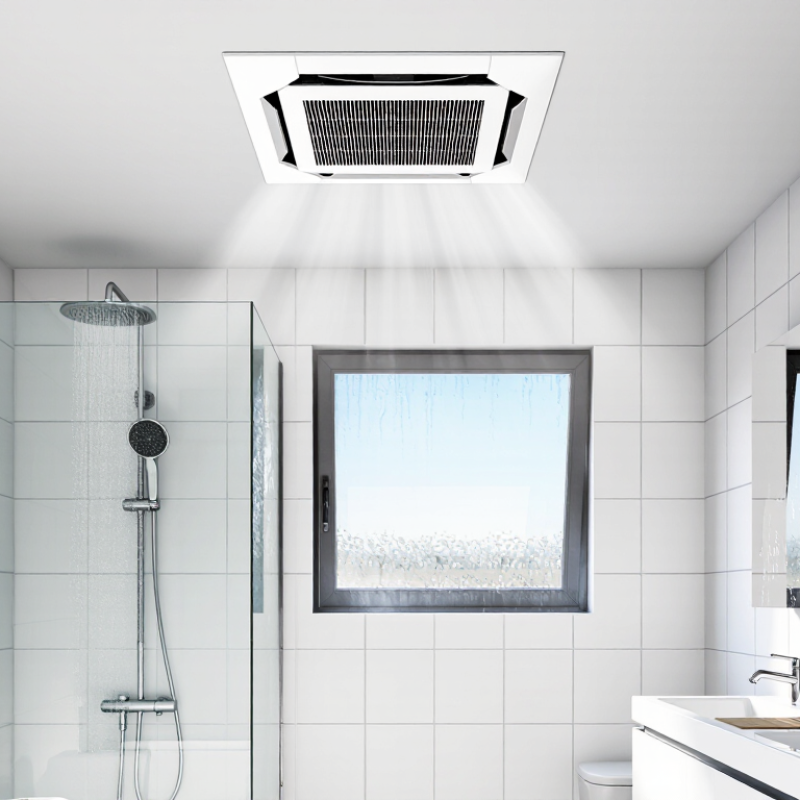
What Is a Bath Exhaust Fan and How Does It Work?

What a Bathroom Exhaust Fan Is

A bathroom exhaust fan is a mechanical ventilation device that pulls humid, stale air from the room and sends it outdoors through a duct. It does not simply recirculate air. When you switch it on after a shower, the fan helps remove moisture before it settles on mirrors, paint, and cooler surfaces. That matters. The Home Ventilating Institute recommends at least 1 cubic foot per minute of airflow per square foot for bathrooms up to 100 square feet, with a 50-CFM minimum. The right capacity depends on room size and use.

The fan’s motor turns an impeller, creating airflow through the housing and exhaust duct. Airflow ratings matter, but the number on a product label is not the whole story. Long ducts, sharp bends, and blocked grilles can reduce the air actually moved. The 2022 ASHRAE Standard 62.2 lists 50 CFM for intermittent bathroom exhaust, or 20 CFM for continuous operation. A fan also needs a clear path for replacement air, often through a small gap beneath the door. It is a practical device, not a cure-all: a quiet fan may still move too little air, and moisture can linger if it runs briefly. I would check the duct route and airflow, not just the switch.

What Is a Bath Exhaust Fan and How Does It Work? - What a Bathroom Exhaust Fan Is

Part or feature What it does How it works in practice
Bathroom exhaust fan A mechanical ventilation device that removes indoor air from a bathroom. When switched on, it draws air from the room and sends it through a duct to an outdoor exhaust point.
Intake grille The visible cover where bathroom air enters the fan housing. Air flows through the grille as the fan creates airflow; the grille also helps conceal and protect the assembly.
Motor and fan blades The powered components that move air. The motor turns an impeller or fan wheel, producing airflow from the bathroom into the connected duct.
Ductwork A passage that carries extracted air out of the building. The duct should lead to an approved outdoor termination, such as a wall or roof vent, rather than into an attic or ceiling cavity.
Backdraft damper A flap that helps limit air flowing backward through the duct. It opens when the fan pushes air outward and generally closes when the fan is off.
Controls The means of turning the fan on and off or setting how long it runs. Common options include a wall switch, timer, humidity control, or occupancy sensor, depending on the installation.
Airflow rating The volume of air a fan is designed to move, commonly stated in cubic feet per minute (CFM). The appropriate capacity depends on the room and applicable guidance; duct length, bends, and installation can affect actual airflow.
Moisture and odor removal A key purpose of bathroom ventilation. Exhausting humid, stale air helps reduce lingering moisture and odors. Replacement air must be able to enter the room for the fan to operate effectively.
Typical operating sequence The basic path air follows while the fan runs. Bathroom air enters the grille, passes the fan wheel, travels through the duct, and exits outdoors; fresh replacement air enters the bathroom from elsewhere in the home.

Key Parts of a Bathroom Exhaust Fan

A bathroom exhaust fan contains several parts that work together to move damp air outdoors. The visible grille covers the opening and helps keep fingers and loose objects away from the moving fan. Behind it, a metal or plastic housing supports the motor and connects the fan to the duct. A snug housing also helps limit rattling, though imperfect installation can still cause vibration.

The electric motor spins a fan wheel, sometimes called an impeller. Its curved blades draw humid air through the grille and push it into the duct. Small parts matter. Loose dust on the blades can reduce airflow and add noise. The motor needs enough power and clear space to run properly; a fan that hums without moving air may need inspection.

Air needs a path. The duct carries air to an exterior vent, and shorter, smoother runs generally make airflow easier. At the outlet, a backdraft damper opens as air leaves and closes when the fan stops. It helps limit cold air and pests entering through the duct, but it may stick if lint or debris builds up. Controls can be a wall switch, timer, or humidity sensor. A timer is useful, though people sometimes forget to set it. Before cleaning or inspecting internal parts, switch off power at the circuit breaker.

How the Fan Moves Stale Air

A bath exhaust fan does more than make bathroom air feel fresher. Its motor spins an impeller, drawing humid, odor-filled air through the ceiling or wall grille. The fan then pushes that air through a duct and outdoors. Not into the attic. Replacement air usually slips in from nearby rooms through the gap beneath the bathroom door.

That simple path depends on adequate airflow. The Home Ventilating Institute recommends at least 1 cubic foot per minute (CFM) per square foot for bathrooms up to 100 square feet, with a 50 CFM minimum for intermittent ventilation. A fan’s labeled capacity is not always its real-world performance. Long ducts, tight bends, and a sticking damper can restrict airflow. A tissue held near the grille may show suction, but it cannot measure CFM accurately.

Moisture removal matters. The U.S. Environmental Protection Agency advises keeping indoor relative humidity below 60%, ideally between 30% and 50%. A fan can help, especially during a steamy shower, but it needs time to clear damp air. Leave it running after bathing. Still, there is a catch: a quiet fan that barely moves air may create a false sense of ventilation. HVI guidance and duct installation details are worth checking.

Where Exhaust Air Goes

A bath exhaust fan pulls humid air through a grille and sends it into a duct. That duct should carry the air outdoors, usually through a roof cap or an exterior wall hood. The outlet has a flap that opens when the fan runs and helps limit drafts when it stops. A gentle click is normal.

The air should not simply end in an attic, crawlspace, or wall cavity. Moisture can collect on cold wood or insulation, encouraging mold and decay over time. A short, smooth duct with few bends usually moves air more effectively. In colder climates, insulating the duct can reduce condensation inside it. Small details matter.

The exterior hood needs a clear opening, away from obstructions that could trap lint or snow. Its position should also avoid drawing moist air back through nearby windows or vents. Local requirements can differ, so an installer should check the fan’s instructions and applicable building rules. I used to think a powerful fan solved everything; the duct route can matter just as much. If the bathroom mirror stays fogged long after a shower, check that the damper opens and air actually reaches the outdoor outlet. A quiet fan is not proof of good airflow.

Common Fan Types and Features

Bath exhaust fans pull damp, stale air from a bathroom and send it outdoors through ductwork. Ceiling-mounted axial fans are common and move air through a compact housing. They work well with short, straight ducts. For longer runs or several bends, centrifugal and mixed-flow fans can maintain airflow more effectively. Inline models place the motor along the duct, often reducing noise at the ceiling grille.

Useful features include adjustable speed controls, timers, and humidity sensors. A timer keeps the fan running after a shower, while a humidity sensor switches it on when moisture rises. Check the fan’s airflow rating against the room size, and consider the duct route, not just the advertised capacity. A powerful fan can still perform poorly if the duct is crushed or the outlet is blocked. Noise ratings matter too, especially in small homes. Even a quiet fan can seem loud at night.

Tips: Run the fan during bathing and for about 20 minutes afterward. Keep the grille clear of dust, and confirm that the duct actually vents outdoors. A fan that seems weak may need duct inspection, not replacement.

Hi! What is your idea today?
WORLDIA 8618618272087
Nina +86 15631662072
google-site-verification=0STkOZEvYuoDp-D40AVfMUk--CzM2AsZv24S6ISPdmk