How to Choose a Boiler Centrifugal Fan for Your Needs?
Selecting a Boiler Centrifugal Fan is a practical engineering decision, not a simple catalogue comparison. The correct fan must match airflow, pressure, temperature, fuel type, and operating conditions. A unit that looks powerful on paper may struggle when ducts become longer, dampers close, or combustion resistance increases.
Heinz P. Bloch, a widely published rotating-equipment authority, offers a useful principle: “A fan must be selected for the system, not for the nameplate.” This idea remains highly relevant for boiler applications. Engineers should examine the complete air and flue-gas path, including elbows, filters, dampers, silencers, and stack resistance. Small pressure losses can become significant at operating temperature.
Measure the duty point carefully.
Fan efficiency also matters. An oversized motor may provide safety margin, but it can increase energy consumption, noise, and control difficulty. An undersized fan may cause unstable combustion, poor heat transfer, or unsafe furnace pressure. These risks require attention from qualified professionals and compliance with applicable codes.
In real installations, conditions are rarely perfect. Dust may accumulate on impellers. Bearings may face heat and vibration. Fuel quality can change. A tidy specification may still miss these details.
Therefore, this guide considers fan type, performance curves, materials, motor selection, speed control, maintenance access, and supplier support. It also questions a common assumption: maximum airflow is not automatically the best choice. Reliable selection comes from matching actual boiler behavior with verified fan data, operating margins, and long-term service needs.
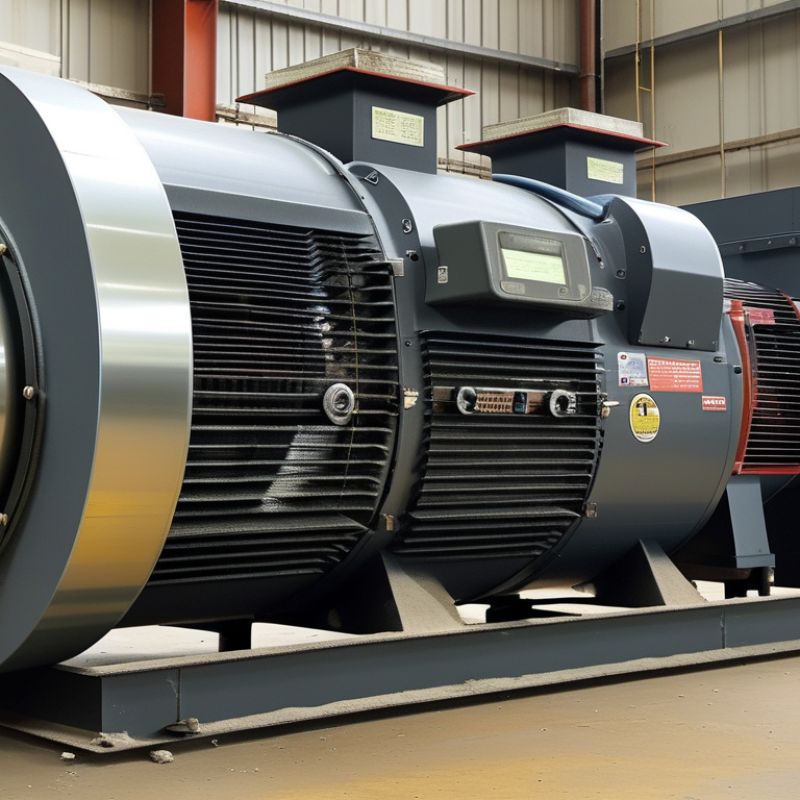
Understanding the Role of a Boiler Centrifugal Fan
How to Choose a Boiler Centrifugal Fan for Your Needs?
Understanding the Role of a Boiler Centrifugal Fan
A boiler centrifugal fan controls the movement of air and exhaust gases through the system. It supports combustion by supplying steady air to the burner. It also helps remove flue gases from the furnace. Without stable airflow, combustion may become incomplete, uneven, or unsafe.
The fan must overcome resistance from ducts, dampers, filters, and the boiler passages. Engineers usually check required airflow, static pressure, gas temperature, and operating hours. Fan curves provide useful guidance, but real installations can behave differently. A narrow elbow may create unexpected pressure loss. Dust buildup can reduce performance.
Field commissioning often reveals details that calculations miss. Technicians should measure airflow, pressure, vibration, and motor current after installation. Unusual noise may indicate imbalance, bearing wear, or poor alignment. Excessive vibration should never be treated as a minor issue. It can damage connected equipment over time.
Choosing a fan also requires attention to material durability and temperature tolerance. The impeller and housing must suit the flue gas conditions. Variable-speed control can adjust airflow during changing boiler loads. However, control settings need careful testing. I have seen systems waste energy because the fan ran faster than necessary. Maintenance access matters too. A practical design allows inspection, cleaning, and bearing checks without long shutdowns. Certified professionals should verify the final selection against applicable safety standards and the boiler manufacturer’s operating requirements.
How to Choose a Boiler Centrifugal Fan for Your Needs?
Boiler centrifugal fan selection depends mainly on the required combustion-air volume and system resistance. The chart shows representative operating requirements for natural-gas-fired boilers at different thermal inputs. Airflow values assume approximately 10% excess air, while pressure values represent typical resistance from the burner, boiler passages, ductwork, and dampers.
Choose a fan that can deliver the required airflow at the actual system pressure, while allowing reasonable adjustment capacity and operating near its efficient working range.
Comparing Efficiency, Noise, Maintenance, and Safety Features
How to Choose a Boiler Centrifugal Fan for Your Needs?
Efficiency should begin with the complete operating point, not the fan’s maximum rating. Compare airflow, static pressure, motor input, and expected boiler load. The U.S. Department of Energy reports that fan systems can consume 10–25% of industrial facility electricity. Its guidance also identifies potential savings of 20–50% through better system design and control. Select a backward-curved impeller when stable pressure and efficient operation matter. Variable-speed control can reduce energy use during partial-load firing. However, poor duct design can erase these gains.
Noise deserves measurement, not guesswork. Ask for sound-power data tested under recognized procedures, such as AMCA 300. A fan may sound acceptable in a factory but harsh beside a boiler room door. Check vibration limits, bearing temperature, and access space before purchase. Maintenance also matters. Choose inspection doors, grease points, replaceable bearings, and an impeller that can be cleaned without dismantling half the system. I have seen efficient fans perform poorly after dust built up on one blade. The calculation was right. The installation was not.
Tips: Specify the duty point with a safety margin, but avoid excessive oversizing. Request efficiency curves at minimum, normal, and maximum loads. Confirm pressure switches, airflow proving, motor overload protection, emergency isolation, and flame-safety interlocks. Verify guarding against moving parts and hot surfaces. Keep service records. A short checklist can prevent a long outage. Perfect selection is rare; reviewing field data after commissioning is still necessary.
Matching Fan Specifications to Your Boiler Operating Conditions
How to Choose a Boiler Centrifugal Fan for Your Needs?
Matching Fan Specifications to Your Boiler Operating Conditions
Boiler centrifugal fan selection starts with operating conditions, not catalog size. Record required airflow in m³/h and total pressure in Pa. Include boiler load range, fuel type, and expected excess-air level. These values define the fan’s real duty point. Guessing is risky.
Flue-gas temperature affects casing materials, bearing arrangement, and motor protection. Measure normal and peak temperatures near the fan inlet. Dust, moisture, and corrosive compounds also influence impeller design. A clean gas stream needs different protection than ash-laden exhaust. Check the performance curve at the actual gas density. Curves based on standard air can mislead.
Choose a fan that reaches the duty point near its efficient operating zone. Keep enough margin for fouled heat-transfer surfaces, but avoid excessive oversizing. Oversized fans may waste electricity and create unstable control. Review sound limits, vibration data, variable-speed compatibility, and emergency shutdown logic. Ask a qualified engineer to verify structural loads and installation clearances. Field commissioning should compare measured airflow, pressure, amperage, and vibration with design values. The first selection may not be perfect. Recheck it after seasonal operation.




