What Is a Memory Foam Core Pillow Filling Machine?
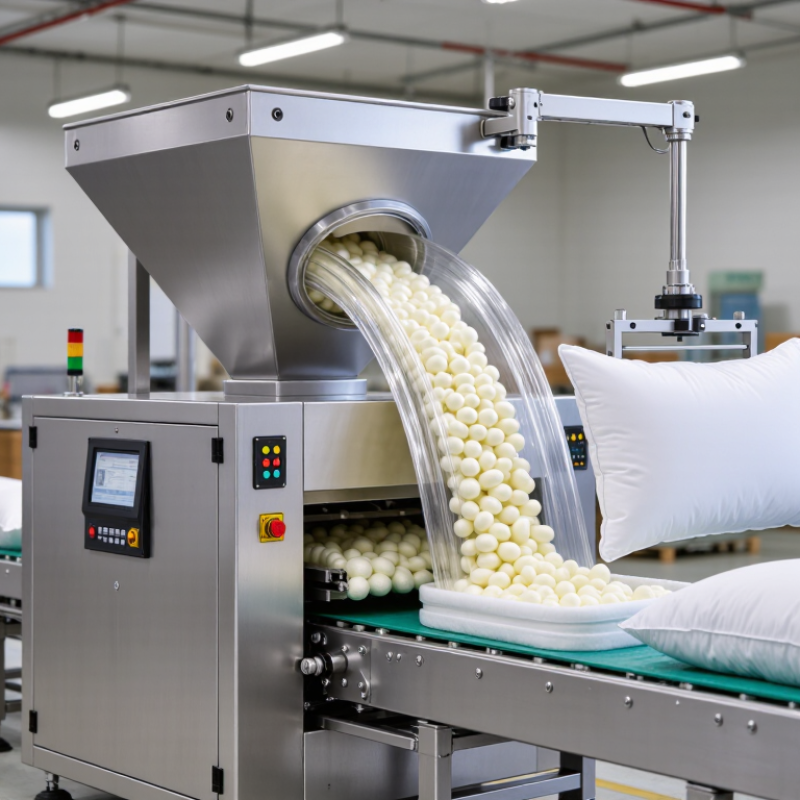
A Memory Foam Core Pillow Filling Machine is designed to place processed foam pieces inside pillow shells with controlled, repeatable delivery. Depending on its configuration, it may use a hopper, feeding mechanism, fill tube, and controls for adjusting the amount of material. The operator guides the shell over the nozzle, starts the cycle, and checks the finished pillow’s shape and feel. Small adjustments matter. Too little filling can leave soft, flat corners; too much can strain seams or make the pillow feel unusually firm.
The machine does more than move foam. It helps production teams manage filling consistency, reduce manual handling, and keep a steady workflow. Still, equipment alone cannot guarantee a comfortable pillow. Foam size, shell dimensions, target firmness, and operator technique all affect the result. “Reliable filling starts with matching the machine settings to the foam and the pillow design,” says Elena Park, a fictional production-engineering specialist. This illustrative quotation is not a verified statement from a real expert.
This guide explains how a Memory Foam Core Pillow Filling Machine works, which components shape its performance, and what buyers should assess before choosing one. Expect practical details, not a promise of perfect results. Real production conditions vary, and setup often takes careful testing. That part is easy to underestimate.
What a Memory Foam Core Pillow Filling Machine Is
What Is a Memory Foam Core Pillow Filling Machine?
What a Memory Foam Core Pillow Filling Machine Is
A memory foam core pillow filling machine places shredded or small-cut memory foam into a pillow casing. It does not usually shape a solid foam block. Instead, it meters loose foam pieces and moves them through a delivery tube or nozzle. The operator guides the nozzle into the casing and controls the fill. Simple in principle.
The machine may include a hopper, a feed mechanism, and controls for adjusting the flow. These parts help keep filling steady, though foam pieces can vary in size and density. A setting that works for one batch may not suit another. That detail is easy to overlook. Static, tangled pieces, or a narrow casing opening can also interrupt feeding, so operators may need to pause and clear the path.
The goal is a pillow core with an even feel, not merely a full-looking cover. After filling, staff can check the pillow’s weight, shape, and firmness by hand. That check is useful, but subjective; consistent weights and clear inspection standards make results more reliable. The machine supports repeatable production, yet it cannot correct every issue in the foam itself. Poorly prepared pieces may still create lumps or uneven support.
What Is a Memory Foam Core Pillow Filling Machine?
| Machine area | Typical function | Material or input | Practical considerations |
| Feed hopper | Holds and supplies the filling material to the feeding system. | Shredded or chopped memory foam pieces. | Foam piece size and consistency can affect how smoothly material flows. |
| Feeding and conveying system | Moves foam from the hopper toward the filling nozzle, using a configuration suited to the machine design. | Loose foam pieces. | The conveying path should be kept clear to reduce material blockages and uneven feeding. |
| Filling nozzle | Directs the foam into the opening of a pillow cover or inner casing. | Pillow cover positioned at the filling point. | Nozzle size and operator positioning should suit the cover opening and foam pieces. |
| Metering or weighing control | Helps control the quantity of filling delivered to each pillow when included in the machine setup. | Foam quantity specified for the product. | Target fill weight depends on pillow size, design, and desired firmness; it is not universal. |
| Dust management | May collect airborne particles around material handling and filling areas. | Fine particles generated during handling of foam pieces. | Dust-control needs depend on the material, workspace, and equipment configuration. |
| Operator controls | Start, stop, and adjust the filling cycle according to the machine’s design. | Machine settings and the pillow being filled. | Follow the equipment instructions and applicable workplace safety procedures. |
| Overall purpose | A memory foam core pillow filling machine transfers loose memory foam pieces into a pillow cover or casing, helping make the filling process more controlled and repeatable than manual stuffing alone. |
Main Components and Their Functions
What Is a Memory Foam Core Pillow Filling Machine?
Main Components and Their Functions
A memory foam core pillow filling machine moves prepared foam pieces from a storage hopper into a pillow casing. The hopper holds the material, while a slow agitator helps prevent bridging and uneven feed. A metering screw or belt controls how much foam enters the line. This matters because memory foam pieces can vary in size and springiness. Small details matter. A blower then carries the measured pieces through a flexible hose to the filling nozzle. Operators position the nozzle inside the casing to reduce spills and trapped air.
The control panel coordinates feed speed and blower output; load cells can help monitor fill weight. A bag clamp keeps the casing steady during filling, while an extraction hood captures loose dust near the opening. OSHA’s machine-guarding guidance emphasizes protecting workers from moving parts, so access panels and interlocks deserve attention during equipment selection. Grand View Research’s Memory Foam Market Size, Share & Trends Analysis Report estimated the global market at about USD 5.87 billion in 2022, with a projected 7.6% compound annual growth rate through 2030. That market estimate is not a measure of machine performance. Real lines vary. Foam density, piece size, and casing shape all affect throughput, and settings may need adjustment between batches.
How the Machine Fills a Pillow Core
A memory foam core pillow filling machine meters shredded or diced viscoelastic foam into an inner casing. The operator loads foam into a hopper, sets the target weight, then feeds the nozzle into the opening. Air pressure or a mechanical auger moves the pieces through the tube. The machine does not make every pillow feel identical; foam size, density, and rebound also matter. Small changes matter. Grand View Research estimated the global memory foam mattress market at about US$6.5 billion in 2022 and forecast continued growth through 2030. That figure is not pillow-specific, but it indicates demand for consistent foam processing.
During filling, the operator watches the scale and adjusts feed speed if foam bridges inside the hopper. A narrow nozzle helps reach the casing’s corners, while gentle handling limits clumping and unnecessary compression. After filling, staff weigh samples and check loft by hand. It is a practical check, though not a substitute for repeatable testing. ASTM D3574 provides test methods for flexible cellular urethane materials, including density and indentation-force measurements; it does not prescribe a pillow-fill recipe. Not perfectly uniform. Foam pieces can settle unevenly, so the fill weight alone may not predict how the pillow feels after use. A slower final feed can improve distribution, but it also takes more time.
Memory Foam Materials and Filling Methods
Memory foam pillow filling starts with the material itself. Solid foam cores are cut to size, while shredded foam uses small pieces that can move inside the cover. Shredded filling may include different foam densities, so pieces can feel uneven unless they are blended and measured carefully. A few larger chunks can change the pillow’s support.
Filling machines handle loose foam through hoppers, conveyors, and metering systems. Depending on the setup, an operator may feed foam pieces manually or use an automated scale to deliver a target weight. The filling tube then guides material into the pillow shell. Static can make lightweight pieces cling to the tube, and fine dust may collect around the feed area. Good extraction and routine cleaning help keep the process controlled. Small details matter.
A consistent fill weight does not guarantee an identical feel. Foam shape, density, and distribution also affect loft and pressure response. Operators can check sample pillows by weighing them, inspecting seams, and pressing the filled surface by hand. This last check is useful, but it is subjective. That is worth remembering. A machine improves repeatability; it cannot replace sensible material checks or careful adjustment when foam batches behave differently.
Applications, Selection, and Basic Maintenance
What Is a Memory Foam Core Pillow Filling Machine? Applications, Selection, and Basic Maintenance
A memory foam pillow filling machine feeds foam pieces into pillow covers, helping manufacturers produce consistent fills across different sizes. It is commonly used for shredded-foam bed pillows, travel pillows, and specialty cushions. Some systems weigh each charge; others rely on timed feeding. The foam’s shape and density affect how smoothly it moves through the hopper and filling tube. Dust can build up quickly.
When selecting equipment, match its capacity to your daily output and the type of foam you use. Check whether the opening and feed path handle your foam pieces without frequent bridging. Ask how easily operators can adjust fill weight and clean contact surfaces.
Still, more automation is not always better. A complicated machine may slow a small team if changeovers take too long. Request a practical demonstration using your own foam, if possible.
Basic maintenance starts with safe shutdown and a clear work area. Remove leftover foam from the hopper, tube, and nearby surfaces after production. Inspect belts, hoses, fasteners, and sensors for wear or buildup. Keep dust extraction working, and follow the manual for lubrication and electrical checks.
Small checks matter. Record fill-weight variation and recurring jams; these notes can reveal problems before downtime grows. No routine prevents every fault, and maintenance intervals should reflect actual operating conditions.




