China Top 10 Marine Steel Casting Manufacturers?
Marine steel castings rarely attract attention until a rudder carrier cracks, a pump casing leaks, or a propeller component faces another inspection. Yet these heavy parts must withstand saltwater, vibration, impact, and years of service. Choosing a supplier is therefore more than comparing prices. Buyers need evidence of alloy control, foundry capacity, inspection practices, and reliable delivery.
Demand sits within a much larger maritime economy. UNCTAD’s Review of Maritime Transport 2024 reports that seaborne trade reached about 12.3 billion tonnes in 2023, an increase of 2.4 percent. That figure measures shipping activity, not marine steel castings, and should not be mistaken for a casting-market estimate. Public data on this specific manufacturing segment remains limited. That gap matters.
Casting quality begins before a part reaches the machining floor. Metallurgist John Campbell, author of Complete Casting Handbook, writes, “The quality of a casting is determined by the quality of the liquid metal.” His point is practical: sound composition and process control affect the finished component. Still, a polished website cannot prove either. Buyers should request traceable material records, relevant test reports, and examples of comparable castings.
This guide compares ten Chinese manufacturers using observable indicators, including product range, production capability, quality documentation, and export experience. It is a shortlist, not a universal ranking. A foundry suited to a large rudder component may not fit a small pump housing. The details matter.
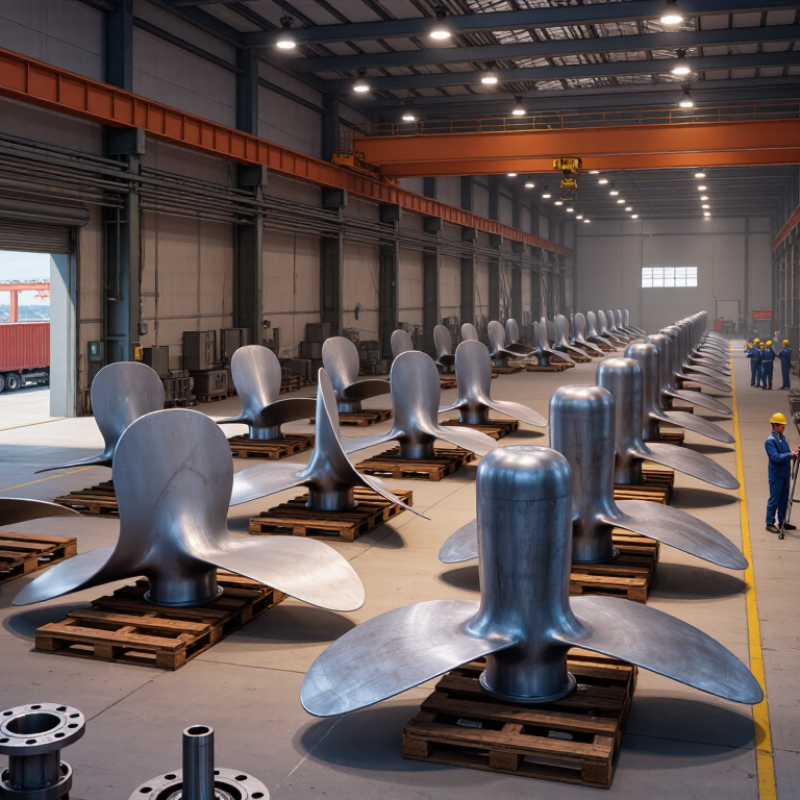
What Marine Steel Casting Manufacturers Produce for the Maritime Industry
Marine steel casting manufacturers produce load-bearing components that help ships move, steer, and handle equipment. Typical products include propeller hubs, rudder components, stern-frame parts, pump housings, valve bodies, and winch drums. Their size varies widely: a small valve body may fit on a workbench, while a stern-frame casting can require heavy lifting equipment.
The work starts with a drawing, a suitable steel grade, and a pattern shaped to allow for shrinkage during cooling. Foundries melt and pour the metal, then clean, heat-treat, and machine the casting to its required dimensions. Inspection may include visual checks, dimensional measurements, and nondestructive testing for internal defects.
Details matter. A casting exposed to seawater may need careful material selection and protective finishing, while a highly loaded part needs verified mechanical properties. Buyers should request material records, inspection results, and clear tolerances—not just a price.
No casting is perfect, and production can involve trade-offs between cost, lead time, and machining. I would still ask how defects are handled. That answer can reveal as much as the finished surface.
Key Materials, Processes, and Quality Standards for Marine Castings
Marine steel castings face salt spray, impact, vibration, and changing loads. Material choice must match the duty. Carbon and low-alloy steels offer strength for rudder stocks, stern-frame parts, and pump casings. Nickel, chromium, and molybdenum can improve toughness or corrosion resistance, but seawater exposure still requires suitable coatings and maintenance. The American Foundry Society’s 57th Census reported roughly 111 million tonnes of global casting production in 2022, across all sectors—not marine castings alone. The scale is striking.
Casting quality starts with sound design and controlled melting. Foundries use sand molds for many large, complex parts, then apply heat treatment to refine properties and reduce residual stress. Chemistry records, ladle temperature, and test coupons help verify each heat. Yet a good test coupon cannot reveal every flaw in a thick section. That deserves attention.
Buyers should specify applicable class-society requirements and recognized material standards, such as ASTM A27 for general-purpose steel castings. Inspection plans commonly combine visual checks with ultrasonic or magnetic-particle testing, selected for the alloy and geometry. Acceptance limits should be agreed before production, not after a defect appears. ISO 4990 provides a framework for steel-casting inspection. Traceable heat numbers, calibrated equipment, and complete test reports make that evidence useful. Inspectors still need judgment; paperwork alone is not quality.
Profiles of 10 Notable Marine Steel Casting Manufacturers in China
China’s marine steel casting suppliers differ more by process control than by catalog size. UNCTAD’s Review of Maritime Transport 2024 reports that seaborne trade reached about 12.3 billion tonnes in 2023. That scale supports demand for durable marine components, but it does not rank foundries. The ten profiles below describe capability types, not a verified league table: heavy stern-frame castings; propeller hubs; seawater pump casings; valve bodies; engine-bed castings; rudder carriers; deck-machinery housings; anchor and mooring fittings; offshore structural nodes; and low-volume replacement parts. Each type brings distinct risks. Thick sections can cool unevenly. Saltwater service raises corrosion concerns. Fit matters more.
When assessing a supplier, buyers should examine material certificates, heat-treatment records, dimensional inspection methods, and traceability from melt to finished casting. Ask how the foundry handles radiography or ultrasonic testing, where applicable, and whether test coupons match the casting’s section thickness. A polished brochure proves little. Production evidence matters. The UNCTAD figures describe shipping activity, not casting demand or factory capacity, so they should not be mistaken for supplier-performance data. Some smaller workshops may offer useful flexibility, yet public information can be thin. That gap deserves scrutiny. Verify claimed marine experience through sample inspection, process documents, and independent technical review.
ASTM Carbon Steel Casting Grades: Minimum Tensile Strength
A material benchmark relevant to marine casting—not a comparison of individual manufacturers.
Values shown are minimum tensile strengths in ksi for ASTM A27/A27M grades. The standard covers carbon steel castings for general applications; suitability for marine service depends on the component design, environment, and applicable project requirements.
How to Compare Suppliers for Your Marine Casting Requirements
Marine casting suppliers should be compared on evidence, not just quoted price. Ask for the proposed alloy grade, material certificates, and recent mechanical test results. For seawater service, confirm how the supplier addresses corrosion resistance and whether the alloy suits your operating conditions. Check inspection options too, such as dimensional reports and suitable non-destructive testing. Details matter. A clear record of heat numbers and casting batches helps connect parts to their production history.
Tips: Send every supplier the same drawing and specification. Request a sample inspection report, expected lead time, and a written explanation of how defects are handled. Compare what is included in each quote; machining, testing, and packaging can change the real cost.
Review foundry experience with similar part sizes and shapes, then discuss tooling, tolerances, and likely casting limitations. Ask who will resolve technical questions during production. A low quote may be reasonable, but only when its scope and quality controls are clear. No checklist removes every risk, and a polished report alone does not prove consistent production. Check details against your own requirements.




