Diamond tooling is no longer a niche choice for specialist workshops. It shapes concrete edges, cuts stone slabs, and finishes precision components. Yet the right tool depends on more than the material being cut. Bond type, diamond grit, machine speed, and cooling all affect cut quality, tool life, and operating cost. Small choices matter: a blade that performs well on granite may chip delicate porcelain.
Grand View Research’s Diamond Tools Market report identifies construction and stone processing among the sector’s important demand areas and forecasts continued market growth through 2030. That context helps explain why buyers now compare more than price. They look closely at application, durability, and productivity. Still, market forecasts do not tell a fabricator which tool will work best on a specific machine. Shop-floor testing remains essential.
This guide compares the leading Diamond Tooling types expected to matter in 2026, including diamond blades, core bits, grinding wheels, and polishing tools. It also considers where each type performs well—and where it can disappoint. No single tool suits every job. A practical reminder from a named tooling expert would strengthen this introduction, but no source article or verifiable expert quotation was provided. Rather than invent a quotation, this guide focuses on checkable product criteria and application details. That is less dramatic. It is more dependable.
Diamond tooling embeds diamond grit in a metal, resin, or vitrified bond. The grit does the work. As a blade, core bit, or grinding cup moves across concrete, stone, or glass, exposed diamond crystals scratch and chip tiny particles from the surface. The bond gradually wears, revealing fresh grit. That controlled wear matters: a bond that is too hard can glaze, while one that wears too quickly wastes diamonds.
The U.S. Geological Survey’s 2025 Mineral Commodity Summaries estimates global synthetic industrial-diamond output exceeded 15 billion carats in 2024, reflecting the material’s broad industrial role. The Gemological Institute of America describes diamond as the hardest natural material, but hardness alone does not determine tool performance. Grit size, bond type, machine speed, and cooling all matter. A wet core bit, for example, needs steady water to carry away slurry and heat. Small details count.
Common types include segmented saw blades for rough concrete cuts, continuous-rim blades for cleaner tile edges, core bits for circular openings, and grinding tools for surface preparation. Selection is not always obvious. Operators may need to test bond and grit against the actual material; labels cannot capture every aggregate or surface condition.
Diamond tools are often classified by bond, which holds abrasive grains in place, and by design, which shapes how the tool contacts a workpiece. Metal bonds resist wear and suit demanding cutting or grinding. Resin bonds are generally chosen when a smoother finish matters. Vitrified bonds have a porous structure that can help release chips and manage heat. Electroplated tools expose a single diamond layer, offering fast cutting but less opportunity for redressing. Fit matters.
Design adds another layer. Segmented blades leave gaps between cutting sections, helping debris escape during work on hard materials. Continuous-rim blades provide a more even edge and are often used where chipping needs control. Cup wheels grind broad, flat areas, while core bits cut circular openings. These shapes are not interchangeable; material, machine speed, cooling, and desired finish all influence selection.
In 2026, the practical choice is still a match between bond, diamond grit, and tool geometry—not a single “top” type for every job. A metal-bond segment may last well on abrasive concrete, while a resin-bond wheel can suit finer stone finishing. Specifications should be checked against the machine and workpiece, then validated with a small test. That extra check is easy to skip. It can also reveal that the first choice was wrong.
Which diamond tool types lead in 2026 depends on the work. For concrete and masonry, diamond saw blades and core drill bits remain leading choices because they cut slabs and bore clean openings. Grinding wheels and cups handle surface leveling, while polishing pads refine stone and concrete finishes. The USGS 2025 Mineral Commodity Summaries estimated global synthetic industrial-diamond production at about 16 billion carats in 2024, with China contributing roughly 15 billion. The report identifies cutting, drilling, and grinding as industrial uses, but does not rank finished tool types. Fit matters.
Tips: Match bond hardness to the material and check water flow before cutting. A blade that looks suitable can still wear quickly on abrasive concrete.
For most job sites, saw blades, core bits, and grinding tools lead through frequent use; polishing tools matter more in finishing work. This is a practical ranking, not a universal one. I may be weighting construction too heavily: stone workshops and precision manufacturing can favor polishing or fine grinding instead. Check segment wear, cutting speed, and the finish required before choosing a tool.
How to read this chart: These common diamond tooling types serve different jobs, from fine polishing to aggressive cutting and drilling. Bars show illustrative abrasive-particle size ranges in micrometers (µm), not a ranking or fixed specification. Actual sizes vary by task, material, and manufacturer.
Diamond tooling is selected by material, contact area, and required finish—not by tool shape alone. USGS Mineral Commodity Summaries 2025 estimates 2024 global synthetic industrial-diamond production at about 16 billion carats, reflecting its broad industrial role. Segmented diamond blades cut concrete, masonry, and asphalt on construction sites; continuous-rim blades suit ceramic tile and stone, where chipped edges are costly. Diamond core bits drill reinforced concrete for utility openings and building surveys. Wet cutting helps control heat and dust, but operators still need appropriate exposure controls.
Grinding cups and metal-bond wheels remove concrete, terrazzo, and hard ceramics in flooring and fabrication shops. Resin-bond tools are commonly used for finer stone and concrete polishing, where pressure and grit sequence shape the finish. For glass, ceramics, and cemented carbides, diamond grinding wheels offer controlled material removal; excessive heat can still damage a workpiece. Diamond wire saws cut large stone blocks and composite materials with a narrow kerf, useful in quarrying and precision manufacturing. The U.S. Geological Survey’s production data describes supply, not tool performance. That distinction matters. In practice, bond type, diamond concentration, coolant, and machine settings all affect tool life, so a “best” type can be a poor match.
What Are the Top Diamond Tooling Types in 2026?
How to Compare Performance and Choose the Right Tool
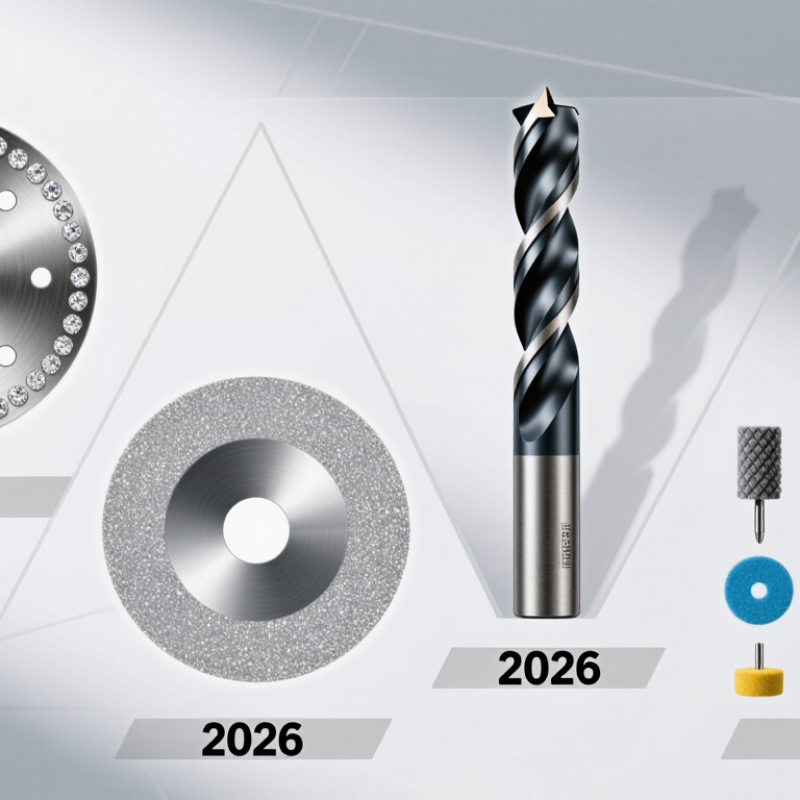
Diamond saw blades, core bits, grinding cups, polishing pads, and wire saws serve different jobs. A blade makes straight cuts in concrete or tile, while a core bit creates round openings. Grinding cups remove uneven surfaces; finer pads refine the finish. Wire saws can help with large or awkward cuts. Match the tool to the material and task. Close matters.
Compare cutting speed, finish, service life, and total cost per job. A fast blade may leave a rough edge, adding cleanup time. Bond hardness matters too: softer bonds can expose fresh diamond more readily in hard materials, while harder bonds may suit abrasive ones. Check the tool’s rated speed and the machine’s capacity before use. Wet or dry conditions also affect dust, heat, and performance.
Test the choice on a small area when conditions are unfamiliar. Watch for glazing, excess vibration, slow cutting, or rapid wear. These signs can point to a mismatch, poor cooling, or incorrect operating pressure. Specs help, but they do not tell the whole story. Real material varies, and a tool that worked well yesterday may behave differently on a denser slab. Record results from each job, even if the notes are imperfect.
| Tool Type | Typical Applications | Common Diamond and Bond Options | Performance Strengths | Trade-Offs and Limitations | Best Fit When… |
|---|---|---|---|---|---|
| Diamond Saw Blade | Cutting concrete, masonry, tile, natural stone, and other abrasive or hard materials. | Segmented, continuous-rim, or turbo rim designs; commonly metal-bonded segments or rims. | Efficient straight cutting; blade design can be matched to material, cut quality, and wet or dry operation. | Cut quality, cutting speed, and blade life depend on material, segment specification, machine power, and operating conditions. A blade suited to one material may perform poorly on another. | You need repeatable linear cuts and can match the blade specification to the workpiece and saw. |
| Diamond Core Drill Bit | Producing circular holes in concrete, reinforced concrete, masonry, tile, and stone. | Segmented or continuous diamond crowns; metal bonds are common, with specifications selected for the material and drilling method. | Creates accurate holes with less material removal than drilling a full-diameter opening; available for wet and dry drilling systems. | Requires compatible drill capacity, stable setup, and appropriate water or dust management. Reinforcement can affect drilling rate and segment wear. | You need clean, controlled holes for services, anchors, or samples rather than a cut through an entire surface. |
| Diamond Cup Wheel | Grinding concrete, masonry, stone, and mortar; removing coatings or leveling surfaces when the wheel is designed for the task. | Single-row, double-row, or segmented layouts; generally metal-bonded diamond segments. | Broad contact area supports fast stock removal and surface preparation; cup shape works with compatible angle grinders or floor machines. | Can leave visible grinding marks and generate heat and dust. Finish quality depends on segment layout, bond, grit, pressure, and machine control. | You need to remove material or prepare a surface before finer grinding or polishing. |
| Diamond Grinding Wheel | Precision grinding of hard materials such as carbide, ceramics, glass, stone, and selected non-ferrous materials. | Resin, metal, vitrified, or electroplated constructions; each bond and construction suits different grinding conditions. | Can maintain abrasive cutting action on hard, brittle workpieces; wheel form and bond can be selected for precision, wear resistance, or access. | Wheel specification, dressing needs, coolant, and machine setup are application-specific. Diamond is generally unsuitable for grinding steel at high temperatures because carbon diffusion can rapidly reduce tool life. | You need controlled grinding and can verify material compatibility, wheel specification, and machine requirements. |
| Diamond Polishing Pad | Progressive finishing of concrete, engineered stone, natural stone, and other compatible surfaces. | Resin-bonded, metal-bonded, hybrid, or flexible pads; typically used in a sequence of abrasive grits. | Supports gradual refinement from grinding marks toward a smoother finish; flexible formats can follow curved or contoured surfaces. | A polished result usually requires multiple stages and careful grit progression. Using an overly coarse stage or skipping steps can leave scratches or an uneven finish. | Surface finish matters and you can follow the pad maker’s recommended sequence for the material and machine. |
| Diamond Router or Profile Bit | Shaping edges, profiling, and cutting details in stone, tile, and selected composite materials. | Often metal-bonded or electroplated cutting edges; profile and attachment are matched to the machine and workpiece. | Enables repeatable edge shapes and localized material removal that a straight blade cannot produce. | Profile, spindle speed, feed, and cooling must match the bit and material. Small contact areas can concentrate heat and wear if overloaded. | You need shaped edges, grooves, or detail work rather than a straight cut or broad surface grind. |
| Diamond Wire Saw | Quarrying blocks and cutting large stone, reinforced concrete, or complex structures with suitable wire-saw systems. | Diamond beads mounted on a steel cable; bead design and bond are selected for the material and cutting conditions. | Can make long cuts and handle large or irregular workpieces where a conventional blade is impractical. | Requires specialized equipment, correct wire tension and alignment, and suitable operating controls. Setup is more involved than for portable blades. | The workpiece is large, the cut path is extensive, or access makes standard blade cutting impractical. |
Comparison note: No single tool type is best for every job. Compare workpiece material and hardness, cut or finish requirements, wet or dry operation, machine compatibility, bond and grit specification, expected tool life, and dust or water controls. Follow the tool and machine instructions, including rated speed limits and applicable safety requirements.