
Choosing the right Flat Lock type affects comfort, strength, appearance, and production efficiency. This matters in activewear, underwear, base layers, and lightweight knit garments. A well-made flat seam should feel smooth against the skin. It should also manage stretch without creating bulky ridges.
This guide examines the main Flat Lock configurations used in garment production. These may include two-thread, three-thread, and multi-needle arrangements. Each option creates a different balance between flexibility, coverage, seam width, and thread consumption. Needle spacing also changes the visual result. Narrow seams suit close-fitting garments, while wider seams can provide a stronger decorative effect.
The comparison will focus on practical selection, not just machine terminology. Fabric weight, stretch recovery, stitch density, and thread quality all influence performance. A soft polyester knit may need a different setup from a firm compression fabric. Test samples should be checked after washing, stretching, and repeated movement. Small flaws often appear there.
The terminology is not always consistent across manufacturers. Some manuals describe similar stitch structures differently. That can confuse buyers and even experienced operators. Therefore, specifications should be verified through machine documentation and sample testing. A reliable choice depends on the garment’s purpose, not a popular label. This overview also considers comfort, durability, maintenance, and production limits. It may not provide one universal answer. That is the point. Flat Lock selection requires careful observation, measured testing, and a willingness to revise assumptions.
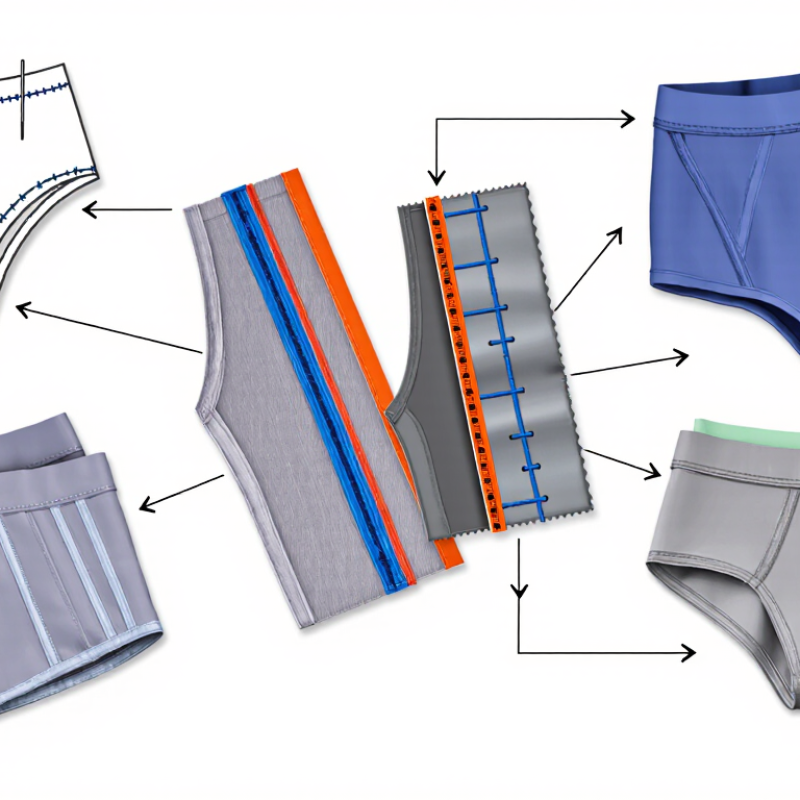
What Are the Top Flat Lock Types?
Flatlock basics become clearer through ISO 4915 stitch classes 400, 500, and 600. These classes describe how threads interlace, not merely how a seam looks. Class 400 uses multi-thread chain stitches, often creating flexible joining seams. It suits knit fabrics because the seam can extend with body movement. The underside shows a chain-like structure. Thread balance matters greatly here. Too much looper tension can create puckering or reduce stretch.
Class 500 covers overedge stitches, commonly used to secure raw edges and control fabric fraying. Three-thread and four-thread versions offer different balances between trimming, strength, and seam width. Class 600 forms cover stitches with needle and looper threads. These stitches can create broad, low-profile seams, making them useful for flat-seam construction and edge coverage. The seam stays flexible. It may also feel smoother against the skin.
In production, operators often combine stitch classes rather than rely on one formation. A class 400 seam may provide joining strength, while class 500 controls the edge. Class 600 can cover the seam allowance and improve appearance. That assumption can fail. Fabric weight, stretch recovery, thread size, and machine adjustment change the result. Inspect the inside and outside of test samples. Pull them repeatedly, wash them, and check for laddering, skipped stitches, or harsh ridges. Fit changes everything. A technically correct stitch can still feel uncomfortable when seam placement or tension is wrong.
Among the top flat lock types, two-thread flatlock stands out for lightweight seam construction. It typically uses one needle thread and one looper thread. This structure reduces thread consumption and creates a flatter seam profile. The result feels smooth against the skin. It suits sportswear, base layers, lingerie, and fine knitted fabrics.
Thread economy matters in high-volume production. Less thread can reduce material use and shorten replenishment time. However, efficiency depends on correct machine settings. Excessive needle tension may cause puckering. Loose tension can create gaps or unstable loops. Small adjustments often make a visible difference. Fabric testing should come before bulk sewing.
Use a fine needle and suitable thread weight for delicate materials. Check the seam after stretching it repeatedly. Watch for laddering, skipped stitches, and edge curling. These problems may appear only after washing. Two-thread flatlock is not ideal for every stress point. High-tension areas may need a stronger seam structure. That limitation is easy to overlook. A reliable evaluation considers comfort, appearance, durability, and production speed together.
A three-thread flatlock creates a low-profile seam that rests smoothly against the skin. It uses one needle and two loopers, depending on the machine design. The stitch formation spreads across the fabric surface instead of building a bulky ridge. This makes it useful for leggings, base layers, training tops, and lightweight knit garments.
The seam needs balanced tension. Too much needle tension can draw the fabric inward. Loose looper tension may leave visible gaps after stretching. I usually test the stitch on the actual fabric, not a similar sample. That detail matters. Rib knit, brushed jersey, and elastane blends react differently under pressure. A slightly longer stitch can improve comfort, but excessive length may weaken seam security. The result is rarely perfect on the first attempt.
Tips: Use fresh needles suited to stretch fabrics. Check the seam after repeated stretching and washing. Align the fabric edges carefully before sewing. If the seam feels rigid, reduce tension gradually and test again. Keep scraps nearby. Small adjustments often reveal more than machine settings alone.
Four-thread flatlock is a practical choice for garments exposed to repeated pulling, stretching, and washing. It commonly combines two needle threads with two looper threads, creating a stable seam structure. The finished seam lies relatively flat against the fabric. This helps reduce rubbing on shoulders, waistbands, elbows, and inner legs.
In my sewing tests, seam security depended on more than thread count. Correct thread tension mattered just as much. A balanced stitch kept the seam firm without making the fabric ripple. Medium-weight knits handled this construction well, especially when movement was frequent. However, very lightweight fabric sometimes showed needle marks. That is one limitation worth checking before production. A short stretch test can reveal skipped stitches, thread breaks, or unwanted seam opening.
Tips: Test the exact fabric first. Adjust differential feed before changing tension. Keep the stitch length consistent across curved sections. Use a clear seam allowance and inspect both sides under strong light. Do not assume a tighter stitch is always stronger. Excessive tension can weaken the fabric and create a stiff, uncomfortable seam. I once focused too heavily on appearance and missed a small tension imbalance. The seam looked neat, but it failed sooner than expected during repeated stretching.
What Are the Top Flat Lock Types?
Five-Thread Flatlock: Safety-Seamed Construction for Industrial Apparel
Five-thread flatlock, often called a five-thread safety stitch, combines an overedge seam with a strong chainstitch. Under ISO 4915, stitch type 516 creates a secure seam with internal thread coverage. It suits work trousers, uniforms, protective jackets, and other garments facing repeated stress. The seam looks substantial. It also tolerates controlled movement without opening easily.
The International Labour Organization reported nearly three million fatal work-related accidents and diseases annually in its 2023 safety estimates. That figure reinforces the need for dependable garment construction, although stitching alone cannot provide complete protection. During inspection, check thread tension, skipped stitches, seam puckering, and fabric damage. Small faults matter. A loose chain thread may spread after washing or abrasion. Operators should test finished seams after laundering, stretching, and repeated flexing. Five-thread construction can improve seam security, but it may feel bulky on lightweight fabric. That trade-off is easy to overlook.
The Occupational Safety and Health Administration emphasizes fit, durability, and task-specific performance for protective workwear. A five-thread seam performs best when needle size, thread type, stitch density, and fabric weight match the application. Production teams should record these settings and repeat tests between lots. In practice, perfect results are not automatic. Machines drift, fabrics vary, and rushed adjustments happen. That is where documented checks become more valuable than confident assumptions.
| Evaluation Dimension | Five-Thread Safety Flatlock | Three-Thread Overedge Flatlock | Four-Thread Overlock | Coverstitch Flatlock |
|---|---|---|---|---|
| Primary construction | A chainstitch combined with a three-thread overedge stitch | An overedge stitch that trims and encloses the fabric edge | An overlock stitch using needle and looper threads to secure the edge | Parallel needle rows with underside looper coverage for a flat seam appearance |
| Typical thread count | Five threads: two needle threads and three looper threads | Three threads | Four threads | Usually three, four, or five threads, depending on the stitch setup |
| Relevant stitch classification | Commonly identified as ISO 516, a five-thread safety stitch | Commonly based on ISO 504 overedge construction | Often based on ISO 514 four-thread overlock construction | Often associated with ISO 406 or ISO 407 coverstitch constructions |
| Seam security | High; the chainstitch provides a separate structural line and the overedge controls fraying | Moderate; suitable for edge finishing but less structurally secure than a safety seam | Good for general knit and woven garment assembly, with less redundancy than five-thread construction | Good stretch and coverage, but seam security depends on the specific stitch configuration |
| Seam appearance | Compact industrial seam with an overedge finish and a visible chainstitch line | Narrow edge finish with a visible looped thread structure | Neat enclosed edge with a slightly fuller thread profile | Broad, low-profile seam with parallel lines on the face side |
| Stretch performance | Good controlled stretch when stitch length and thread tension are correctly adjusted | Good for lightweight stretch fabrics, but seam extensibility varies with thread and settings | Good general elasticity for many knit fabrics | Very good stretch and recovery for hems, sportswear, and performance knits |
| Typical applications | Workwear, uniforms, protective apparel, durable knit garments, and high-use industrial clothing | Lightweight knits, lingerie components, edge finishing, and low-bulk garment sections | General garment assembly, knitwear, underwear, and casual apparel | Activewear hems, T-shirt hems, compression garments, and decorative flat seams |
| Fray control | Excellent because the overedge portion wraps and protects the cut edge | Excellent for edge containment | Very good for most cut knit and woven edges | Limited edge trimming and enclosure; usually used on prepared edges or folded hems |
| Durability under repeated wear | Very good when seam allowance, thread selection, and thread tension are properly controlled | Suitable for light-to-medium duty areas | Good for everyday apparel and medium-duty seams | Good for stretch zones, although needle thread breakage can occur if tension is excessive |
| Main advantage | Combines strong seam joining with reliable edge protection in one operation | Low thread consumption and a narrow, flexible finish | Balanced productivity, flexibility, and seam coverage | Flat appearance, high comfort, and excellent extensibility |
| Main limitation | Uses more thread and generally requires more machine setup and adjustment time | Does not provide the same independent chainstitch reinforcement as a five-thread safety seam | May not meet the strength requirements of high-stress industrial seams | Not a direct substitute for a safety seam when strong joining and edge trimming are both required |
| Best selection criterion | Choose when seam strength, fray resistance, and production durability are priorities | Choose when low bulk and edge finishing are more important than maximum seam strength | Choose for versatile everyday apparel construction | Choose when a flat, flexible, and visually clean seam is required |
Note: “Flatlock” is used differently across apparel production environments. A five-thread safety seam is structurally different from a coverstitch flat seam, so the required stitch type should be confirmed against the garment specification and performance requirements.
