
Welcome to Worldia, we have over 25 years of expertise.

Top Formwork Magnets for Sale in 2026?

Choosing the top Formwork Magnets for sale in 2026 means looking beyond advertised pull force. On a precast production line, a magnet must sit flat, release cleanly, and hold its position through vibration. Small details matter: table thickness, adapter fit, concrete pressure, and how often crews reset the mould. A high force rating alone does not guarantee a reliable setup.

The productivity challenge is real. McKinsey Global Institute’s 2017 report, Reinventing Construction, estimated that construction labor productivity had grown about 1% annually over the previous two decades, compared with 3.6% in manufacturing. That figure does not measure magnet performance. It does show why practical gains from repeatable setup and fewer adjustments deserve attention. Construction adviser Mark Farmer’s report title, Modernise or Die, offers a blunt reminder: established methods may need review.

For 2026 buyers, compare verified holding-force data, compatibility with your formwork system, corrosion protection, and service support. Ask suppliers how testing conditions differ from your own steel tables. Request clear instructions for installation, cleaning, and release. Then test shortlisted products on a representative mould before committing to a full set. This step is easy to overlook. It shouldn’t be. Published specifications help narrow the field, but site conditions decide whether a magnet performs as expected. The best choice is not automatically the strongest or cheapest; it is the one that fits your production process and can be checked in practice.
Top Formwork Magnets for Sale in 2026?

What Formwork Magnets Are and How They Secure Concrete Forms

Top Formwork Magnets for Sale in 2026?

Formwork magnets are reusable devices that hold steel side forms in position on a steel casting bed. Their magnetic force helps keep the form aligned while concrete is placed and cured.

Many designs use a switchable mechanism: workers activate the magnet for positioning, then release it when the form is ready to move. They hold fast. The exact holding force depends on the magnet, the steel surface, and how cleanly the unit sits against it.

On site, a worker may set a magnet beside a form rail, check the edge against the drawing, and engage the mechanism with a lever or tool. A thin layer of dried concrete or a small gap can reduce contact and affect performance.

Still, magnets are not magic. They anchor the form to the bed, but the formwork system must also be designed to handle concrete pressure and placement forces.

Check rated capacity and operating instructions for the specific setup; a number on a product sheet cannot account for every casting condition.

After use, remove residue and inspect the contact face and mechanism. A quick check is easy to skip, and that is often when alignment problems begin.

The Main Types of Formwork Magnets Available in 2026

Top Formwork Magnets for Sale in 2026?

The Main Types of Formwork Magnets Available in 2026

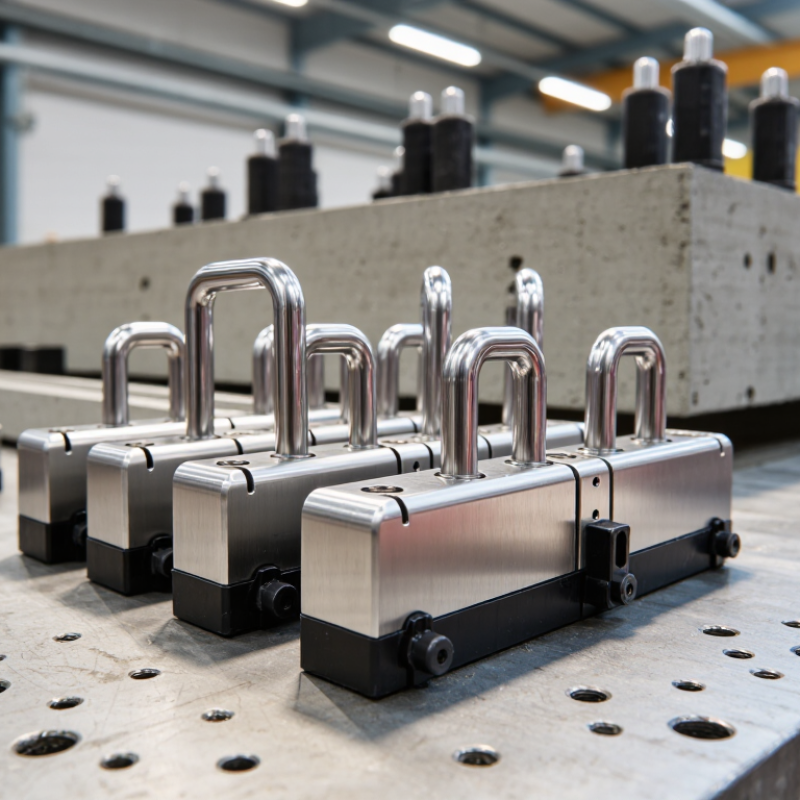
Formwork magnets generally fall into several practical categories. Standard switchable box magnets use a steel housing and a release button or lever. They secure timber or steel shutters to a casting bed, then disengage for repositioning. Small parts matter. Check that the magnet sits flat and its rated holding force suits the bed plate.

Side-rail magnets have a slimmer profile for fixing along panel edges or integrated shuttering rails. They can help keep long sections aligned, especially when crews repeat the same layout. Insert magnets serve a different job: they hold recess formers, sleeves, or embedded components in position during casting. Their shape and placement depend on the insert, so a generic size may not fit.

Some setups use adapter plates or linked magnet assemblies to handle wider panels and varied layouts. Selection should account for concrete pressure, panel weight, bed thickness, and the working gap between magnet and steel. Dust, grout, or a slight tilt can reduce contact and holding performance. Clean the contact surface, test the setup, and follow the supplier’s load guidance. Ratings are useful, but real site conditions are rarely perfect. That deserves a second look.

Key Factors for Comparing Formwork Magnet Performance

Top Formwork Magnets for Sale in 2026?

Key Factors for Comparing Formwork Magnet Performance

A magnet’s holding-force rating is only useful when its test conditions match the job. Compare pull force, contact area, and whether the force acts vertically or sideways. ACI 347R-14, Guide to Formwork for Concrete, accounts for placement rate, concrete temperature, unit weight, and vibration when estimating fresh-concrete pressure. It also uses about 150 lb/ft³ (2,400 kg/m³) as a typical unit weight for normalweight concrete. These conditions affect the load a formwork system must resist; magnet force alone cannot establish safe performance.

Check how each unit behaves on the actual form face. Paint buildup, rust, dust, or a slight gap can reduce magnetic contact. Ask for test results on a comparable steel thickness, and check whether the rating is a peak value or a working value. Small details matter. A clean, flat plate can make a catalog figure look convincing, while a rough, curved surface may tell a different story.

Also compare release mechanisms, corrosion protection, and repeatability after cycling. In practical trials, measure displacement under load and inspect for slipping after vibration. Record the setup, including plate thickness and surface condition. One caveat: site tests can be inconsistent if crews change the setup between samples. Even so, repeatable field measurements often reveal more than an impressive number on a datasheet.

Top Formwork Magnet Options for Sale in 2026

Top formwork magnet options for sale in 2026 include standard box magnets, compact units for narrow beams, and adjustable systems for changing panel layouts. A box magnet suits repeated work with steel formwork because its housing protects the switch mechanism from concrete splash. Compact magnets fit tight spaces, but their smaller footprint may offer less resistance to movement. Check the formwork profile and magnet dimensions before ordering.

Holding force matters, but it is not the whole story. Compare the supplier’s rated force with the panel design, expected concrete pressure, and installation conditions. Sideways movement can be a concern, even when a magnet lifts strongly in a straight pull. Keep contact surfaces clean; a thin layer of dried concrete can leave a visible gap. Small details matter.

For frequent layout changes, adjustable magnets can reduce the need for custom brackets. Confirm that their locking parts are easy to reach with gloves on, and ask for load data and care instructions. Test a sample on the actual steel profile before buying a large quantity. A tidy product sheet helps, but it cannot replace a site check. Choosing only by price or advertised force is tempting, and sometimes it leads to rework.

Top Formwork Magnets for Sale in 2026? - Top Formwork Magnet Options for Sale in 2026

Formwork Magnet Option Typical Configuration Typical Size or Range Best Suited For Key Selection Considerations
Standard push-button magnet box Steel housing with an internal permanent-magnet assembly and push-button release Commonly offered in several lengths; nominal holding-force ratings vary by model, often around 10–18 kN Repeated positioning of steel side forms on precast casting beds Check bed-plate thickness, contact surface flatness, form profile, and the supplier’s rated force test conditions.
Compact magnet box Short, low-profile magnetic unit with a mechanical release button Typically shorter than standard units; commonly rated around 5–10 kN, depending on design Light-duty forms, narrow profiles, and layouts with limited installation space Confirm that the available contact area and rated force are adequate for the formwork design and concrete pressure.
Heavy-duty magnet box Reinforced steel housing and a higher-capacity permanent-magnet assembly Often rated around 18–25 kN or more, depending on the model and test conditions Heavier steel forms and applications requiring higher clamping capacity Review the formwork load calculation, bed compatibility, handling requirements, and the magnet’s rated working conditions.
Adjustable Magnetic Formwork system Magnet box paired with an adjustable profile or adapter for different form heights Profile height and length are selected to match the form; magnet ratings depend on the box used Precast production using multiple form heights or changing product geometries Check adjustment range, profile stiffness, connection method, and whether the magnet can sit flush on the casting bed.
Magnetic chamfer strip Steel-backed strip, commonly with a triangular or shaped profile, held to a steel form or bed by magnets Profile dimensions and strip lengths vary; available in multiple chamfer sizes Creating consistent chamfered edges on precast concrete elements Select the required chamfer shape and size; verify magnetic contact, alignment, and resistance to movement during casting.
Magnetic corner or angle profile Magnetic profile designed to position or secure a steel corner-form section Dimensions are matched to the form profile and corner geometry Forming edges, corners, and shaped sections in precast elements Confirm the profile angle, contact surfaces, and compatibility with the casting-bed and formwork materials.

Important: Holding-force figures are indicative product-rating ranges, not allowable design loads. Actual performance depends on the magnet design, steel thickness, surface condition, air gaps, and loading direction. Confirm current specifications and suitability with the supplier and the project’s formwork engineer.

How to Select, Use, and Maintain Formwork Magnets

Top Formwork Magnets for Sale in 2026?

Selecting a formwork magnet is about matching its holding capacity to the panel, steel surface, and expected concrete pressure. Check the system’s rated capacity and installation guidance, rather than choosing by magnet size alone. A clean, flat contact area helps the magnet seat properly; dried concrete or a small gap can reduce its grip. Small details matter.

During setup, position each magnet on the designated steel face and confirm it is fully engaged before placing concrete. Keep spacing consistent with the formwork system’s instructions, especially near edges and joints. A quick pull test can reveal poor contact, but it does not replace proper load planning. That is easy to overlook. Never assume one magnet layout suits every panel or pour.

After stripping, remove concrete residue with tools that will not damage the magnet housing or contact surface. Inspect for cracks, bent parts, corrosion, and weak engagement before the next use. Store magnets dry, with contact faces protected from impact and metal debris. If performance seems inconsistent, check the surface and seating first, then follow the supplier’s inspection criteria. A rushed cleanup can leave grit behind, and I would not ignore it.

Top Formwork Magnets for Sale in 2026? How to Select, Use, and Maintain Formwork Magnets

Understand the force units that may appear in magnet specifications. The bars express the same force—1 kilonewton—in different units.

Use the manufacturer’s rated holding force to compare magnets, and account for the formwork setup and working conditions. Keep contact surfaces clean, check magnets before use, and follow the product’s care instructions. Conversion values are rounded; 1 kgf = 9.80665 N and 1 lbf = 4.44822 N.

Hi! What is your idea today?
WORLDIA 8618618272087
Nina +86 15631662072
google-site-verification=0STkOZEvYuoDp-D40AVfMUk--CzM2AsZv24S6ISPdmk