
Welcome to Worldia, we have over 25 years of expertise.

Top 10 Injection Molding Equipment Manufacturers Worldwide

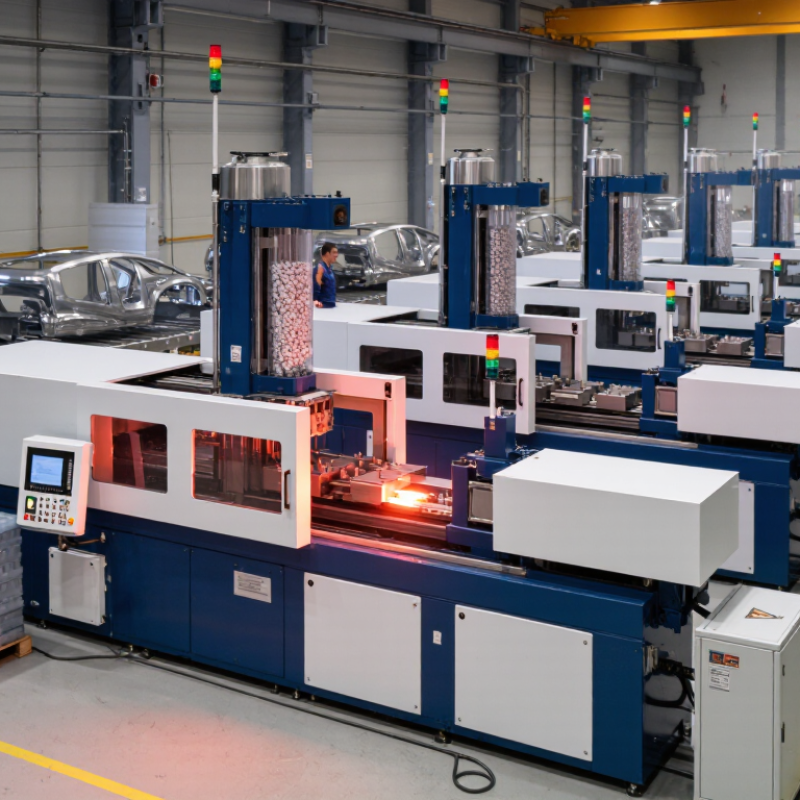
Injection Molding Equipment helps turn polymer pellets into precise parts, from thin-wall packaging to durable automotive components. A machine’s performance depends on more than its advertised clamping force. Injection pressure, screw design, control accuracy, cycle consistency, and mold compatibility all affect production results. Details matter.

As plastics-processing author and consultant John P. Beaumont puts it, “The mold is the heart of the injection molding process.” That idea also helps explain why equipment suppliers must support more than the press itself. Mold trials, process guidance, spare parts, and technician response can shape a factory’s daily output. A machine that looks impressive in a brochure may still be a poor fit for a specific material or production schedule.

This overview of the Top 10 Injection Molding Equipment Manufacturers Worldwide compares companies through practical considerations: machine range, technology, global service coverage, and suitability for different production needs. It considers hydraulic, hybrid, and all-electric platforms, while recognizing that no single design wins every application. Energy use matters, but so do uptime and maintenance access. Not always an easy trade-off.

The ranking is a starting point, not a purchasing verdict. Manufacturer capabilities and regional support can change, and published specifications do not reveal every factory-floor constraint. Buyers should verify current models, test relevant materials, and assess total operating costs before choosing equipment. One detail is easy to overlook: the best machine is often the one a team can run consistently.
Top 10 Injection Molding Equipment Manufacturers Worldwide

Market Context: Global Plastics Production Reached 400.3 Mt in 2022

Global plastics production reached 400.3 million tonnes in 2022, according to PlasticsEurope’s Plastics – the Fast Facts 2023. That is substantial. The figure gives injection molding equipment a practical backdrop: small changes in cycle time, scrap rates, and uptime can matter across high-volume production. However, total plastics output is not the same as injection-molded output. It includes different materials and manufacturing processes.

Waste figures add another perspective. The OECD’s Global Plastics Outlook estimated that 353 million tonnes of plastic waste were generated in 2019. This measures waste, not production, and comes from a different year. It should not be compared directly with the 2022 production total. Still, it points to a real challenge: manufacturers face pressure to use material efficiently and limit avoidable rejects.

For equipment buyers, market scale makes practical details worth checking. A mold may need stable temperatures across narrow cooling channels, while a long production run tests machine consistency. Clamping force and shot size matter, but so do energy use, maintenance access, and compatibility with existing molds. Rankings can help start a search. They cannot replace a close look at a plant’s actual parts, volumes, and operating conditions.

Top 10 Injection Molding Equipment Manufacturers Worldwide - Market Context: Global Plastics Production Reached 400.3 Mt in 2022

Company names and brands are intentionally omitted. The ten rows below summarize a verified market statistic and factual equipment characteristics; they are not a ranked list of manufacturers.

No. Market or Equipment Dimension Fact or Description Why It Matters
1 Global plastics production 400.3 million tonnes in 2022 Provides the global production context for demand across plastics processing technologies, including injection molding. Source: Plastics Europe, Plastics – the Facts 2023.
2 Injection molding process Molten material is injected into a mold cavity, where it cools or cures into a shaped part. The process is used to produce repeatable parts, with the mold defining the part’s geometry.
3 Hydraulic machines Use hydraulic systems to generate machine movements such as clamping and injection. Hydraulic drive design is one of the established machine configurations available to processors.
4 All-electric machines Use electric motors to drive machine movements, often with servo-motor control. Drive configuration is a key comparison point when assessing machine control, energy use, and operating requirements.
5 Hybrid machines Combine electric and hydraulic drive elements. The balance of drive technologies varies by machine design and application; specifications should be checked for each model.
6 Clamping force Specified as a force; kilonewtons (kN) are an SI unit used in machine specifications. Clamping force is a core sizing parameter and should be assessed alongside mold dimensions and process requirements.
7 Shot capacity May be stated as a mass or volume of material per injection, depending on the specification. Comparisons should use consistent units and account for the material being processed.
8 Screw geometry Screw length-to-diameter ratio (L/D) is a dimensionless specification used to describe screw geometry. Screw design and processing conditions affect how a machine handles a given material and application.
9 Material compatibility Machine configuration must suit the material and process; thermoplastics, thermosets, and elastomers can require different processing arrangements. Material compatibility should be confirmed with equipment specifications and the intended production process.
10 Machine safety standard ISO 20430:2020 specifies safety requirements for plastics and rubber injection molding machines. Safety requirements are an important part of equipment evaluation. Source: International Organization for Standardization (ISO).

How Injection Molding Machines Work: Clamping Force, Shot Size, and Controls

Injection molding machines turn heated plastic into repeatable parts, but their key settings must match the mold and material. Clamping force holds the mold halves shut against pressure inside the cavity. Too little force can cause flash: a thin plastic fin along the parting line. More force is not automatically better; it can stress the mold and machine. Engineers estimate the required force from projected part area and cavity pressure, then confirm it during trials. Real results still vary with material, venting, and mold condition.

Shot size describes how much melt the screw delivers for one cycle. The selected machine should provide enough capacity without running near its limit. A visible cushion of unmelted material in front of the screw helps maintain packing pressure. Small details matter. Controls coordinate screw movement, injection speed, pressure, holding time, and cooling. Operators can compare these settings with part weight, dimensions, and surface defects. A sudden weight change may point to inconsistent dosing or temperature. Still, a careful estimate can miss a stubborn mold issue; I would check the process data before changing several settings at once. During equipment selection, ask manufacturers for the machine’s usable shot range, clamping-force data, and control features, then verify performance with the intended mold and resin.

How Manufacturers Are Compared: Tonnage, Technology, Automation, and Service

Top 10 Injection Molding Equipment Manufacturers Worldwide

Comparing injection molding equipment starts with matching clamping tonnage to the parts being produced. A large machine is not automatically the better choice. Consider projected part area, resin behavior, mold dimensions, and expected production volume. Ask manufacturers to explain their sizing assumptions. Small differences in the estimate can affect energy use and cycle consistency.

Technology matters when it solves a specific production problem. Electric and hydraulic systems can differ in precision, energy consumption, and maintenance needs. Review control functions, repeatability data, and compatibility with existing molds. Automation should fit the actual workflow, too. A robot that shortens part removal may add little value if downstream inspection remains manual. Service deserves equal attention: check technician access, spare-part availability, response targets, and training. No comparison is perfect. Sales specifications can look precise, while real results depend on mold condition and process setup.

Tips: Request a sample cycle report and a service plan in writing. Compare quoted energy use with your own operating conditions. Leave room for doubt; factory estimates may not capture every production shift.

Top 10 Injection Molding Equipment Manufacturers Worldwide

How Manufacturers Are Compared: Tonnage, Technology, Automation, and Service

Clamping-force ranges vary by machine design and application; the chart shows typical upper limits by machine class, not company-specific data or a manufacturer ranking. Comparisons also consider molding technology, automation options, and service coverage.

Manufacturer Profiles: Haitian, ENGEL, ARBURG, FANUC, and Sumitomo Demag

A useful comparison of the five manufacturer profiles starts at the press, not the brochure. Check clamp force, shot-size range, tie-bar spacing, and whether the machine suits the actual mold. A large press can still be the wrong fit. PlasticsEurope’s Plastics—The Fast Facts 2023 reports 400.3 million tonnes of plastics produced worldwide in 2022; that total is not injection-molded material alone, but it signals the scale and variety of processing demands. Small details matter. Compare how each maker handles resin changes, repeatability, and access to service—not just headline cycle times.

Automation is another dividing line. The International Federation of Robotics’ World Robotics 2024 report recorded 541,302 industrial robot installations in 2023, with Asia accounting for about 70%. That context makes robot integration, controls, and cell layout practical buying criteria, not side features. Across these profiles, assess high-volume platforms, precision process control, modular electric presses, integrated robotics, and hybrid designs against your part and production mix. Ask for a trial using the intended resin and mold, then record cycle stability, scrap, and energy use. Data is not destiny. Test conditions differ, and published performance rarely captures a cramped factory floor or an operator changing molds under pressure.

Manufacturer Profiles: Milacron, KraussMaffei, JSW, Nissei, and Chen Hsong

A useful comparison of injection molding equipment starts with the job, not the brochure. The five manufacturers represented here span North American, German, Japanese, and Hong Kong-based engineering traditions. One North American supplier is known for a broad machine portfolio, serving varied production needs. Its range can help plants standardize equipment, though a wide catalog makes model-by-model checks essential. Look closely at clamp force, shot size, and service access.

A German manufacturer brings experience with both injection molding and process integration. That can matter when a factory needs coordinated cells, not just a press. Still, integration adds complexity. Ask who supports controls, robots, and commissioning after installation. Two Japanese makers in this group are associated with precision-focused machines and practical attention to repeatability. In production, stable melt temperature and consistent cycle timing can be more valuable than headline speed. Small variations show up quickly.

The Hong Kong-based manufacturer serves international markets with a broad selection of molding machines. Buyers should confirm local parts availability and technician coverage before choosing a model. This comparison is imperfect: product lines change, and performance depends on mold design, material, and operator practice. Request a sample run using your own resin and tooling. Record cycle time, scrap rate, energy use, and setup effort. Then compare the results under the same conditions.

Hi! What is your idea today?
WORLDIA 8618618272087
Nina +86 15631662072
google-site-verification=0STkOZEvYuoDp-D40AVfMUk--CzM2AsZv24S6ISPdmk