
Selecting the right Scaffold Jack Base can influence stability, leveling accuracy, and installation speed across many construction sites. Global buyers often compare threaded jacks, U-head jacks, swivel bases, forkhead bases, and heavy-duty adjustable models. Each design serves a different structural purpose. A U-head may support a steel beam or timber bearer, while a base plate spreads pressure across concrete or compacted ground. Small details matter.
From practical procurement experience, thread diameter, adjustment range, plate dimensions, steel grade, weld quality, and surface treatment deserve close attention. Galvanized finishes can improve resistance to outdoor moisture, but coating quality still requires inspection. Buyers should request load-test reports, material certificates, dimensional drawings, and clear packaging details. Supplier claims need verification. Photos alone are not enough.
This guide examines ten common Scaffold Jack Base types for international purchasing decisions. It considers compatibility, working conditions, handling, maintenance, and likely project costs. Regional scaffold systems may use different dimensions or connection methods, so a familiar product may not fit correctly. Check the system first. The safest choice is not always the heaviest one; it is the product matched to the actual load, ground condition, and adjustment requirement. Some comparisons remain imperfect because suppliers describe capacities differently. That limitation should encourage careful technical review, not rushed buying. With consistent specifications and documented quality checks, buyers can reduce installation problems and select jack bases with greater confidence.
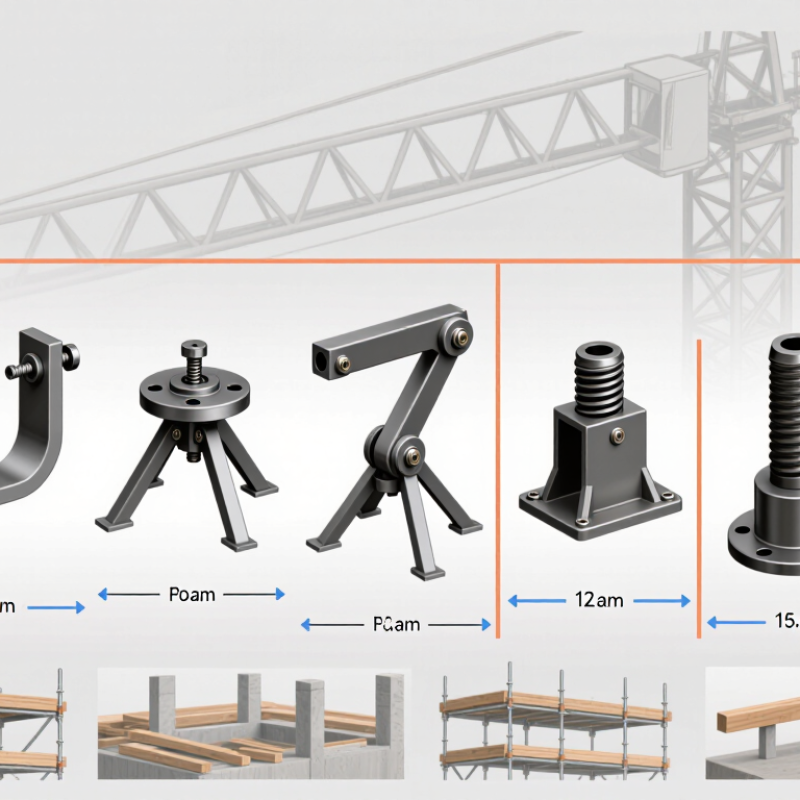
Top 10 Scaffold Jack Base Types for Global Buyers
Scaffold jack bases differ by function, structure, and application. A fixed flat-plate jack uses a welded steel plate for firm contact on concrete floors. A U-head jack supports timber beams, ledgers, or formwork from above. Its open channel helps align horizontal members. A fork-head jack grips paired beams and reduces sideways movement during temporary support work. A swivel jack includes an angled joint for sloped ground or uneven structural connections. It is useful, but its joint needs careful inspection.
A base-collar jack adds a collar near the plate, improving connection with vertical scaffold standards. A solid-stem jack uses a thick steel rod and suits higher compression loads. A hollow-stem jack weighs less and may simplify handling, though wall thickness must be checked carefully. An adjustable screw jack uses a threaded stem and nut for height correction. Clear threads matter. A reinforced heavy-duty jack adds thicker plates, larger threads, or gussets for demanding formwork applications. A caster-compatible jack supports mobile scaffold systems, but it must match the wheel assembly and locking arrangement.
Global buyers should compare plate dimensions, thread diameter, adjustment range, coating, weld quality, and rated load. Measurements can vary between suppliers, even when names look identical. Request drawings, inspection records, and sample pieces before bulk purchasing. Check how the base performs on wet concrete, timber, or compacted ground. I have seen small thread damage create large adjustment problems. Product selection is not only a catalog decision; site conditions can change the correct choice.
The chart compares representative maximum adjustment lengths commonly specified for scaffold jack base configurations. Selection depends on scaffold load, ground conditions, required leveling range, and the applicable regional standard.
Function: Provides a stable, non-adjustable bearing point.
Structure: Flat steel plate welded to a solid stem.
Application: Level concrete floors or pre-leveled support points.
Function: Levels scaffold standards and controls base elevation.
Structure: Threaded solid stem, load-bearing nut, and base plate.
Application: General frame and tube-and-fitting scaffolding.
Function: Provides adjustable support with reduced component weight.
Structure: Hollow threaded tube with a welded or forged plate.
Application: Projects requiring easier manual handling and transport.
Function: Supports and centers beams, ledgers, or timber members.
Structure: Threaded adjustable stem with a U-shaped head.
Application: Shoring towers, formwork, and beam-support systems.
Function: Holds two sides of a beam or scaffold member in position.
Structure: Adjustable threaded stem with a forked steel head.
Application: Heavy-duty shoring and modular support frames.
Function: Maintains support on sloped or uneven surfaces.
Structure: Adjustable threaded stem with an articulated or tilting base.
Application: Sloping ground, ramps, bridges, and irregular platforms.
Function: Combines leveling adjustment with mobile scaffold movement.
Structure: Threaded jack assembly integrated with a locking castor.
Application: Mobile towers on smooth, hard, and level floors.
Function: Improves connection control and distributes load at the scaffold base.
Structure: Adjustable stem with a collar or rosette-compatible connection.
Application: Ring-lock and other modular scaffold systems.
Function: Supports higher reaction loads and demanding temporary works.
Structure: Larger threaded stem, reinforced nut, and thicker base plate.
Application: Shoring towers, industrial access structures, and formwork.
Function: Provides a wide height range with rapid coarse adjustment.
Structure: Telescoping outer and inner tubes combined with a fine-thread jack.
Application: High-clearance shoring and structures with large elevation differences.
The adjustment figures are representative common configurations in millimetres, not universal product limits. Always verify allowable load, thread size, plate dimensions, corrosion protection, and local scaffold requirements before specification.
Top 10 Scaffold Jack Base Types for Global Buyers
Scaffold jack bases support vertical loads and correct uneven ground conditions. Their designs differ in movement, contact shape, and adjustment range. A fixed jack base suits firm, level surfaces and straightforward frame layouts. A swivel jack base follows modest ground angles and reduces uneven loading. It needs careful inspection around the pivot and locking parts.
U-head jack bases hold ledgers, beams, or timber securely from below. Forkhead bases grip narrow members and help prevent lateral movement. Leveling jack bases use threaded adjustment for height changes, while fixed plate and swivel plate versions spread loads across broader surfaces. Adjustable U-head, adjustable forkhead, and heavy-duty leveling types complete the ten practical classifications. Keep it simple. Match the head to the supported member.
Measure twice. Buyers should check thread diameter, adjustment length, base plate size, material grade, and surface protection. Load capacity must reflect the complete scaffold arrangement, not the jack alone. Confirm compatibility with frames, couplers, pins, and local site requirements. A common mistake is choosing the longest adjustment range without checking stability. In practice, that choice can increase exposed thread and reduce stiffness. I would also avoid judging quality by appearance alone. Threads should turn smoothly, welds should look consistent, and plates should sit flat. Fit matters. Product drawings, inspection records, and clear test information make international purchasing more reliable.
Choosing among the top 10 scaffold jack base types starts with the planned EN 12811-1 load class. The standard uses six ranges: 0.75, 1.5, 2.0, 3.0, 4.5, and 6.0 kN/m². These values describe the intended scaffold service load, not the jack alone. A base must transfer forces safely into the ground.
Common options include fixed base plates, adjustable screw jacks, swivel jacks, U-head jacks, fork heads, wide-foot bases, heavy-duty bases, leveling bases, locking bases, and castor-compatible bases.
Fixed plates suit firm, level surfaces. Screw jacks help correct small height differences. Swivel designs can follow uneven layouts, while wide-foot bases reduce ground pressure. For 4.5 or 6.0 kN/m² applications, check thread diameter, extension length, steel grade, connection details, and the complete scaffold design. A stronger-looking jack is not automatically safer.
Tips: Keep the threaded adjustment within its marked limit. Place a sole board beneath each base when the ground may settle. Inspect threads, welds, pins, and plates before assembly. Confirm that the ground bearing capacity exceeds the transferred reaction. Do not select a jack from load class alone; bracing, ties, bay width, platform spacing, and wind exposure also matter. A neat calculation can still miss site movement. That deserves a second review. Experienced supervisors should record the chosen class and adjustment length before loading the platform.
When comparing ten scaffold jack base types, inspect adjustment range before appearance. Many adjustable bases provide roughly 300–600 mm of height correction, but actual travel depends on tube size, nut position, and load rating. Measure the uneven area on site. A short stem may leave gaps; excessive extension can reduce stability. Check whether the adjustment is continuous or limited by locking holes.
Thread design deserves close attention. Coarse threads usually tolerate dirt better, while finer threads can offer more precise leveling. Neither choice is automatically safer. Look for a visible thread length, a positive retaining collar, and a nut that turns without binding. EN 12811-1 supports performance-based scaffold assessment, but it does not replace a project-specific engineering check. That distinction is easy to miss.
Material selection affects service life. Common options include carbon steel, galvanized steel, and stainless steel. The NACE IMPACT Study estimated global corrosion costs at US$2.5 trillion, equal to about 3.4% of global GDP in 2013. Zinc coating helps, but damaged edges and trapped moisture still create rust. ISO 9223:2012 classifies atmospheric corrosivity, so coastal and industrial sites need stricter protection. World Steel Association data recorded about 1.89 billion tonnes of crude steel production in 2023, yet high volume does not guarantee consistent base quality. Ask for coating thickness, steel grade, weld inspection, and load-test evidence. I would not trust a polished finish alone.
Top 10 Scaffold Jack Base Types for Global Buyers
Verify OSHA 1926.451 compliance and regional certifications for global sourcing
Global buyers commonly compare fixed base jacks, adjustable screw jacks, U-head jacks, fork-head jacks, swivel jacks, base-plate jacks, heavy-duty shoring jacks, and system-compatible jacks for frame, ringlock, or cuplock scaffolds. Caster-compatible and low-profile leveling bases may complete the list, but compatibility must be confirmed. Names can vary between suppliers. A similar-looking thread may not fit safely.
For United States projects, review OSHA 1926.451 requirements with a qualified scaffold professional. Compliance concerns the complete erected scaffold, not only the jack base. Check rated load capacity, adjustment range, foundation contact, vertical alignment, and secure connections. The jack should sit on a stable surface, with no visible bending, damaged threads, cracked welds, or severe corrosion. Keep inspection records and product traceability documents.
Regional approval also matters. Ask for current material certificates, dimensional drawings, load-test data, welding controls, and factory quality records. Confirm whether the destination requires local conformity marks, third-party testing, or specific hot-dip galvanizing standards. A catalog photo is not evidence. One practical mistake is accepting a certificate without matching its model number, batch, and revision date. Another is assuming OSHA acceptance covers every market. It does not. Before purchasing, request sample measurements and have an independent competent person review the proposed assembly. Some details may still be overlooked, especially when suppliers change steel grades or thread designs without clear notice.
| Rank | Scaffold Jack Base Type | Typical Configuration | Primary Use | Common Material | Typical Adjustment or Base Size | Key Selection Advantages | OSHA 1926.451 Verification Points | Relevant Regional Standards or Certification Pathways | Global Buyer Inspection Documents |
|---|---|---|---|---|---|---|---|---|---|
| 1 | Fixed Base Plate | Flat plate welded to a vertical scaffold standard or spigot | Standard supported scaffolds on firm, level foundations | Hot-dip galvanized carbon steel | Common plate footprints: approximately 120–150 mm square; verify design drawings | Simple, rigid, economical, and easy to inspect | Place on a firm foundation; use mudsills or other adequate foundation where required. Do not use unstable objects to support the scaffold. | OSHA 29 CFR 1926.451(b)(2) EN 12811-1 design framework AS/NZS 1576.1 applications | Material certificate, weld inspection record, dimensional inspection, coating record, and declared design load |
| 2 | Adjustable Screw Jack Base | Threaded stem with base plate, nut, and retaining collar | Leveling uneven ground and correcting small elevation differences | Forged or rolled steel stem with steel plate | Common adjustment ranges: approximately 300–600 mm; verify maximum extension limit | Fast height adjustment while maintaining a continuous load path | Confirm the jack remains within the manufacturer’s extension limit, is fully engaged, and transfers load to an adequate foundation. The scaffold must support at least four times the maximum intended load. | OSHA 29 CFR 1926.451(a)(1) OSHA 29 CFR 1926.451(b)(2) EN 12811-1 AS/NZS 1576.1 | Thread gauge or pitch record, proof-load or design calculation, maximum-extension marking, weld report, and corrosion-protection certificate |
| 3 | Swivel Base Plate | Base plate connected to an articulated or rotating joint | Sloping, irregular, or changing terrain where the scaffold standard must remain vertical | Galvanized steel with forged or machined swivel components | Typical articulation is application-specific; verify permitted angle and load reduction | Improves contact with sloped foundations and reduces point loading | Verify that the joint cannot slip under load and that the supporting surface remains firm and stable. Engineering review may be necessary for non-level or heavily loaded arrangements. | OSHA 29 CFR 1926.451(b)(2) EN 12811-1 AS/NZS 1576.1 | Joint-load test, articulation range, locking mechanism inspection, design calculation, and installation instructions |
| 4 | U-Head Jack Base | Adjustable threaded jack terminating in a U-shaped saddle | Supporting timber beams, steel beams, formwork frames, and shoring heads | Steel stem with pressed or forged steel U-head | Common U-head widths: approximately 100–150 mm; adjustment commonly 300–600 mm | Provides positive seating for beams and helps prevent lateral movement | Use only with a stable load-bearing member seated correctly in the U-head. Check that the scaffold or shoring system is designed for the intended load and braced against displacement. | OSHA 29 CFR 1926.451(a)(1) EN 12811-1 where used in scaffold systems EN 1065 for telescopic steel props where applicable | Head geometry, load-capacity table, proof-load evidence, thread inspection, weld inspection, and installation manual |
| 5 | Base Jack with Spigot | Adjustable base jack incorporating a projecting spigot for the scaffold standard | Ringlock, cuplock, frame, and other modular scaffold systems | Galvanized steel with machined or formed spigot | Common spigot diameter range: approximately 25–38 mm; verify system compatibility | Provides height adjustment while maintaining positive standard alignment | Confirm full insertion depth, compatible standard diameter, effective locking or retention, and adequate foundation support. Do not mix incompatible system components. | OSHA 29 CFR 1926.451(b)(2) EN 12811-1 AS/NZS 1576.1 CSA S269.2 where applicable | Compatibility drawing, spigot dimensions, insertion-depth requirement, load rating, material certificate, and batch traceability |
| 6 | Heavy-Duty Screw Base Jack | Large-diameter threaded stem with reinforced plate and heavy-duty adjusting nut | High-load scaffolds, shoring towers, temporary works, and industrial access structures | High-strength carbon steel, normally galvanized | Typical stem diameters: approximately 32–38 mm; capacity is design-specific | Higher stiffness and improved resistance to buckling compared with light-duty jacks | Capacity must be established for the complete scaffold configuration, including eccentricity, bracing, foundation bearing, and maximum jack extension. OSHA does not approve a product by brand or model. | OSHA 29 CFR 1926.451(a)(1) EN 12811-1 EN 1065 where used as a prop component AS/NZS 1576.1 | Verified design calculation, load-test report, steel grade, thread inspection, weld NDT where specified, and factory quality plan |
| 7 | Articulated or Tilting Jack Base | Adjustable jack with a tilting head or articulated bearing plate | Uneven concrete, ramps, sloped platforms, and specialized temporary works | Steel jack with hardened pin or spherical bearing components | Typical tilt capability is project-specific; commonly limited to a small design angle | Maintains a better bearing interface on sloped surfaces | Verify the allowable angle, locking method, residual capacity, and prevention of sliding. A competent person should review unusual support conditions. | OSHA 29 CFR 1926.451(b)(2) EN 12811-1 AS/NZS 1576.1 | Angle-capacity chart, slip-resistance test, pin and bearing inspection, design calculation, and installation procedure |
| 8 | Caster Jack Base | Adjustable jack or adapter used with a lockable scaffold caster | Mobile scaffolds designed for movement on smooth, level surfaces | Steel adapter with industrial wheel and positive brake assembly | Wheel diameter and jack geometry vary; common wheel diameters are approximately 125–200 mm | Combines mobility with leveling and a positive parked position | Use only where the scaffold is designed as a mobile scaffold. Wheels or casters must be locked when personnel are on the scaffold, and the surface must be level, stable, and free of hazards. | OSHA 29 CFR 1926.452(w) OSHA 29 CFR 1926.451(b)(2) EN 1004-1 for mobile access towers where applicable | Wheel load rating, brake test, swivel-lock test, mobile-tower compatibility, operating instructions, and inspection checklist |
| 9 | Base Plate with Mud-Sill Interface | Fixed or adjustable base plate installed over timber or engineered load-distribution sill | Soil, asphalt, soft ground, and areas requiring greater bearing distribution | Steel plate combined with sound, rated timber or engineered sill material | Sill dimensions are site- and load-specific; commonly selected by bearing-pressure calculation | Reduces bearing pressure and helps prevent settlement or punching of the foundation | The sill must be adequate for the soil and imposed load. The base plate should be centered, fully supported, and prevented from sliding. Inspect for settlement during use. | OSHA 29 CFR 1926.451(b)(2) EN 12811-1 AS/NZS 1576.1 | Ground-bearing assessment, sill material grade, foundation calculation, plate dimensions, site inspection record, and settlement-monitoring plan |
| 10 | Base Jack with Locking Collar | Threaded jack fitted with a captive or positive locking collar to limit unintended rotation | Long-duration scaffold installations and structures subject to vibration | Galvanized or mechanically plated steel | Adjustment range commonly 300–600 mm; collar design and extension limit vary | Helps maintain the selected height and reduces accidental adjustment | Check collar engagement, thread condition, extension markings, and resistance to loosening. The collar does not replace required bracing, ties, or foundation support. | OSHA 29 CFR 1926.451(a)(1) OSHA 29 CFR 1926.451(b)(2) EN 12811-1 AS/NZS 1576.1 | Locking-torque or vibration test, thread and collar inspection, load rating, corrosion-protection record, and traceability documentation |


