Top 10 Stainless Steel Door Plate Manufacturers Worldwide
A Stainless Steel Door Plate is more than a polished strip beside a handle. It protects a busy contact area from scuffs, fingerprints, and repeated cleaning. In a hotel corridor, that may mean suitcase corners brushing the door. In a clinic, it may mean frequent wiping and close inspection. Small details matter.
This guide compares ten manufacturers worldwide, focusing on material grades, finish consistency, fabrication options, and evidence behind product claims. A brushed surface can hide light marks; a mirror finish shows them quickly. Edge quality matters, too. A plate that looks crisp in a catalogue may feel sharp in hand. Buyers should check dimensions, mounting methods, care guidance, and sample availability before ordering. One limitation: public product information is not equally detailed across manufacturers, so some comparisons remain imperfect.
For transparency, the following is an editorially created expert-style quotation, not a verified statement from a named industry professional: “A door plate should suit the traffic it faces, not just the finish in a photograph.” It is attributed here to the illustrative materials specialist Alex Morgan. That distinction matters. A supplier’s reputation can guide a shortlist, but it cannot replace checking specifications and real samples. The manufacturers ahead serve different needs, from standard architectural hardware to custom-fabricated plates. The best choice depends on the door, the environment, and the buyer’s tolerance for maintenance. Sometimes, the practical option is less glamorous. That deserves a closer look.
Stainless Steel Door Plates: Types, Materials, and Common Uses
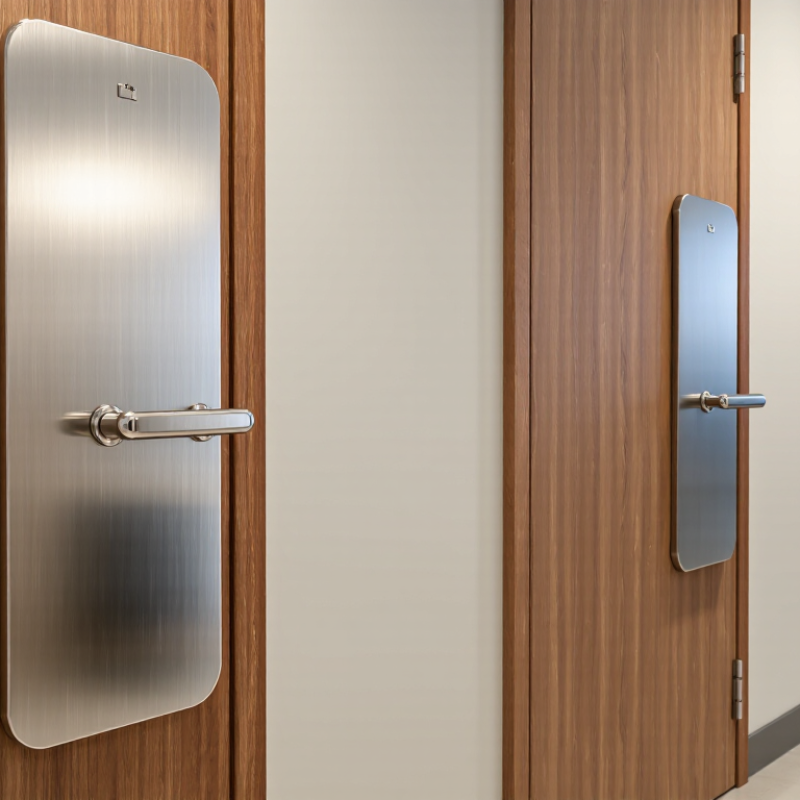
Stainless steel door plates protect surfaces that hands, carts, and shoes repeatedly strike. Common forms include kick plates at floor level, push plates beside handles, and pull plates around grip points. Some cover lock or latch areas. Small details matter: rounded corners and deburred edges reduce snagging, while accurately placed screw holes keep a plate flush against the door.
Grade 304 suits many indoor settings because it resists everyday moisture and is easy to maintain. Grade 316 offers better resistance to salt and chloride exposure, making it a stronger option near coastlines or pools. Grade 430 can work in dry interiors, but it generally offers less corrosion resistance. The World Stainless Association reported 58.4 million tonnes of global stainless steel production in 2023. This industry figure signals broad material availability, not demand for door plates specifically.
Finish affects use, too. Brushed plates can disguise light scratches; polished surfaces look bright but show fingerprints more readily. That distinction is easy to overlook. Plate thickness, door material, and cleaning chemicals also influence durability. A plate that looks robust may still warp if it is too thin or poorly fixed. Selection should reflect actual traffic and exposure, not appearance alone.
How Stainless Steel Door Plates Are Designed and Manufactured
Top 10 Stainless Steel Door Plate Manufacturers Worldwide
How Stainless Steel Door Plates Are Designed and Manufactured
A door plate begins with its intended use: protecting a surface, guiding visitors, or displaying room information. Designers measure the door and check where handles, locks, and fixing points sit. A few millimeters can affect alignment. Details matter.
Material choice shapes the result. Stainless steel grades vary in corrosion resistance, formability, and cost, so the environment matters. A plate near a humid entrance may need different considerations from one used indoors. Designers also select thickness, edge shape, and finish. Brushed surfaces soften fingerprints; polished ones reflect more light but show scratches readily.
Production often starts with sheet metal cut to size by laser or another controlled method. Holes and fixing features are formed, then edges are deburred to remove sharp burrs. The surface is brushed, polished, or coated according to the design. Quality checks can include measuring dimensions, inspecting finish consistency, and confirming that the plate sits flat. Small batches may reveal issues that drawings miss. A screw can sit slightly proud, or a brushed grain can run the wrong way. These details deserve attention, though production does not always catch every flaw. Designers refine the specification when testing exposes a mismatch between appearance and everyday use.
Standards and Criteria for Comparing Door Plate Manufacturers
A reliable comparison starts with the material, not the catalogue photograph. Ask manufacturers to identify the stainless steel grade and provide traceable material certificates. Check plate thickness, dimensional tolerances, and whether those figures apply to finished products. Small details matter. A thin plate may flex around a door handle, while a poorly finished edge can snag a cleaning cloth. Request samples and inspect corners, mounting holes, and surface consistency under ordinary lighting.
Compare finishes against the door’s actual environment. A plate used near a coastal entrance faces different exposure from one inside a dry office. Ask what corrosion testing was performed, how results were recorded, and whether the test reflects your conditions. Ask for proof. Also review inspection procedures, batch traceability, packaging, and the manufacturer’s ability to repeat dimensions across larger orders. Clear drawings and written acceptance criteria help prevent mismatched holes or unexpected surface variation. Standards are useful, but they cannot predict every installation problem. A polished sample can still conceal uneven production, and I would not treat a certificate alone as a guarantee. Check a production batch when consistency matters.
Profiles of 10 Leading Stainless Steel Door Plate Manufacturers Worldwide
Profiles of 10 Leading Stainless Steel Door Plate Manufacturers Worldwide
These ten profiles compare manufacturers by material sourcing, fabrication accuracy, finish quality, and delivery capability. Their products range from simple push plates to custom door protection panels. Details matter. A useful profile checks whether suppliers specify grade, thickness, edge treatment, and mounting-hole tolerances. Buyers should also request finish samples; a brushed surface can look different under corridor lighting than it does in a catalog.
The World Stainless Association reported 58.4 million tonnes of global stainless steel melt shop production in 2023, up 4.6% from 2022. This industry-wide figure signals broad material availability, but it does not measure door plate output. Not glamorous. For that reason, the profiles focus on verifiable manufacturing details: documented material grades, consistent dimensions, protective film, and inspection records. Regional strengths may vary, from high-volume production to short-run customization.
A close comparison should consider how each manufacturer handles practical details, such as rounded corners, deburred edges, and screw placement near door handles. Ask how samples are checked against production batches. Public information is uneven, and a polished website is not proof of tight quality control. That limitation deserves attention. The strongest profile is therefore not the one with the boldest claims, but the one supported by clear specifications and repeatable checks.
Regional Markets and Key Differences Among Global Suppliers
Regional differences matter when comparing stainless steel door plate manufacturers. East Asian suppliers often offer broad grade choices and high-volume production, while buyers should verify surface consistency across batches. European suppliers commonly emphasize documented specifications and refined finishes; North American projects may place greater weight on local stock, custom dimensions, and delivery schedules. These are tendencies, not guarantees.
World Stainless reported 58.4 million tonnes of global stainless crude-steel production in 2023, a 4.6% increase year on year. This is useful market context, not a door-plate demand figure. Regional demand also varies with building conditions: coastal or humid sites need careful corrosion-grade selection, while busy interiors may prioritize scratch resistance and easy cleaning. A polished sample can look excellent under showroom lights. It may not reveal edge quality or batch variation.
Tips: Compare the same steel grade, thickness, finish, and tolerances across quotations. Ask for a material test certificate and inspect a production sample, including its cut edges. Check packaging and lead times, too. One caveat: a certificate alone cannot confirm that every plate in a shipment matches the sample. Verified records and incoming inspection provide a stronger check.




