Welcome to Worldia, we have over 25 years of expertise.

What Are the Top Type B Washers for Global Buyers?

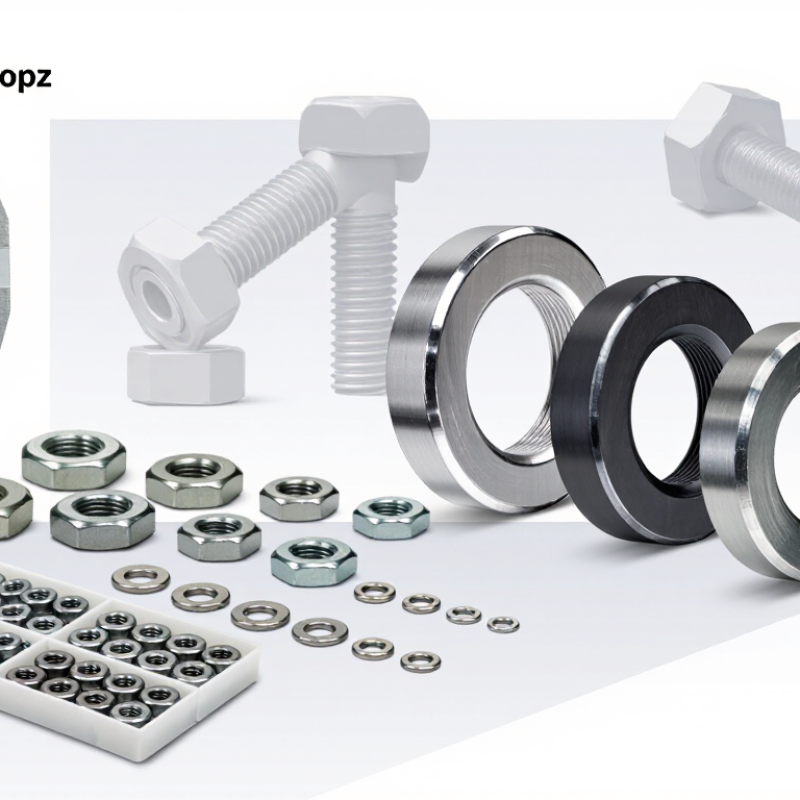
Choosing the right Type B Washers requires more than comparing prices or counting pieces. Global buyers must examine material, outer diameter, thickness, hardness, surface finish, and dimensional consistency. A washer that looks correct may still deform under pressure. Small differences matter.

Fastener authority John H. Bickford offers a useful principle: “A bolted joint is only as strong as its weakest component.” This reminder applies directly to Type B Washers. Their role is not decorative. They distribute clamping force, protect mating surfaces, and help maintain joint stability. Buyers should request material certificates, inspection records, and clear dimensional data from suppliers. Packaging also deserves attention. Mixed sizes in one carton create expensive mistakes during assembly.

Real projects are less tidy than catalog tables. A galvanized washer may perform well outdoors, but it may not suit every corrosive environment. Stainless steel can improve resistance, yet it may change friction behavior and installation results. The lowest quotation can hide inconsistent stamping, sharp edges, or unreliable traceability. That risk is easy to underestimate.

This guide compares top Type B Washers for international purchasing teams. It considers performance, sourcing reliability, application fit, and supplier transparency. There is no universal winner. A construction buyer, machinery producer, and maintenance distributor may need different specifications. Even experienced teams should recheck assumptions. A familiar washer is not always the correct washer.

What Are the Top Type B Washers for Global Buyers?

Define Type B Washers by Standard: DIN 125B, ISO 7089, and ASME B18.21.1

Global buyers often compare Type B washers by appearance, but standards determine fit. DIN 125B commonly identifies a chamfered plain washer profile. ISO 7089 defines normal-series plain washers with metric dimensions. ASME B18.21.1 covers inch-series flat washers and dimensional types. These standards are not automatic equivalents. Check outside diameter, inside diameter, thickness, material, and hardness before approval.

Grand View Research estimated the global industrial fasteners market at about USD 92 billion in 2023. Its report also projects continued growth through 2030. This scale increases the cost of small specification errors. In practical sourcing, ISO 7089 suits metric assemblies, while ASME B18.21.1 fits inch-based designs. DIN 125B may support replacement work, but buyers should verify the exact edition and drawing. A visual match is not enough. I have seen washers pass appearance checks, then fail clearance testing.

Tips: Ask suppliers for dimensional inspection reports, material certificates, and batch traceability. Confirm whether the drawing requires a chamfered edge. Compare the standard’s tolerance table, not only the nominal size. Also review corrosion protection separately; the washer standard may not define the complete coating system. Some specifications remain unclear. That is where a controlled sample and a real assembly trial are valuable.

Compare Dimensions: M6 Washers—6.4 mm ID, 12 mm OD, 1.6 mm Thick

What Are the Top Type B Washers for Global Buyers?

For global buyers, Type B washers should be checked by dimensions, material, and application. The M6 size listed here has a 6.4 mm inside diameter, a 12 mm outside diameter, and a 1.6 mm thickness. This design gives an M6 bolt enough clearance while spreading load across a wider surface. It works well under standard hex-head bolts and screws in general assembly work.

A practical inspection starts with a caliper, not only a package label. Measure several washers from each shipment. The inner edge should remain smooth, because sharp burrs can damage coatings or reduce contact. Thickness also matters. A thinner washer may deform under pressure, while a thicker one can affect thread engagement. I have seen small dimensional differences create alignment problems. That detail is easy to overlook.

Tips:

  • Confirm the 6.4 mm ID before ordering.
  • Check whether 12 mm OD covers the mounting slot.
  • Review the 1.6 mm thickness against available thread length.
  • For outdoor or damp equipment, select a suitable corrosion-resistant material.
  • Keep certificates for material and dimensional inspection.
  • Do not assume every M6 washer uses the same standard.
  • Specifications can vary between suppliers and regions.
  • When tolerances are critical, request sample pieces and measure them before approving volume production.

Evaluate Materials: ASTM F844 Steel, A2/A4 Stainless, and Zinc-Plated Options

What Are the Top Type B Washers for Global Buyers?

Type B washers are selected by load, environment, and mating-surface requirements. ASTM F844 steel offers practical strength for general construction and equipment assembly. It suits dry interiors and protected applications. Buyers should verify diameter, thickness, hardness, and dimensional tolerances against the purchase specification. A certificate of conformity adds useful traceability.

A2 stainless steel provides strong corrosion resistance in ordinary outdoor and industrial settings. A4 stainless steel performs better where chlorides, coastal air, or chemical exposure are expected. Neither grade is automatically suitable for every environment. Galling can occur during tightening, especially with stainless fasteners. Controlled torque and compatible assembly practices matter. Small details matter.

Zinc-plated steel is often a cost-effective choice for moderate corrosion exposure. Its coating protects the underlying steel, but scratches and sharp edges can become weak points. Coating thickness, adhesion, surface treatment, and post-plating hydrogen-control procedures deserve verification. Salt-spray hours can help compare batches, but they do not perfectly predict service life. That shortcut can mislead. In real purchasing work, packaging also matters because moisture can damage clean surfaces before installation. Request lot numbers, inspection records, and clear material declarations. I would also recheck the washer’s bearing surface after installation; field assumptions are sometimes wrong.

What Are the Top Type B Washers for Global Buyers? — Evaluate Materials: ASTM F844 Steel, A2/A4 Stainless, and Zinc-Plated Options
Washer Material / Reference Typical Material Description Corrosion Resistance Magnetic Behavior Relative Strength and Hardness Recommended Service Environment Key Advantages Global Buyer Checks
Plain Steel Washer
ASTM F844
General-purpose steel washer manufactured to the dimensional and product requirements of ASTM F844. The standard does not define a stainless-steel grade. Low in uncoated condition. The steel surface can rust when exposed to moisture, salts, or outdoor conditions. Normally magnetic. Generally suitable for load distribution and surface protection, but the exact mechanical properties depend on the supplied steel and manufacturing process. Dry indoor assemblies, temporary fixtures, and applications where low material cost is important. Economical, widely available, easy to source, and suitable for general load distribution under a fastener head or nut. Confirm the ASTM F844 edition, washer dimensions, nominal fastener size, inside and outside diameters, thickness, flatness, and any requested hardness or test documentation.
Zinc-Plated Steel Washer Steel washer with an electroplated or mechanically deposited zinc coating. Coating type, thickness, and chromate or passivation system vary by specification. Better than plain steel in normal indoor or mildly humid conditions. Protection decreases when the coating is scratched, cut, or consumed by corrosion. Normally magnetic because the base material is steel. Usually comparable to the selected steel substrate; the zinc layer primarily provides corrosion protection rather than structural strength. Indoor equipment, covered outdoor installations, general construction, and moderately humid environments. Lower cost than stainless steel, improved appearance, and better short- to medium-term corrosion resistance than bare steel. Specify zinc coating process, minimum coating thickness or corrosion requirement, salt-spray method if applicable, passivation type, RoHS or REACH requirements, and hydrogen-embrittlement controls where high-strength parts are involved.
A2 Stainless Steel Washer
ISO 3506 Classification
Austenitic stainless steel commonly associated with the 18% chromium and approximately 8% nickel family, such as the 304-type composition. Exact chemistry depends on the declared grade and product standard. Good general atmospheric and moisture resistance. Not immune to staining or corrosion in chloride-rich, marine, or chemically aggressive environments. Usually non-magnetic or only slightly magnetic in the annealed condition; cold working may increase magnetic response. Good ductility and toughness. Cold-worked washers can have higher hardness than annealed material; mechanical class must be confirmed from the applicable standard. Indoor and outdoor general applications, food-service surroundings, light industrial equipment, and normal humid climates. Longer service life than uncoated steel in many environments, good appearance, and no coating layer to peel or wear away. Confirm the exact ISO 3506 designation, chemical composition, mechanical property class, dimensional standard, surface finish, and suitability for chloride exposure.
A4 Stainless Steel Washer
ISO 3506 Classification
Corrosion-resistant austenitic stainless steel commonly associated with the 316-type family, containing molybdenum for improved resistance to localized corrosion. Very good resistance to atmospheric moisture and improved resistance to chlorides compared with A2, although severe marine, acidic, or crevice conditions can still cause corrosion. Usually non-magnetic or slightly magnetic in the annealed condition; cold working can increase magnetic response. Good ductility and toughness. The specified property class and manufacturing condition should be verified for the intended fastener assembly. Coastal and marine-adjacent areas, chemical-processing surroundings, wastewater equipment, outdoor infrastructure, and high-humidity installations. Superior general corrosion resistance to A2, no plated coating to damage, and strong lifecycle value in demanding environments. Confirm the exact A4 grade or ISO 3506 designation, chloride exposure level, galling-control requirements, surface finish, and compatibility with the mating fastener.
A2 Stainless Steel with Zinc-Plated Steel Fastener Mixed-material assembly using an A2 stainless washer with a zinc-plated carbon-steel bolt or nut. The washer itself resists general corrosion, but the zinc-plated component remains the more vulnerable part. Dissimilar-metal contact may require evaluation in wet or salty environments. The stainless washer is generally non-magnetic or slightly magnetic; the zinc-plated steel fastener is magnetic. Performance is governed by the individual washer and fastener grades. The assembly should not be rated solely from the washer material. Controlled indoor or sheltered applications where a stainless bearing surface is useful but a fully stainless assembly is not required. Can reduce cost compared with an all-stainless assembly while providing a corrosion-resistant washer surface. Evaluate galvanic compatibility, moisture retention, coating damage, torque-tension behavior, thread galling, and whether the assembly specification permits mixed materials.
A4 Stainless Steel with A4 Stainless Fastener Matched corrosion-resistant stainless-steel washer and fastener assembly, with the exact product grades declared by the supplier. Very good for many outdoor, coastal, and industrial environments; performance still depends on chloride concentration, crevices, deposits, temperature, and cleaning practices. Usually non-magnetic or slightly magnetic in the annealed condition, with possible magnetic response after cold working. Good toughness and ductility. Assembly strength must be based on the fastener property class, not on the washer alone. Marine-adjacent structures, exterior equipment, high-humidity facilities, and applications where maintenance or replacement is difficult. Consistent material system, strong corrosion-resistance profile, and reduced dependence on an external protective coating. Control tightening procedure and lubrication because stainless threads may gall. Confirm product traceability, dimensional tolerances, surface condition, and the required ISO 3506 property class.
Technical note: ASTM F844 primarily covers plain steel washers for general applications, while A2 and A4 are stainless-steel designations used under ISO 3506. Actual performance depends on washer dimensions, load, surface condition, coating specification, installation practice, temperature, humidity, chloride exposure, and contact with dissimilar metals.

Check Quality Data: ISO 898-1 Bolt Matching and ISO 3506 Stainless Grades

For global buyers, Type B washers should be checked against the bolt’s actual mechanical class, not only its diameter. ISO 898-1 defines property classes for carbon and alloy steel bolts, such as 8.8 or 10.9. It does not automatically certify the washer. The washer must resist the bolt’s preload without excessive bending, crushing, or permanent distortion.

Request a material certificate, hardness results, dimensional records, and lot traceability. Check the inside diameter, outside diameter, thickness, flatness, and bearing surface. A washer may fit perfectly yet fail under a high-strength joint. That risk increases when the washer is thin, poorly heat-treated, or produced outside the agreed drawing. Small details matter.

Stainless assemblies require a different review. ISO 3506 identifies stainless fastener grades, including common austenitic grades such as A2 and A4. Match the washer grade with the bolt, nut, and service environment. A4 may suit more aggressive moisture or chloride exposure, but site conditions still require engineering judgment. Check chemical composition, corrosion expectations, and certificate consistency. Salt spray data can help, but it cannot represent every field condition. No inspection plan is perfect. I have seen buyers trust a grade label while ignoring washer thickness and surface damage. A practical approval process combines standards, samples, and clear acceptance limits.

Buy Globally: EN 10204 3.1 Certificates, REACH/RoHS, MOQ, and Incoterms 2020

What Are the Top Type B Washers for Global Buyers?

Type B washer definitions vary between standards, so confirm dimensions before comparing suppliers. Check inner diameter, outer diameter, thickness, material, hardness, and surface treatment. A clear drawing prevents costly misunderstandings. Request an EN 10204 3.1 certificate with every production batch. It should identify heat numbers, test results, and the issuing manufacturer. A certificate without traceability is weak evidence.

Chemical compliance also needs documented control. The European Chemicals Agency’s 2024 Candidate List contained 247 substances of very high concern. Ask for a REACH declaration that covers the supplied material and current reporting duties. RoHS compliance matters for washers used in electrical assemblies. The European Commission identifies ten restricted substances under the current RoHS framework. Do not accept “RoHS approved” without a signed declaration and supporting material data.

MOQ affects cash flow, storage, and inspection effort. A smaller trial order may cost more per washer, but it exposes dimensional problems earlier. Incoterms 2020 must name the exact delivery point, not only the country. Under FCA, clarify loading responsibility and export clearance. Under DAP, confirm who pays import duties and taxes. UNCTAD’s Review of Maritime Transport reports that more than 80% of world merchandise trade by volume moves by sea, so freight planning deserves attention. One practical weakness remains: buyers often compare unit prices while ignoring certificates, testing, insurance, and destination charges. That mistake is easy to repeat.

Global Buyer Reference Points for Type B Washers

Key standards, compliance, and delivery facts for international washer sourcing

The chart presents fixed reference points commonly used in global purchasing. EN 10204 includes four inspection document types: 2.1, 2.2, 3.1, and 3.2. Incoterms 2020 contains 11 rules, including 7 rules for any mode of transport and 4 rules limited to sea or inland waterway transport. EU RoHS currently restricts 10 substances. REACH SVHC requirements and lists can change over time, while MOQ is negotiated according to material, size, finish, packaging, and production volume.

Hi! What is your idea today?
WORLDIA 8618618272087
Nina +86 15631662072
google-site-verification=0STkOZEvYuoDp-D40AVfMUk--CzM2AsZv24S6ISPdmk