What Are Fixtures and Jigs Used For?
What Are Fixtures and Jigs Used For?
Fixtures Jigs are essential tools for controlling workpieces during manufacturing, inspection, welding, and assembly. A fixture holds a component in a repeatable position. A jig performs that role and often guides a cutting tool, drill, or other operation. The distinction sounds simple. In practice, the boundary can become less clear.
A machined aluminum fixture may locate a bracket against three hardened pins. A drill jig may guide a 6 mm bush through a steel plate. These small details protect accuracy, reduce setup time, and make repeated production more consistent. According to the International Federation of Robotics’ World Robotics reports, industrial automation continues expanding across manufacturing. That trend increases the value of reliable workholding and repeatable tooling. MarketsandMarkets also identifies automation, precision production, and flexible manufacturing as major forces shaping the tooling environment.
Shigeo Shingo, a respected industrial engineer and lean manufacturing authority, wrote, “The most dangerous kind of waste is the waste we do not recognize.” Poorly designed fixtures can hide that waste through extra adjustments, damaged surfaces, and unnecessary operator movement. The mistake is easy to miss. A fixture may appear efficient while quietly creating delays.
This guide examines how Fixtures Jigs support accuracy, safety, throughput, and quality control. It also considers material choice, locating principles, ergonomic access, and maintenance. Not every production problem needs a complex tool. Sometimes, a simple locator works better. That judgment requires shop-floor experience, measured results, and willingness to question familiar designs.
What Fixtures and Jigs Are
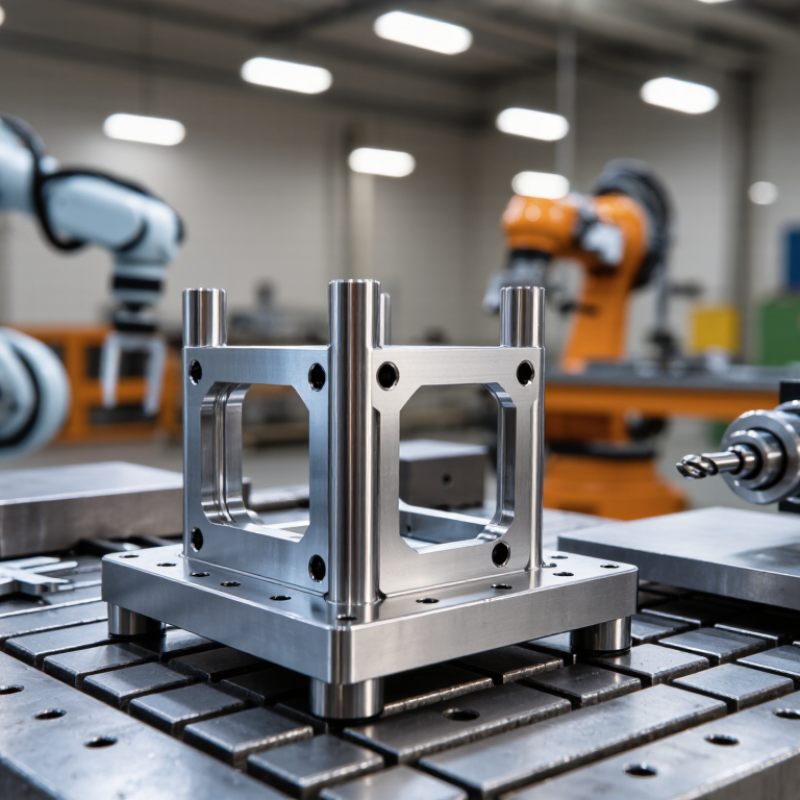
Fixtures and jigs are specialized tools that position, support, or guide a workpiece during manufacturing. A fixture holds the part firmly, but it does not usually guide the cutting tool. A jig performs both jobs and guides the tool through features such as hardened drill bushings. That is the practical distinction. In a milling operation, a fixture may locate a metal plate against fixed stops and secure it with clamps. During drilling, a jig can keep each hole aligned without repeated manual measurement. Consistent positioning matters.
These tools are used to improve repeatability, reduce setup time, and protect operators from unstable workpieces. A welding fixture can hold a frame square while joints cool. A drilling jig can maintain hole spacing across dozens of parts. Skilled designers consider datum surfaces, locating pins, clamp pressure, chip clearance, and access for inspection. Steel suits heavy loads, while aluminum may reduce weight for frequent handling. The choice depends on force, accuracy, production volume, and maintenance needs.
Fixtures and jigs are not automatically efficient. A complicated design may save machining time but make cleaning or part changes frustrating. A tool can be accurate on paper and troublesome on the shop floor. Small burrs, worn locators, or trapped chips can shift a part by a fraction of a millimeter. Regular checks are essential. Definitions can also overlap, especially in custom equipment, so the tool’s actual function matters more than its name.
How Fixtures and Jigs Differ
What Are Fixtures and Jigs Used For?
A fixture holds a workpiece in a fixed position during machining, welding, inspection, or assembly. It improves repeatability without guiding the cutting tool. For example, a milling fixture can clamp an aluminum plate against a precise locating surface. The operator loads each plate against the same stops. This reduces setup variation and protects the part from unwanted movement.
A jig performs a different job. It holds the workpiece and guides the tool or process. A drill jig may use hardened bushings to direct a drill into accurate hole locations. The bushing controls the drill path, while the body supports the material. This distinction matters when choosing equipment. A fixture supports consistency; a jig adds controlled guidance. Some tools combine both functions, which can make terminology confusing.
Good design starts with the actual operation, not a standard drawing. Clamps must hold firmly without damaging thin walls or finished surfaces. Locators should resist cutting forces but allow quick loading. On a busy shop floor, even a small chip under a locator can shift a part. That detail is easy to miss. It can ruin several pieces before inspection catches it. Designers should also consider cleaning, access, operator fatigue, and tool clearance. A clever jig may still fail if loading feels awkward. In practice, simple equipment often performs better, although “simple” requires careful testing.
The Main Functions of Fixtures
What Are Fixtures and Jigs Used For?
The Main Functions of Fixtures
Fixtures and jigs turn repeatable positioning into a controlled production habit. A fixture holds the workpiece. A jig also guides the cutting tool. Their main function is accurate location. Hardened pins, stops, and clamps keep each part against known datums. This reduces shifting, uneven edges, and operator guesswork. It also makes inspection easier. A gauge can check the same surfaces every cycle.
Fixtures support speed and consistency. In automated cells, they present parts at a predictable angle for loading, welding, drilling, or assembly. World Robotics 2024 reported 4.28 million industrial robots operating worldwide in 2023. That scale increases the value of stable part presentation. NIST estimates that manufacturing contributes about 2.3 trillion dollars to the United States economy each year. Small positioning errors can therefore create expensive, repeated losses. A good fixture can shorten loading time and reduce rework. It is not automatically efficient. Over-clamping may distort thin sheet. Poor chip clearance may trap debris beneath the workpiece.
Jigs mainly improve tool guidance and repeatability. They are useful when holes, slots, or fasteners must align. They reduce dependence on highly skilled hand positioning. They also preserve a clear inspection reference. Record clamp force, datum wear, and setup time. A fixture that worked last year may now create variation. Operators should question its assumptions. Tightening every clamp is not a real solution.
How Fixtures and Jigs Support Manufacturing Processes
Fixtures and jigs support manufacturing by controlling position, movement, and tool access. A fixture holds a workpiece firmly during cutting, welding, drilling, or inspection. A jig also guides the tool, helping operators repeat the same operation with less measurement. In practice, a well-designed setup feels simple: locating pins seat the part, clamps apply steady pressure, and the operator reaches every surface without twisting.
The need for repeatable tooling is growing. The 2024 World Robotics report recorded 541,302 industrial robot installations worldwide in 2023. Fixtures help these systems maintain a reliable relationship between the robot, tool, and workpiece. They also reduce setup variation during manual production. Small details matter. A chamfered locator prevents damage, while a visible clamp confirms proper loading. Yet fixtures are not automatically efficient. Poor access can increase loading time, and excessive clamping may distort thin components.
Good engineering connects fixture design with process data. Teams should measure cycle time, defect patterns, changeover duration, and operator feedback before revising the design. The 2023 ISO Survey reported more than one million certified quality-management systems globally, showing the scale of documented process control. Still, documentation cannot replace observation. A fixture may pass a drawing review but frustrate an operator on the production floor. That gap deserves attention. Sometimes, a simpler jig performs better than a highly automated one.
What Are Fixtures and Jigs Used For?
How Fixtures and Jigs Support Manufacturing Processes
The chart illustrates the standard 3-2-1 locating principle used in fixture design. The primary locating surface constrains three degrees of freedom, the secondary surface constrains two, and the tertiary surface constrains one. Fixtures hold and position workpieces, while jigs also guide cutting or drilling tools to improve repeatability and process accuracy.




