
Welcome to Worldia, we have over 25 years of expertise.

What Is the Best Home Surge Protector?

Choosing the best Home Surge Protector requires more than counting outlets or reading a bright marketing label. A surge protector sits beside your television, router, or refrigerator, quietly absorbing electrical stress. Its quality can affect expensive equipment, data, and daily comfort. The Insurance Information Institute reported 71,551 lightning-related homeowners insurance claims in 2023, totaling approximately $1.2 billion in losses. That figure shows why household surge protection deserves careful evaluation.

Reliable comparison begins with recognized safety standards. UL 1449, the Standard for Surge Protective Devices, establishes important requirements for testing, construction, and performance. IEEE Standard C62.41.1 also explains electrical surge environments inside low-voltage AC power circuits. These documents do not identify one universal winner. They provide a professional framework for judging clamping voltage, surge-current capacity, response behavior, and installation safety. Look for clear certification information, realistic joule ratings, thermal protection, and a protected-equipment warranty with understandable conditions.

Details matter. A well-designed unit should fit firmly into a wall outlet without forcing a heavy adapter downward. Its indicator light should remain visible behind a desk. Cable spacing also matters near a crowded entertainment console. However, no protector lasts forever. Repeated surges can weaken internal components, even when the device still appears normal. That is easy to forget.

This guide compares leading options through standards, specifications, usability, and independent evidence. It also considers weaknesses, because the “best” choice depends on your wiring, appliances, budget, and risk exposure. A more expensive model is not automatically safer. Careful selection remains essential.
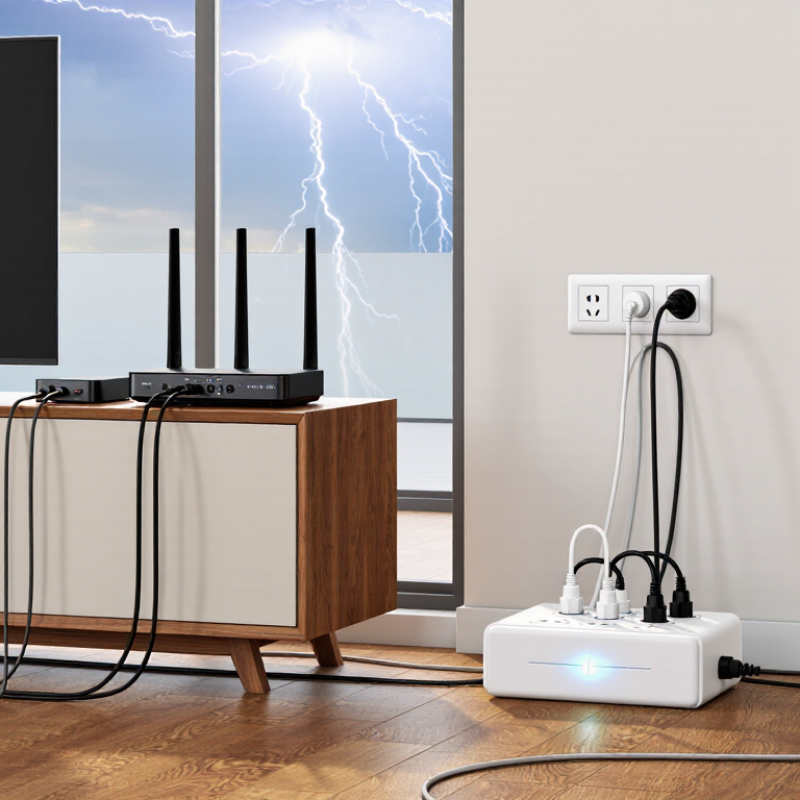
What Is the Best Home Surge Protector?

What a Home Surge Protector Does and Why It Matters

What Is the Best Home Surge Protector?

A home surge protector limits sudden voltage increases before they damage connected electronics. These spikes can enter through power lines, cable lines, or nearby lightning activity. A reliable unit diverts excess energy away from sensitive circuits. It does not provide unlimited protection. No device can stop every surge.

When choosing one, check its joule rating, response time, and number of protected outlets. Higher joule ratings generally indicate greater energy-handling capacity. Look for tested safety certification from a recognized laboratory. A status light should confirm that protection remains active. Replace the unit after a major surge or when its warning light changes. I have seen people trust a protector for years without checking its condition. That habit is easy to question.

Tips: Keep large appliances and delicate electronics on separate circuits when practical. Do not connect one surge protector into another. Leave space around the unit to prevent heat buildup. For homes in storm-prone areas, consider professional whole-home protection. Ask an electrician to inspect grounding and the main service panel. A plug-in device cannot correct poor grounding. The best choice depends on your wiring, equipment, and local risks.

How to Compare Surge Protection Ratings and Key Features

What Is the Best Home Surge Protector? The better question is how its ratings match your home’s risks. I once chose a protector by joule rating alone. That shortcut was flawed. A joule figure estimates absorbed energy under test conditions, not guaranteed service life. Compare clamping voltage, nominal discharge current, and protection modes. Lower clamping voltage usually limits the voltage reaching equipment. However, compare products tested under the same standard.

The National Fire Protection Association reported an average of 31,700 U.S. home fires involving electrical distribution and lighting equipment each year from 2015 to 2019. These fires caused about 400 civilian deaths and $1.3 billion in annual property damage. The data does not prove that surges caused those fires. It does show why thermal safety matters. Look for an independent safety certification, internal overcurrent protection, and a thermal disconnect. A warning light helps, but it can fail or become difficult to see.

Check the protection path. Line-to-neutral alone may leave gaps during certain wiring events. Line-to-ground and neutral-to-ground protection can provide broader coverage when correctly designed. Response time sounds impressive in nanoseconds, yet it should not outweigh clamping performance and certification. The IEEE recommends considering the whole electrical system, not only plug-in devices. A main-panel surge protective device can complement a receptacle protector. Still, installation requires qualified electrical judgment. I would also inspect the cord, spacing, and outlet condition. Those details are easy to ignore.

Which Surge Protector Types Fit Different Home Devices

What Is the Best Home Surge Protector?

The best protector depends on the device, not the advertising label. A television, router, refrigerator, and laptop face different electrical risks. The Insurance Information Institute reported about $1.2 billion in insured U.S. lightning losses during 2023. That figure does not include every household failure. Still, it shows why layered protection deserves attention.

For televisions, computers, and game consoles, choose a plug-in surge protective device with a UL 1449 listing, a clear protection indicator, and adequate joule capacity. Short, thick cords are preferable. Avoid hiding the protector behind a crowded cabinet. A laptop benefits from a UPS, which provides temporary battery power during brief outages. A refrigerator usually needs a properly rated dedicated protector, because its motor creates switching surges. It also needs normal airflow.

For broad household coverage, an electrician can install a whole-home SPD at the service panel. It should match the electrical system and include a suitable grounding path. Coaxial or network-connected equipment may need protection on those cables too. IEEE guidance treats surge protection as a coordinated system, not one magic strip. My own mistake was judging products by joule numbers alone. Clamping voltage, response behavior, installation quality, and replacement indicators matter. Check them carefully. Even good protection has limits.

How to Choose the Right Protector for Your Home Setup

What Is the Best Home Surge Protector?

Choosing the right protector starts with your home setup, not the highest joule rating. A bedroom with a laptop needs different protection from a workshop with tools and motors. The Insurance Information Institute reported about $1.2 billion in insured lightning losses in 2023. That figure includes damaged wiring, appliances, and electronic systems. Start by listing sensitive equipment, outlet locations, and your electrical panel type.

For daily electronics, choose a unit certified to the current UL 1449 standard. Look for thermal protection, spaced outlets, and a response indicator. A joule rating helps, but it does not tell the whole story. Check clamping voltage, maximum continuous voltage, and the manufacturer’s replacement policy.

For a larger home, ask a qualified electrician about a panel-mounted surge protective device. IEEE guidance also stresses proper grounding and coordinated protection. Without a sound ground path, even an expensive protector may perform poorly. That detail is easy to miss.

Tips: Keep cords short and avoid daisy-chaining protectors. Replace a unit after a major surge, visible damage, or a failed indicator. Never cover it under rugs. Leave breathing space around warm adapters. I have seen homeowners protect a television while ignoring the modem and security hub. That feels incomplete. The best choice is the one matched to your circuits, equipment, and risk—not simply the biggest number on the package.

How to Install, Test, and Replace a Home Surge Protector

Choosing the best home surge protector starts with the installation point. A plug-in model protects nearby electronics, while a panel-mounted device can protect many circuits. Look for suitable voltage, adequate surge-current capacity, thermal protection, and a clear status indicator. Compatibility matters more than impressive numbers. Grounding must be sound. I have seen a high-rated protector perform poorly because an old receptacle lacked reliable grounding. Small detail, serious consequence.

For a plug-in unit, unplug sensitive equipment and inspect the receptacle. Connect the protector directly to the wall. Avoid extension cords unless the instructions allow them. Keep cables loose, not sharply bent. Panel-mounted equipment is different. It connects inside the electrical panel and requires a qualified electrician. Service lugs may remain energized, even when breakers are off. Ask the electrician to verify grounding, bonding, breaker size, wire torque, and enclosure fit. A photograph helps, but it cannot replace training.

Testing should be simple. Check the indicator light, but do not treat it as complete proof. It usually confirms basic status, not full protective performance. After a severe storm, inspect the casing for cracks, heat marks, or a burnt smell. Replace the unit if its indicator fails or damage appears. A panel device should be replaced by an electrician. I once kept an old protector because it still powered a lamp. That was poor reasoning. Power delivery is not proof of surge protection. Dispose of the old device according to local electronic-waste rules.

What Is the Best Home Surge Protector? - How to Install, Test, and Replace a Home Surge Protector

Protector Type Typical Installation Point Nominal System Voltage Typical Surge Current Rating Best Use Installation Method Testing Method Replacement Guidance
Type 1 Service-Entrance SPD On the supply side of the main service disconnect, where permitted by the electrical authority 120/240 V AC 10–20 kA per mode is common Reducing externally generated surges, including those entering through utility or service conductors Installed by a qualified electrician using equipment listed for the intended service location Check the visual status indicator and inspect the enclosure; do not open energized equipment Replace after a known major surge, lightning event, physical damage, or a failed status indicator
Type 2 Whole-Panel SPD Load side of the main service disconnect, commonly at the main distribution panel 120/240 V AC 20–40 kA per mode is common Protecting branch circuits, appliances, electronics, and building wiring from incoming and internally generated transients Connected to the appropriate circuit breaker, neutral, and grounding conductors according to the installation instructions Use the built-in indicator; confirm that the associated breaker is on and arrange professional inspection if the indicator changes state Replace when the indicator shows failure, the unit is damaged, or the device has reached its stated end of service life
Type 3 Point-of-Use Strip At a receptacle near sensitive equipment 120 V AC Usually specified by the manufacturer; often below 20 kA Supplemental protection for computers, televisions, networking equipment, and small appliances Plug directly into a properly grounded receptacle; avoid using extension cords or daisy-chaining power strips Press the test or reset control if provided and verify the protection indicator; inspect the cord, plug, and outlets for heat or damage Replace after a substantial surge, overheating, cracked housing, damaged cord, repeated tripping, or a failed indicator
Plug-In Receptacle SPD Inside or directly adjacent to a wall receptacle 120 V AC Commonly rated in the 10–20 kA range Protecting individual loads where a power strip is not needed Plug into a grounded receptacle with no loose connection; keep the device accessible for inspection Check the protection-status light and use any built-in test function described in the instructions Replace if the light indicates failure, the unit becomes warm without a normal load, or the receptacle connection is loose
Data-Line SPD At telephone, coaxial, Ethernet, or other low-voltage communication entry points Depends on the communication system Specified by the device for the applicable signal circuit Limiting surges that may travel through communication cables connected to network or audio-visual equipment Installed inline with the signal cable and bonded to the building grounding system when required Inspect the connection, grounding path, and status indicator; verify equipment operation after installation Replace after a nearby lightning event, visible damage, loss of signal, or a failed status indicator
Combination Protection System Whole-panel SPD combined with point-of-use protection and data-line protection 120/240 V AC power plus applicable signal-circuit ratings Varies by each installed device Layered protection for the electrical service, branch circuits, appliances, and communication lines Install each component according to its listing, wiring diagram, grounding requirements, and local electrical rules Test each indicator and inspect all grounding and bonding connections; professional inspection is recommended Replace only the failed or damaged component unless the manufacturer specifies replacement of the complete system
Safety note: A surge protector does not replace correct grounding, bonding, circuit protection, or an arc-fault and ground-fault protection system. De-energize circuits before inspection, and have panel-mounted devices installed or serviced by a qualified electrician.
Hi! What is your idea today?
WORLDIA 8618618272087
Nina +86 15631662072
google-site-verification=0STkOZEvYuoDp-D40AVfMUk--CzM2AsZv24S6ISPdmk