
Welcome to Worldia, we have over 25 years of expertise.

Why Choose a Scattering Laminating Machine?

Choosing a Scattering Laminating Machine starts with the materials, not the machine’s headline speed. The equipment distributes adhesive or bonding material across a surface before heat and pressure join the layers. Depending on the process, that can help create a more consistent bond on textiles, films, foams, or other flexible substrates. The exact result depends on the material and machine configuration.

Small details matter. A powder feed that scatters unevenly may leave thin patches or visible buildup. A temperature setting that works for one substrate may damage another. Not ideal. Buyers should compare working width, feed control, heating zones, line speed, and cleaning access against their actual production needs. Ask suppliers how they verify coating consistency, and request a trial using representative materials where possible.

A scattering laminating machine is not automatically the right choice for every line. Some products need a different adhesive method, while some factories may not have enough space or ventilation for the proposed setup. Review operating instructions, maintenance requirements, and applicable safety documentation before installation. These checks can reveal practical costs that a brochure does not show. It is also worth admitting that a sample run cannot predict every production issue. Still, careful testing gives teams a clearer basis for comparing bonding quality, waste, and operator workload before making a purchase.
Why Choose a Scattering Laminating Machine?

What Is a Scattering Laminating Machine?

Why Choose a Scattering Laminating Machine?
What Is a Scattering Laminating Machine?

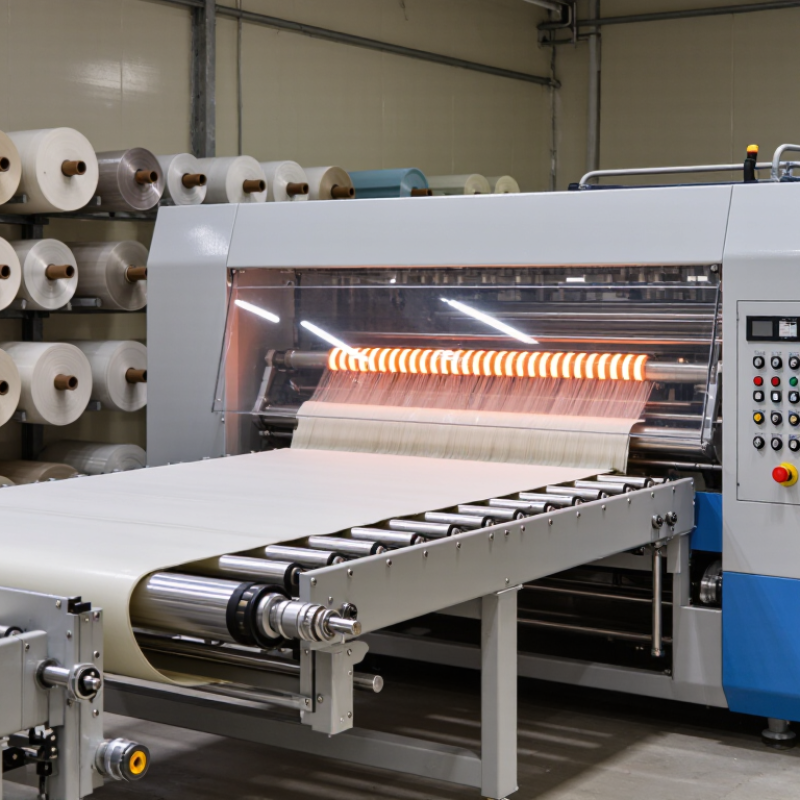
A scattering laminating machine joins flexible materials by spreading thermoplastic adhesive powder across a moving fabric or film. The powder is heated until it softens, then pressure helps bond a second layer to the first. In simple terms, it turns a fine, measured dusting into a bonded laminate.

The process depends on control, not just heat. Operators monitor powder coverage, web tension, temperature, and roller pressure. A pale veil of powder should cover the working width evenly; bare streaks may become weak points. It is not foolproof. Different fabrics and adhesive powders respond differently, so settings need testing before a full production run.

The scale of textile production helps explain why repeatable bonding matters. Textile Exchange’s Materials Market Report 2024 estimates that global fiber production reached 124 million tonnes in 2023, with a projection of 160 million tonnes by 2030. Those figures describe fiber output, not demand for laminating equipment. Still, they point to the volume and variety of materials manufacturers may need to process. A scattering system can suit applications where an even adhesive layer and flexible hand feel matter, provided the powder and substrate are compatible. The details matter.

How Does the Scattering and Lamination Process Work?

Why Choose a Scattering Laminating Machine?

How Does the Scattering and Lamination Process Work?

The process begins by feeding a prepared sheet or web through the machine. A metering system distributes adhesive across the surface, while a scattering unit places particles, flakes, or fibers onto the coated area. Even coverage matters: bare patches and heavy clumps can affect the finished texture. The material then passes through laminating rollers, which press the layers together.

Pressure and heat, when used, help the adhesive bond the surface layers. Settings depend on the substrate, adhesive, particle size, and line speed. Operators often inspect sample sheets before running a full batch. A glossy film may need different pressure from a textured board. There is no universal setting, and this step is easy to underestimate. Small adjustments can change both adhesion and appearance.

Tips: Check the adhesive coating and particle spread before lamination. Keep samples for comparison. Watch the roller edges for uneven pressure. If particles lift or the surface wrinkles, pause and review the settings; guessing can waste material.

What Are the Machine’s Main Components and Materials?

A scattering laminating machine typically combines a web unwinder, tension controls, scattering hopper, laminating nip, heating zone, cooling section, and rewinder. The hopper meters powder or granules across the moving substrate; adjustable gates help prevent uneven buildup. Small parts matter. A drifting tension sensor can wrinkle thin film before the operator sees it.

The frame is commonly welded carbon steel, while guards and product-contact zones may use stainless steel for corrosion resistance and easier cleaning. Rollers often pair a steel core with silicone or another heat-resistant elastomer cover. Surface hardness affects pressure and bond consistency. Heater blocks and sensors need stable control, not just high output. Material choice should match the adhesive, substrate, temperature, and cleaning routine. I would not assume one roller cover suits every laminate.

The Flexible Packaging Association’s 2023 State of the U.S. Flexible Packaging Industry report estimated U.S. sales at $42.9 billion in 2022. That scale makes reliable converting equipment relevant, but it does not prove any single machine design is best. Buyers should inspect guard fit, roller runout, temperature uniformity, and whether the hopper can be cleaned without trapped residue. A trial using the actual film and coating remains the most practical test.

What Benefits Does Scattering Lamination Offer?

Why Choose a Scattering Laminating Machine?

What Benefits Does Scattering Lamination Offer?

Scattering lamination creates a tactile, textured finish by distributing selected particles across a prepared surface. It can add visual depth without covering every part of a design. A matte field beside a raised, shimmering detail feels noticeably different under the fingertips. The effect is tangible.

For packaging, book covers, and display materials, this contrast can help key areas stand out on a crowded shelf. A scattering laminating machine can apply material across defined areas, depending on its configuration and the chosen substrate. Careful setup helps keep coverage even and reduces stray particles. Test a sample first.

The process also offers creative flexibility, but results depend on adhesive behavior, particle size, and feeding conditions. Operators should check adhesion, appearance, and rub resistance after the material has cured. Fine details may not reproduce consistently, especially on uneven stock. That assumption deserves testing. Start with a small run, record settings, and inspect the finished surface under both bright and ordinary lighting. The added texture may improve the design, yet it can also affect folding or downstream finishing.

Where Is the Machine Used, and How Should It Be Selected?

A scattering laminating machine spreads adhesive powder or another bonding layer across a substrate before heat and pressure join it to a second material. It can suit nonwoven fabrics, foam, filtration media, and textile composites. Typical uses include breathable panels, protective liners, and padded products where an even bond matters. Not every production line needs one. If your material already bonds reliably with a simpler process, added equipment may not pay off.

Selection starts with the actual materials, not the machine’s advertised maximum speed. Check substrate width, thickness, heat tolerance, and required coating weight. Ask for a trial using your own samples, then inspect bond strength, edge coverage, and surface feel. A faster line may still create uneven spots if powder delivery or tension control is inconsistent. Also consider cleaning access, changeover time, operator training, and the space needed around the machine. Those details can be overlooked during a showroom visit.

Tips: Record the temperature, line speed, and material settings during trials. Compare several runs, not just one good sample. Test before buying. Results can vary with humidity and material batches, so leave room for adjustment rather than treating one setting as permanent.

Hi! What is your idea today?
WORLDIA 8618618272087
Nina +86 15631662072
google-site-verification=0STkOZEvYuoDp-D40AVfMUk--CzM2AsZv24S6ISPdmk