
Welcome to Worldia, we have over 25 years of expertise.

Why Choose Stainless Steel Door Hinges for Global Buyers?

Global buyers need door hardware that performs reliably across changing climates, building types, and installation practices. That is why Door Hinge Stainless Steel remains a practical choice for residential, commercial, and industrial projects. Its chromium-rich surface helps resist rust, moisture, and everyday handling. In coastal regions, this benefit becomes especially valuable. Salt air can quickly expose weak finishes.

A dependable hinge begins with the correct stainless steel grade, not attractive packaging. Grade selection should reflect humidity, chemical exposure, door weight, and expected usage. Buyers should also examine pin construction, knuckle alignment, bearing design, screw holes, and surface consistency. A well-made hinge should open smoothly without grinding or sideways movement. Small details matter. During product evaluations, installers can check hinge leaves against the door edge and frame. Uneven gaps often reveal poor tolerances before installation is complete.

Stainless steel is strong, but it is not automatically perfect. Lower-quality alloys may stain, and incorrect screws can create galvanic corrosion. Oversized hinges may also complicate fitting. Experienced sourcing teams should request material documentation, dimensional drawings, load guidance, and sample testing before placing large orders. Factory audits and clear inspection standards add confidence, especially when products cross borders. Yet laboratory results cannot replace real installation feedback. A hinge may pass testing but feel unsuitable on a busy fire door or a frequently used gate. Careful buyers compare performance, service support, packaging, and long-term maintenance. The right decision balances corrosion resistance, mechanical reliability, appearance, and total ownership cost. That balanced approach makes Door Hinge Stainless Steel a dependable component for global construction supply chains.
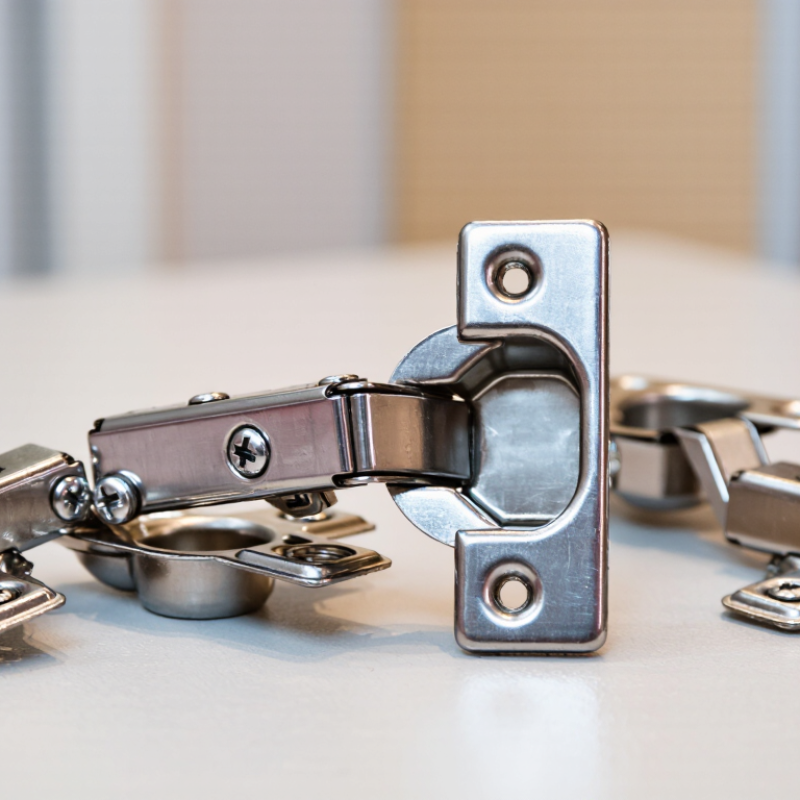
Why Choose Stainless Steel Door Hinges for Global Buyers?

Stainless Steel Door Hinges: 304 Steel with About 18% Chromium and 8% Nickel

For global buyers, stainless steel door hinges offer a practical balance between strength, appearance, and corrosion resistance. The most common grade is 304 stainless steel, containing about 18% chromium and 8% nickel. Chromium forms a thin passive layer that helps protect the surface. Nickel improves toughness and supports corrosion resistance.

In real installations, these hinges suit residential doors, offices, hospitals, and many commercial interiors. I have found that smooth hinge movement depends on more than steel grade. Pin accuracy, knuckle alignment, screw quality, and door weight also matter. A polished hinge may look excellent, but poor fitting can still cause noise or sagging. Small details matter.

304 steel performs well in humid rooms and ordinary outdoor conditions. However, it is not immune to damage. Coastal air, salt spray, chemical cleaners, and trapped moisture can stain the surface over time. That point is often overlooked. Buyers should check material certificates, thickness, load ratings, finish consistency, and test records before ordering. Regular wiping also helps. Not glamorous, but useful. In especially harsh environments, 316 stainless steel may deserve consideration, although it usually costs more. Product selection should match the actual site, not only the catalog description.

EN 1935 Hinge Ratings: Load Classes 7–14 and Durability Testing

Why Choose Stainless Steel Door Hinges for Global Buyers?

EN 1935 ratings help buyers compare hinge performance with measurable evidence. Classes 7–14 cover demanding commercial and heavy-door applications. Depending on the class, tested load capacity reaches approximately 120–200 kilograms. Durability testing may require 200,000, 500,000, or 1,000,000 opening cycles. These figures describe laboratory conditions, not every installation. Door weight, closer force, alignment, and fixing quality still matter. In practical projects, a stainless steel hinge should match the door assembly, not only its advertised load.

Corrosion resistance is another reason global buyers specify stainless steel. World Stainless reported about 58.4 million tonnes of stainless crude steel production in 2023. That scale reflects broad industrial use, although production volume does not guarantee hinge quality. Buyers should request material grades, salt-spray results, cycle-test records, and traceable inspection documents. A hinge rated Class 7 may suit a medium commercial door, while higher classes may support heavier or frequently used entrances. The wrong assumption is easy.

Tips: Check the complete eight-digit EN 1935 classification. Confirm whether the rating applies to one hinge or the complete set. Inspect welds, knuckles, pins, and screw holes. For coastal sites, test the actual finish in realistic exposure conditions. Stainless steel helps, but it is not maintenance-free.

Why Choose Stainless Steel Door Hinges for Global Buyers? - EN 1935 Hinge Ratings: Load Classes 7–14 and Durability Testing

Reference Load Class Status in EN 1935 What Global Buyers Should Request Typical Stainless Steel Application Key Verification Point
7 EN 1935 uses mass code 7 for the highest standard test-mass category, commonly stated as up to 120 kg door mass. Complete EN 1935 classification, number of hinges, door mass, and test evidence. Heavy-duty internal doors, institutional doors, and frequently used public-access doors. Confirm whether the stated mass is the tested door mass or merely a marketing load claim.
8 Not a separate EN 1935 door-mass code. Ask the supplier to identify the applicable EN 1935 mass code and durability grade instead of accepting “Class 8” alone. Large commercial doors where hinge quantity and door geometry affect the final selection. Check the test configuration, hinge spacing, door closer force, and clearance conditions.
9 Not an EN 1935 door-mass code. Request a product test report and the complete seven-digit classification where applicable. High-traffic corridors, schools, hospitals, and transport-related facilities. Verify that the hinge has been tested with the intended door type and operating frequency.
10 Not an EN 1935 door-mass code. Obtain verified load data rather than converting the number directly into kilograms. Oversized doors, doors with high-use cycles, and doors fitted with closing devices. Include the door width, height, thickness, mass, closer torque, and number of hinges in the specification.
11 Not an EN 1935 door-mass code. Require traceable test documentation and installation instructions for the selected hinge configuration. Security, utility, and industrial doors exposed to repeated operation. Confirm that stainless steel grade, pin design, bearings, and fixing screws are suitable for the environment.
12 Not an EN 1935 door-mass code. Clarify whether the number refers to a private manufacturer or project specification. Marine-adjacent buildings, food-processing areas, and humid commercial interiors. For chloride exposure, compare stainless steel grade and corrosion testing; load rating alone is insufficient.
13 Not an EN 1935 door-mass code. Ask for the governing standard, test laboratory, test mass, and durability result. Exterior or semi-exterior doors requiring improved corrosion resistance and long service life. Check drainage, surface finish, galvanic compatibility, and maintenance requirements.
14 Not an EN 1935 door-mass code. Do not treat “Class 14” as an EN 1935 certification without supporting documentation. Specialist heavy-duty applications requiring project-specific engineering approval. Use a documented hinge schedule and obtain confirmation that the complete door assembly has been assessed.

EN 1935 Durability and Performance Reference

EN 1935 Parameter Recognized Rating or Test Level Meaning for Buyers Why Stainless Steel Can Be Beneficial
Category of use Grade 3: medium duty; Grade 4: severe duty Grade 4 is generally preferred for public, commercial, and high-frequency applications. Good corrosion resistance helps preserve movement and appearance where cleaning or humidity is frequent.
Durability Grade 3: 10,000 test cycles; Grade 4: 25,000 cycles; Grade 7: 200,000 cycles The cycle result should be read together with door mass, hinge quantity, and test conditions. Stainless steel can reduce corrosion-related wear, but it does not replace correct sizing or lubrication.
Door mass code EN 1935 uses coded test-mass categories; mass code 7 is commonly associated with doors up to 120 kg. The mass code is not the same as a commercial label such as “Class 8” or “Class 14.” Material selection should also consider door mass, frame strength, fasteners, and environmental exposure.
Corrosion resistance EN 1670 corrosion grades range from Grade 0 to Grade 5, with Grade 5 representing the highest listed resistance level. Select the corrosion grade according to indoor, humid, exterior, coastal, or chemically exposed conditions. Austenitic stainless steel, such as 304 or 316, is commonly considered for demanding environments; the final choice depends on exposure.
Fire and smoke suitability The complete classification must identify fire-resistance or smoke-control suitability where required. A stainless steel finish alone does not prove fire-door approval. Stainless steel may be used in fire-door hardware, but the hinge must be tested and approved as part of the required assembly.
Purchasing note: “Load Classes 7–14” is not a complete EN 1935 classification. EN 1935 uses a coded system covering use category, durability, test door mass, fire performance, safety, corrosion resistance, and security. Buyers should request the full classification and the supporting test report before comparing products.

316 Stainless Steel: 2–3% Molybdenum for Marine and Coastal Environments

Why Choose Stainless Steel Door Hinges for Global Buyers?

For marine and coastal projects, hinge material deserves careful attention. Salt spray reaches door edges, fasteners, and hidden knuckles. Corrosion then weakens movement and appearance. Grade 316 stainless steel contains about 2–3% molybdenum, according to the International Molybdenum Association. This addition improves resistance to pitting caused by chlorides. It is especially useful near seawater, ports, islands, and humid coastal buildings.

The NACE IMPACT study estimated global corrosion costs at approximately US$2.5 trillion annually. That figure equals about 3.4% of global gross domestic product. A failed hinge may seem small, but replacement disrupts access and increases maintenance labor. In field inspections, drainage and surface cleaning often matter as much as alloy selection. 316 is strong protection, not magic. Poor welding, trapped salt, or mixed metals can still create problems. Some installations need better sealing or more frequent inspection.

Tips: Specify 316 or 316L when chloride exposure is expected. Check the molybdenum content in the material certificate. Select marine-grade fasteners with compatible stainless steel. Avoid tight crevices around hinge leaves and pins. Rinse exposed hardware with fresh water periodically. ISO 9223 can help classify atmospheric corrosivity, but site conditions remain imperfect. Coastal distance alone cannot predict performance. Consider wind-driven spray, cleaning chemicals, temperature, and door usage before final selection.

ASTM B117 Salt-Spray Testing for Door Hinge Corrosion Resistance

For global buyers, stainless steel door hinges offer a practical balance of strength, hygiene, and corrosion resistance. This matters in coastal buildings, hospitals, warehouses, and humid residential projects. The NACE IMPACT study estimated global corrosion costs at US$2.5 trillion annually, equal to about 3.4% of global GDP. Small hardware deserves serious attention.

ASTM B117 provides a controlled salt-spray method for comparing hinge performance. The standard commonly uses a 5% sodium chloride solution, about 35°C, and continuous mist exposure. Solution collection should usually reach 1.0–2.0 mL per 80 cm² per hour. Technicians inspect red rust, blistering, and coating damage at defined intervals.

In practice, 304 stainless steel suits many indoor applications, while 316 stainless steel offers stronger chloride resistance near seawater.

A longer test time does not automatically predict longer field life. That is easy to misunderstand. ASTM B117 itself warns against direct service-life conversion. Hinge geometry, weld quality, surface contamination, fastener contact, and installation drainage also matter. Experienced buyers should request test panels, exposure hours, inspection photographs, and failure criteria. A hinge may survive the chamber yet corrode at its pin or cut edge. This uncomfortable detail deserves review. Salt spray is evidence, not a complete warranty. Procurement teams should combine ASTM B117 results with material certificates, dimensional checks, and site-specific risk assessment.

Global Buying Checks: ASTM A240, Load Capacity, Dimensions, and Fire Ratings

Stainless steel door hinges suit global projects because they resist moisture, staining, and frequent handling. In procurement checks, ASTM A240 is a useful starting point. It identifies stainless steel plate and sheet requirements, including grade, chemistry, and mechanical properties. It does not prove hinge performance by itself. Ask for material certificates and confirm the actual grade, thickness, and finish. Small details matter. A coastal entrance may require stronger corrosion resistance than an indoor office door.

Load capacity should match the complete door assembly, not only one hinge. Check door weight, width, height, opening frequency, hinge quantity, screw strength, and frame condition. Manufacturers should provide tested or calculated capacity with a clear safety margin. Dimensions must also match the prepared door: leaf height, leaf width, knuckle length, pin diameter, hole spacing, and hinge thickness. A one-millimeter mismatch can create binding or uneven gaps. I would measure a sample door before approving a large order. Drawings can be wrong.

Fire ratings need careful review. A hinge may be suitable for a rated door only when used within a tested door-and-frame assembly. Request the applicable fire-test evidence, installation limits, material details, and maximum door size. Check whether the rating covers the complete configuration. This point is often overlooked. Stainless steel sounds dependable, but assumptions are not test results. Procurement teams should record every requirement in the purchase specification, including tolerances, inspection methods, packaging, and traceability documents.

Hi! What is your idea today?
WORLDIA 8618618272087
Nina +86 15631662072
google-site-verification=0STkOZEvYuoDp-D40AVfMUk--CzM2AsZv24S6ISPdmk