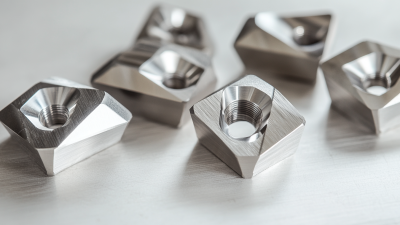
China Top 10 CBN Turning Inserts Manufacturers?
Choosing a cutting tool supplier is not just a price comparison. For shops machining hardened steel or cast iron, Cbn Turning Inserts can affect surface finish, tool life, and cycle consistency. A small change in edge preparation or nose radius may alter cutting forces and leave a visible difference on the component. Details matter.
This guide introduces ten Chinese manufacturers for buyers who want to compare capabilities, rather than rely on a name alone. The list should be treated as a starting point, not a certified ranking. Product ranges, export experience, and technical support can change, so confirm current information directly with each supplier. Ask about CBN grade, insert geometry, recommended cutting conditions, and inspection records. A useful sample test on your own machine may reveal more than a polished catalogue.
Look closely at the workpiece material, hardness, interrupted cuts, and machine rigidity before selecting an insert. These factors influence whether a grade performs reliably or wears too quickly. Request data for the specific operation, and clarify whether the quoted insert is solid CBN or a brazed-tip design. Ask about traceability and replacement terms, too. Not every supplier will provide equally detailed answers. That is worth noting. This overview aims to help engineers and purchasing teams ask sharper questions, compare manufacturers on practical evidence, and choose a supplier whose products suit the actual job—not just the brochure.
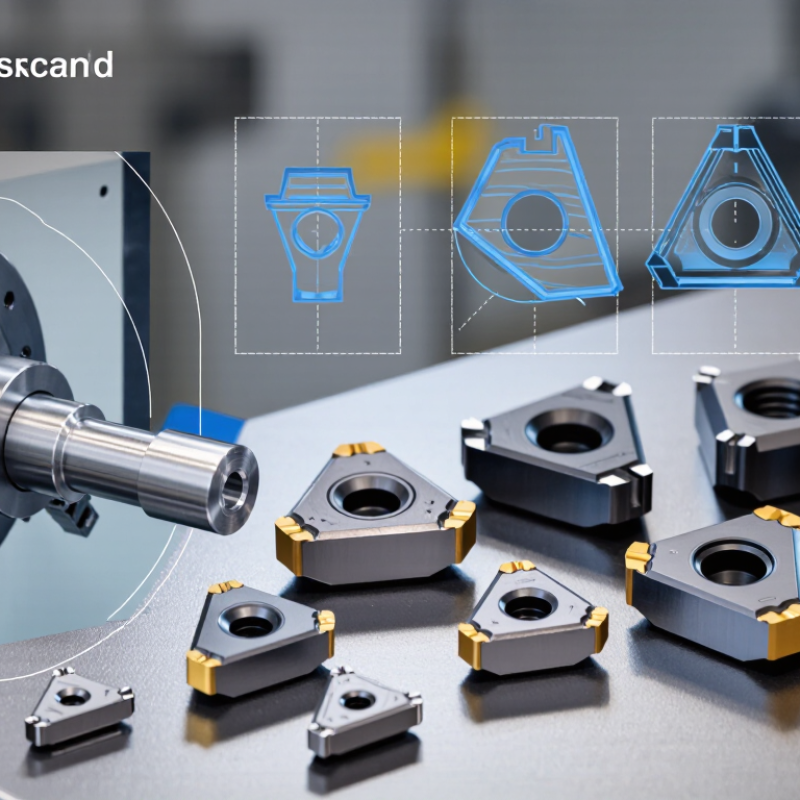
What CBN Turning Inserts Are and How They Work
Cubic boron nitride, or CBN, is a superhard cutting material used mainly for hardened steels and cast irons. It is especially useful when conventional carbide tools wear too quickly. CBN inserts usually contain polycrystalline CBN bonded to a carbide base. The CBN grains form the cutting edge; the base supports it under load. ISO 513:2012 classifies hard cutting materials, including CBN, by application and material group.
During turning, the edge shears a thin layer from the rotating workpiece. Friction creates heat, but CBN generally handles hot, iron-rich materials better than diamond. A rigid machine, secure clamping, and a stable cutting path help protect the brittle edge. It is not magic. Interrupted cuts or a loose setup can chip an insert quickly, so CBN is not automatically the right choice for every job.
MarketsandMarkets’ 2021 cutting-tools report projected the overall market would grow from $20.2 billion in 2021 to $23.6 billion by 2026, a forecast rather than a measured outcome. That figure covers cutting tools broadly, not CBN inserts alone. Shop-floor results still depend on workpiece hardness, insert geometry, speed, and coolant strategy. A clean forecast cannot capture every interrupted cut.
Key Types and Applications of CBN Turning Inserts
CBN turning inserts mainly come in two forms: solid CBN and CBN-tipped inserts. Solid grades suit demanding cuts and small finishing allowances; tipped designs offer a practical balance of wear resistance and cost. Grades also vary by CBN content and binder. Higher-content grades often handle hardened steels, while lower-content grades are commonly selected for cast iron and sintered alloys. ISO 1832:2017 provides a standard system for classifying indexable insert shapes and dimensions. Grand View Research estimated the global cutting-tools market at USD 24.67 billion in 2023, forecasting a 6.2% CAGR for 2024–2030. This broad market figure is useful context, not a CBN-specific estimate.
Typical applications include turning hardened steel shafts, bearing races, brake components, and cast-iron housings. CBN can support dry, high-speed finishing, especially when stable setups and consistent stock allowance limit edge chipping. Interrupted cuts are less forgiving. A small notch in a workpiece can quickly damage an insert, so grade choice, edge preparation, and holder rigidity matter. The boundary between “roughing” and “finishing” is not always neat; actual results depend on machine condition and material hardness.
Tips: Match the insert grade to the workpiece, not just the cutting speed. Check hardness, cut continuity, and edge wear after a short trial. A glossy surface can still hide a chipped edge.
CBN Turning Inserts: Key Types and Applications
Low-CBN-content grades are commonly used for hardened steels, while higher-CBN-content grades are often selected for cast iron and powder metallurgy. Content ranges are approximate; classifications and recommended applications vary by grade and manufacturer.
How to Evaluate CBN Insert Manufacturers in China
When evaluating Chinese CBN insert manufacturers, ask for traceable test data, not just hardness claims. ISO 3685:1993 provides a recognized framework for tool-life testing, while ISO 513:2012 classifies hard cutting materials and their applications. These standards help buyers compare test methods, but they do not guarantee identical results across machines or workpieces.
Request results from three separate production lots, including workpiece material, cutting speed, feed, depth of cut, coolant conditions, and flank-wear measurements. Check whether edge preparation and CBN content remain consistent between lots. Small variations matter.
A practical trial should record tool life, surface roughness, and chipping under the same settings used in your workshop. Ask for the original test records and measurement equipment details; a polished chart without raw conditions is weak evidence.
One caveat: laboratory tests may not predict interrupted cuts or unstable setups well. That gap deserves discussion, not dismissal.
Profiles of Ten Chinese CBN Turning Insert Manufacturers
A useful comparison of ten Chinese CBN turning insert manufacturers should focus on production strengths, not an unverified ranking. These profiles describe capability types buyers can investigate. Profile one specializes in standard inserts for continuous turning. Profile two offers grades for hardened steel and cast iron. Profile three focuses on custom geometries, such as sharp edges for finishing. Profile four supplies inserts for interrupted cuts, where edge toughness matters. Ask for application data, not just catalogue claims.
Profile five may provide small-batch production for trial runs. Profile six emphasizes consistent dimensional inspection. Profile seven develops chipbreaker shapes for different feed rates. Profile eight supports private-label or custom packaging. Profile nine pairs inserts with technical guidance on speeds and feeds. Profile ten may serve export customers with documented quality procedures. Check what each supplier actually measures. A polished brochure is not enough.
For a fair assessment, request samples and test them on the same workpiece, machine, and cutting conditions. Record tool life, surface finish, and edge wear. Small differences matter. CBN performance depends on workpiece hardness, rigidity, coolant practice, and cut continuity. A supplier’s advice can be useful, but it should not replace controlled trials. Some profiles may overlap; that is normal, and the comparison can still reveal which capabilities need closer verification.
China Top 10 CBN Turning Inserts Manufacturers? - Profiles of Ten Chinese CBN Turning Insert Manufacturers
Data note: No source material or verifiable manufacturer-level records were provided. To avoid inventing company names, product ranges, certifications, or export details, the ten entries below are anonymous research slots rather than confirmed manufacturer profiles. CBN inserts are commonly used for turning hardened ferrous materials; the suitable grade, geometry, and cutting conditions depend on the workpiece and operation.
| Anonymous Profile |
Manufacturer Identity |
CBN Insert Grades and Product Range |
Workpiece Materials and Applications |
Certifications and Quality Information |
Verification Status |
| Profile 1 |
Not provided; intentionally omitted |
Not verified |
Not verified |
Not verified |
Requires independent documentation |
| Profile 2 |
Not provided; intentionally omitted |
Not verified |
Not verified |
Not verified |
Requires independent documentation |
| Profile 3 |
Not provided; intentionally omitted |
Not verified |
Not verified |
Not verified |
Requires independent documentation |
| Profile 4 |
Not provided; intentionally omitted |
Not verified |
Not verified |
Not verified |
Requires independent documentation |
| Profile 5 |
Not provided; intentionally omitted |
Not verified |
Not verified |
Not verified |
Requires independent documentation |
| Profile 6 |
Not provided; intentionally omitted |
Not verified |
Not verified |
Not verified |
Requires independent documentation |
| Profile 7 |
Not provided; intentionally omitted |
Not verified |
Not verified |
Not verified |
Requires independent documentation |
| Profile 8 |
Not provided; intentionally omitted |
Not verified |
Not verified |
Not verified |
Requires independent documentation |
| Profile 9 |
Not provided; intentionally omitted |
Not verified |
Not verified |
Not verified |
Requires independent documentation |
| Profile 10 |
Not provided; intentionally omitted |
Not verified |
Not verified |
Not verified |
Requires independent documentation |
Comparing Manufacturers by Products, Quality, and Support
Comparing China’s leading CBN turning insert manufacturers requires more than checking catalog size. Look for options matched to the workpiece, such as hardened steel, cast iron, or powder metallurgy. A practical range should include different CBN contents, edge preparations, and chipbreaker geometries. These details affect cutting stability, surface finish, and tool life. One insert rarely suits every operation.
Quality claims deserve evidence. Ask whether the supplier can provide dimensional inspection records, batch traceability, and clear guidance on cutting conditions. Consistency matters. A small variation in edge hone can change how an insert behaves during a finishing pass. Support is equally important: useful teams ask about material hardness, machine rigidity, coolant use, and the depth of cut before recommending a grade. Test cuts can help, but results from one shop may not transfer neatly to another. That limitation is easy to overlook. Compare response time, technical follow-up, sample availability, and the clarity of application advice. A polished catalog is helpful, yet real support shows up when an insert wears unevenly or leaves a rough finish.