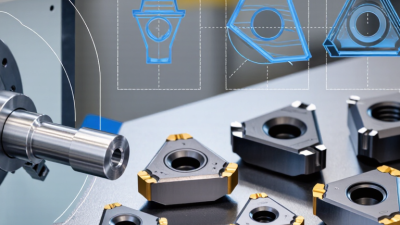
In 2026, selecting the right Pcbn Inserts can determine whether CNC turning produces a stable finish or costly edge failure. Polycrystalline cubic boron nitride is commonly used for hard turning, especially on hardened steels and cast irons. Yet “top” does not mean one grade fits every job. Binder content, grain structure, edge preparation, and insert geometry all affect performance.
Industry data shows why this choice matters. Fortune Business Insights’ Machine Tools Market report valued the global market at USD 84.9 billion in 2023. It projected growth from USD 87.5 billion in 2024 to USD 115.6 billion by 2032. The World Steel Association’s October 2024 Short Range Outlook forecast 2025 steel demand at 1.77 billion tonnes, up 1.2%. These figures do not measure PCBN demand directly, but they reflect a broad machining landscape. Small details matter. A chamfer that survives interrupted cuts may be wrong for a continuous finishing pass. This guide compares common PCBN insert types by grade, edge design, and application, with attention to hardened steel, cast iron, and superalloys. It also considers cutting conditions and surface-finish goals. Published market figures offer useful context, not a substitute for shop-floor testing. That distinction is easy to overlook. A controlled trial on the actual machine and workpiece remains the more dependable check.
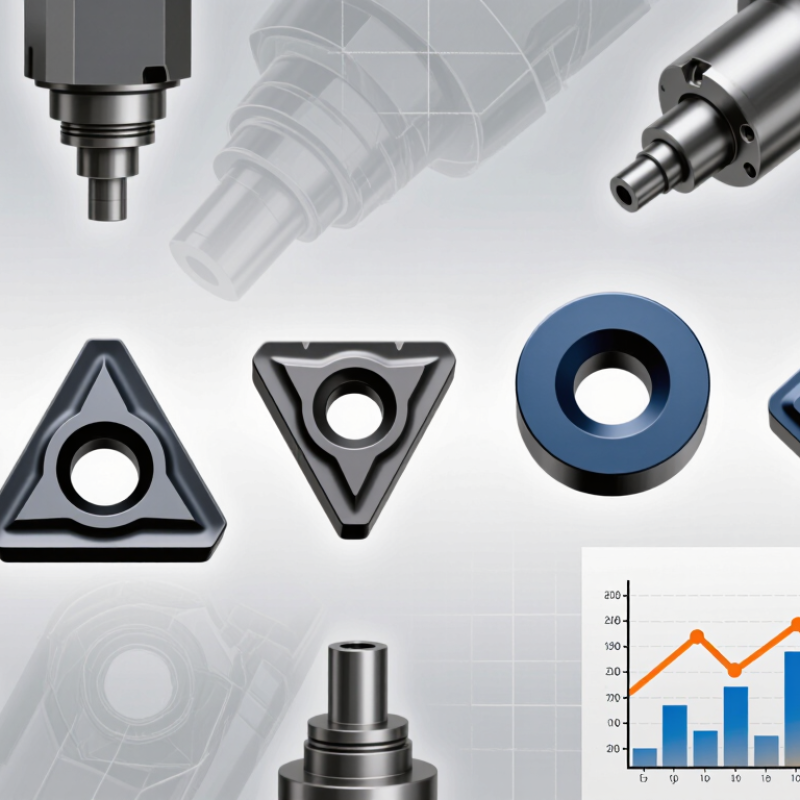
PCBN inserts combine cubic boron nitride grains with a binder, often ceramic or metallic. The CBN percentage and binder influence hardness, toughness, and wear behavior. Higher-CBN grades may suit interrupted cuts, while lower-CBN grades can perform well in stable, continuous turning. These are useful starting points, not fixed rules. Workpiece chemistry and cutting conditions matter.
From 45 to 70 HRC, hard turning places heavy demands on the cutting edge. A rigid setup, minimal tool overhang, and secure workholding help reduce chatter. Edge preparation and nose radius also affect finish and insert life. A polished surface can still hide edge chipping. Check the tool after a short trial.
Tips: Match the grade to the cut. Use a stable speed and feed, then inspect wear under magnification. Avoid changing several settings at once. Coolant choices depend on the insert and process; sudden temperature changes may cause thermal damage. Record the result. Even careful notes can miss a variable, so repeat the test before settling on a setting.

For CNC turning in 2026, PCBN grade selection starts with CBN content, but percentage alone does not predict performance. Low-CBN grades, around 40–65%, contain more binder and often suit stable finishing cuts on hardened steel. They can resist chemical wear and leave a consistent surface when cutting conditions remain controlled. High-CBN grades, around 85–95%, provide more CBN-to-CBN contact and often handle cast iron or interrupted cuts well. Their greater thermal conductivity can help move heat away from the cutting edge. Grade behavior still depends on binder, grain size, edge preparation, and workpiece material.
Tips: Check the manufacturer’s grade data and test one insert under real cutting conditions. Watch the first few parts for flank wear, chipping, and finish changes. Small details matter. A sharp, lightly honed edge may work well in continuous finishing, while a stronger edge can survive interrupted engagement. Coolant use and cutting speed also affect thermal shock, so avoid assuming one setup fits every machine.
A practical comparison should record cutting speed, feed, depth of cut, and tool life. For example, a short interruption at a keyway may chip an edge that performs smoothly on an uninterrupted diameter. That result can be annoying, but useful. Adjust one variable at a time, and inspect the worn edge before changing grades.
Chamfered, honed, and wiper edges change how a PCBN insert meets the workpiece. A chamfer adds support behind the cutting edge, helping resist impact when turning hardened steel or interrupted surfaces. The trade-off is higher cutting force and heat. A honed edge rounds the micro-edge, reducing chipping in steady cuts, though an overly large hone can rub instead of shear. Small details matter: a faint burr on a finished shoulder may signal that the edge radius is too large for the feed.
Wiper geometry uses a shaped nose to improve finish at a given feed, but it needs a stable setup and careful alignment. In practice, compare surface finish, edge wear, and spindle load—not finish alone. ISO 3685:1993 gives 0.3 mm average flank wear as a common tool-life criterion for carbide tools; treat it as a monitoring reference, not a PCBN acceptance limit. PCBN has different wear behavior. A test cut on the actual material is still essential, and that can be inconvenient. Start with the edge style matched to the cut: chamfered for edge strength, honed for steady engagement, and wiper for finish where the machine and workholding can support it.
Representative feature-dimension ranges for three PCBN edge designs
These illustrative ranges show feature dimensions, not a performance ranking. Actual dimensions vary by insert design, workpiece material, and cutting conditions; check the insert specification for application-specific values.
PCBN insert selection starts with the workpiece, then the cut. Hardened steel often benefits from a fine-grain grade and a sharp, stable edge. For continuous finishing, a small chamfer can limit edge chipping while keeping cutting forces modest. Interrupted cuts need stronger edge preparation, though it may leave a rougher surface.
For hardened steel, match CBN content and binder to hardness, speed, and interruption. Gray cast iron often suits higher CBN content and a tougher edge, especially when the cut crosses scale or casting skin. Nodular iron can behave differently; its ductile inclusions may increase wear. Watch the chips and flank carefully. They tell you when the grade is mismatched.
Heat-resistant alloys are less straightforward. PCBN may work in specific finishing operations, but many nickel-based alloys favor ceramic or carbide tools because heat and chemical wear can overwhelm the edge. Check the alloy, coolant strategy, and supplier’s cutting data before committing. Run a short trial and inspect the edge under magnification. One honest caveat: a grade that performs well on a steady cut may fail quickly when the setup flexes. Performance is not guaranteed by material name alone.
2026 Top PCBN Insert Types for CNC Turning
For hardened-steel CNC turning, treat 100–200 m/min as a trial window, not a guaranteed optimum. Begin near the lower end when the setup is interrupted or less rigid. Increase speed in measured steps, watching for flank wear, discoloration, and finish changes. At 0.05–0.10 mm/rev, feed can suit fine finishing; moving toward 0.30 mm/rev raises chip load and edge stress. Small changes matter.
Set depth of cut between 0.1 and 0.5 mm according to stock allowance and insert stability. Very shallow cuts can rub instead of cutting cleanly, especially if the edge is worn. A 0.5 mm cut may improve productivity, but can amplify vibration on a slender workpiece. Check the chip shape and listen for chatter. Not a fixed recipe.
ISO 3685:1993 outlines controlled single-point turning tool-life tests, including cutting speed, feed, depth of cut, and wear criteria. ASM Handbook, Volume 16, Machining, also emphasizes that cutting conditions depend on work material and tool geometry. Use those principles to change one parameter at a time, then record wear and surface finish. Parameter sheets often look more certain than real cuts are.